
A cancer vaccine for one father: PopVax puts tumor data and design on GitHub
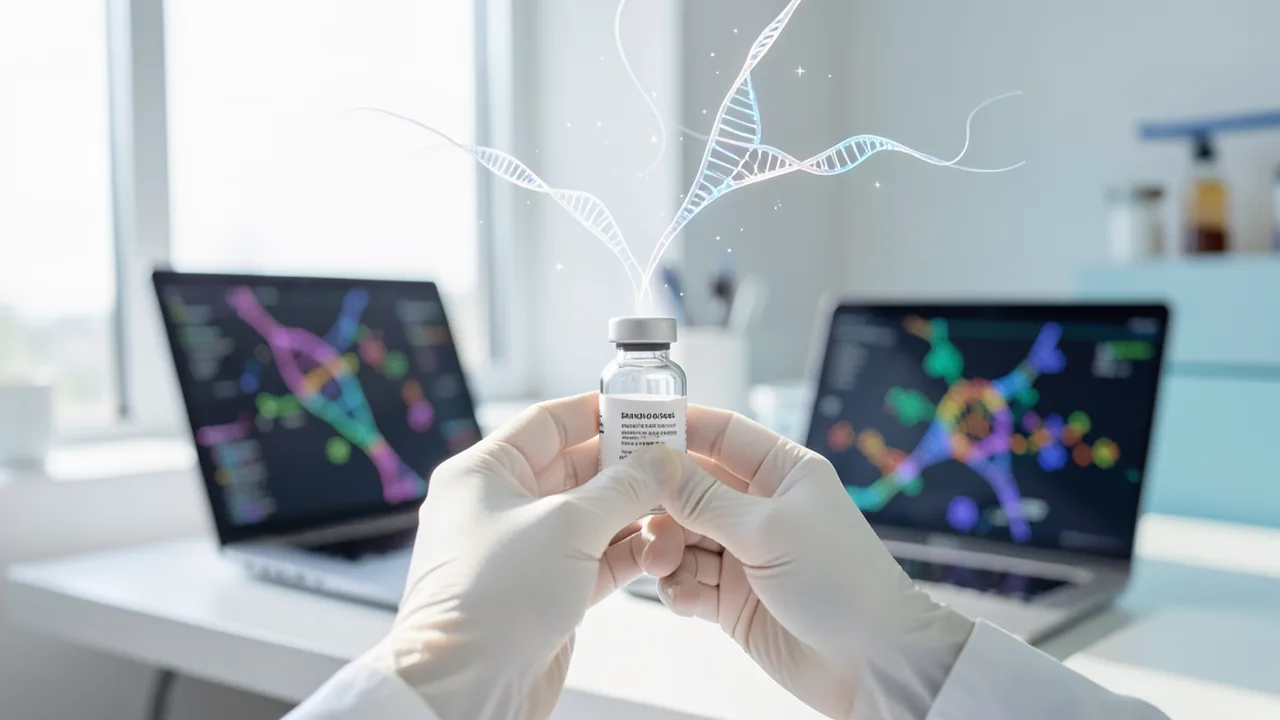
Indian biotech company PopVax is developing a custom mRNA vaccine for a young father with end-stage pancreatic cancer. The tumor data, code and vaccine design are public on GitHub, and experts around the world are invited to review and improve the design before it's manufactured.
What's going on
On November 11, 2026, Indian biotech company PopVax from Hyderabad launched an unusual project. It's developing a personalized mRNA cancer vaccine for a single person and making everything public along the way. The patient is Yashdeep Bindal. According to Fathom News, he was diagnosed with stage IV pancreatic cancer in January 2025 at age 32, shortly after his daughter was born. CNBC-TV18 calls him "Yash, 34." The two figures don't necessarily contradict each other, since almost two years have passed since the diagnosis.
With Bindal's explicit consent, PopVax has put his tumor sequencing data, the analysis code and the leading vaccine design on GitHub. Researchers around the world are invited to review and improve the design before PopVax manufactures it at its own facility, the "RNA Foundry" in Hyderabad. Co-founder Soham Sankaran wrote on X:
"We're making a personalized cancer vaccine for Yash, a 34-year-old pancreatic cancer patient, in the open and with his consent. We want outside experts to review our design and contribute their own before we produce it at the RNA Foundry."
How you build a vaccine from a single tumor
The approach relies on a quirk of cancer. Every tumor carries its own mix of genetic changes, and some of them drive its growth. A personalized vaccine aims to train the immune system to recognize exactly those features and attack the cancer cells. The mRNA works like a set of instructions. The body's own cells read it and briefly produce specific protein fragments, which teach the immune system what the enemy looks like. Several COVID-19 vaccines work on the same principle.
The design for Bindal is a single mRNA sequence with 24 targets from his tumor:
| Type of target | Count |
|---|---|
| Mutations (altered gene building blocks) | 12 |
| Aberrant splice variants (incorrectly assembled gene segments) | 5 |
| Cancer-associated proteins | 5 |
| Fusion genes (two genes fused together) | 2 |
To make sure the vaccine doesn't attack healthy tissue, the team compared the tumor DNA with DNA from Bindal's white blood cells. Seven candidates also showed up in his normal cells and were dropped.
The role of AI
According to the trade publication eHealth, an in-house software pipeline decides which targets go into the vaccine. It combines "frontier AI models," meaning large, state-of-the-art language and analysis models, with open-source tools that predict two things. MHC presentation indicates whether a body cell will actually "display" a particular protein fragment on its surface, where the immune system can see it. Immunogenicity indicates whether that fragment is likely to trigger an immune response. The goal is to find neoantigens, abnormal protein fragments that only occur on tumor cells.
The sources don't say which AI models are used. There's also no information on how accurate they are. In its COVID vaccine work, PopVax describes itself as an "AI-powered biotech" and uses its own computational protein design pipeline.
How you can contribute
PopVax is explicitly inviting experts in cancer vaccine research, antigen discovery and immunotherapy. If you want to contribute, you can fork the GitHub repository (create your own copy), add your own design with a rationale for every decision and open a pull request, which submits your proposed changes. You can also email the team. PopVax mainly wants to know which targets should go in, which signal elements the mRNA should use and what the team might have missed. The available sources don't give a direct link to the repository.
The factory behind it: the RNA Foundry
According to eHealth, the RNA Foundry opened on October 30, 2026, together with partner Stochastic Sciences. It combines research, development and manufacturing under GMP guidelines (Good Manufacturing Practice, the binding quality rules for drug production) in one place. It also offers personalized cancer vaccines as a contract service. More than 100 patient-specific vaccines are slated to be made there over the next twelve months. According to The New Indian Express, as cited by eHealth, it should take eight to ten weeks to go from sequencing data to a finished vial.
The process in four steps:
- Sequencing: The tumor and healthy tissue are read to find cancer-specific mutations.
- AI design: The pipeline selects the neoantigens.
- Manufacturing: The mRNA is produced in ISO 7/8 cleanrooms, packaged in lipid nanoparticles (tiny fat droplets that protect the fragile mRNA and carry it into cells) and filled into vials.
- Quality control: Each batch is tested for RNA identity, particle size, mRNA integrity, encapsulation efficiency, endotoxins and sterility, among other things.
The platform comes from the COVID-19 vaccine candidate PVX-001. A Phase I trial in Melbourne with a planned 36 healthy adults has been running since August 31, 2026. By October 6, 14 people had been vaccinated, and no serious side effects were reported. PopVax says the nanoparticle formulation, which uses its own lipid PVXL-150, stays stable for more than nine months in a regular refrigerator at 2 to 8 °C. Early mRNA vaccines needed deep freezing. According to the company, the facility can produce up to a million doses a year. PopVax also plans to release PVX-001 as open source once the trial is complete.
Who's behind it
PopVax was founded in late 2021. Its backers include the Gates Foundation, Good Ventures (the foundation of Facebook co-founder Dustin Moskovitz and Cari Tuna), Ethereum co-founder Vitalik Buterin through his Balvi fund, and the US agency BARDA (Biomedical Advanced Research and Development Authority). Besides cancer, the company is working on vaccines against tuberculosis, influenza, hepatitis C, HPV, malaria, rabies and group A strep. Its stated goal is to save a million lives a year.
The bigger picture
Personalized mRNA cancer vaccines are considered one of the most promising areas of oncology. According to CNBC-TV18, Moderna and Merck have shown efficacy in Phase III trials for melanoma. BioNTech and Genentech report encouraging early results in pancreatic cancer. PopVax argues that approvals could come too late for many patients alive today.
What's really new about the project is its radical openness. Tumor data and vaccine designs are normally closely guarded trade secrets. Here, any researcher can check which targets were chosen and why. You can think of it as quality control through many eyes, much like open-source software.
The limits are clear, though. None of PopVax's cancer vaccine candidates has been given to a human yet, and Bindal's vaccine hasn't been made. It's unclear when it will be administered. According to eHealth, the first uses are planned through compassionate use and single-patient programs outside India, subject to regulatory approval. Proving safety and efficacy will require dedicated clinical trials. Sankaran stresses that the vaccines are meant to complement existing therapies, not replace them. It also remains to be seen how well outside contributions will actually be reviewed and incorporated, and how regulators will handle drugs built for exactly one person.
Sources
- dev.to #ai dev.to
- cnbctv18.com cnbctv18.com
- news.lavx.hu news.lavx.hu
- ehealth.eletsonline.com ehealth.eletsonline.com
Ask the AI assistant
Questions about this article, installation or background? Our assistant knows this page and runs on our own machine, not in someone else's cloud.
The Assistant is an AI (Gemma 4) and can make mistakes – please check important details against the source. Questions are used only to generate an answer and are deleted after one hour. Please don't enter any personal data.

Comments
What do you think? Already tried it? Write it here, no sign-up needed.
Comments are public. Links aren't allowed, and we delete abusive posts. You can delete your own comment at any time in this browser. Learn more in the Privacy Policy.