Topic

Model releases

New AI models from major labs and the open-source community.

Model releases Oct 27, 2026r/StableDiffusion4 min

Krea 2 fine-tune places comics and text exactly with coordinate boxes

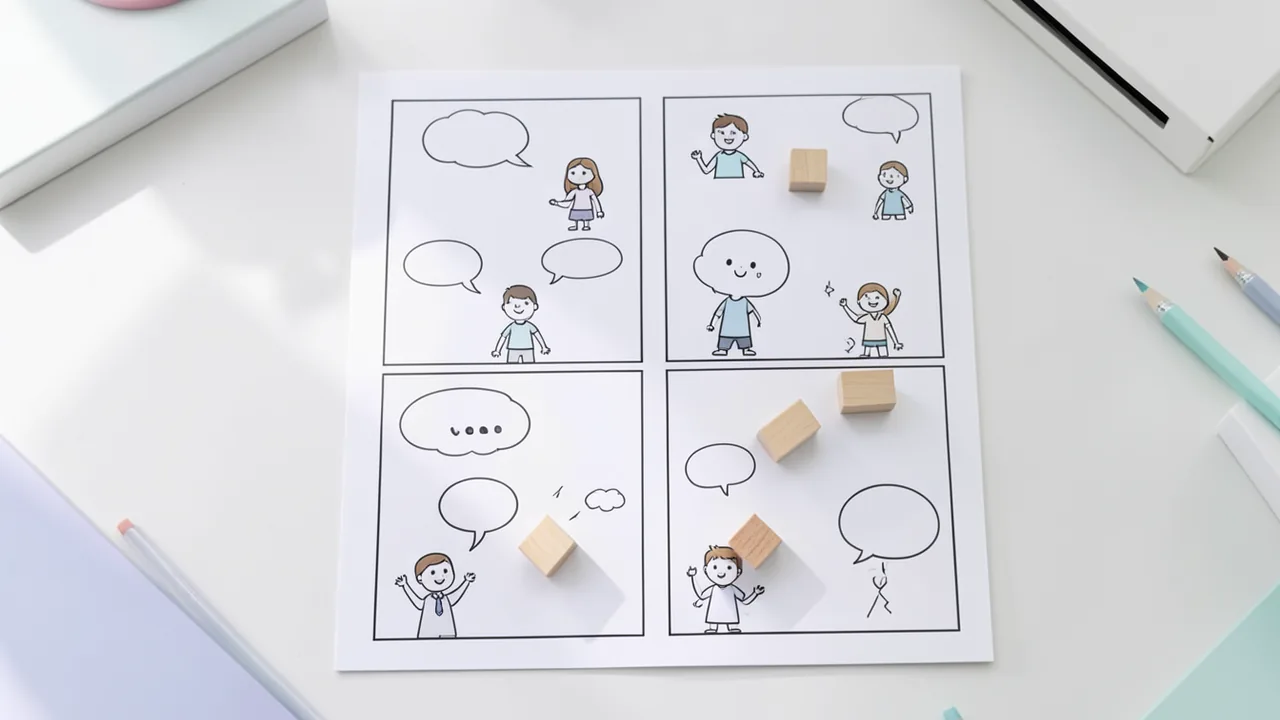
A fine-tune of the image model Krea 2 has appeared on Hugging Face at jimmycarter/krea2-turbo-bbox. It's meant to make layout controllable: multi-panel comics, speech bubbles that land inside their panel, characters whose look stays the same across panels, and text exactly where you want it. The release is the final version (epoch-20-step-104548) after 20 training epochs. An epoch is one full pass through the …

  • The jimmycarter/krea2-turbo-bbox model is a Krea 2 fine-tune for layout control, released as the final version after 20 epochs.
  • There's a Turbo variant (8 steps, no CFG) and a Raw variant (50 steps, CFG 5.5).
  • Each variant comes as a fine-tune plus two EMA weight sets (decay 0.9995 and 0.99975), six checkpoints in total.

Read more Try it
Model releases Oct 28, 2026Hugging Face Spaces3 min

Qwen-Image-2.1: Alibaba's image model adds true transparency, but a stricter license

Alibaba's AI group has released a new image model, Qwen-Image-2.1. According to heise, it came out on September 20, 2026, and you can download it for free, including via Hugging Face. Hugging Face also hosts an online demo (a Space) that you can try out. It already has 484 likes. The model creates new images from text descriptions and edits existing images, both in a single model.

  • According to heise, Qwen-Image-2.1 was released on September 20, 2026. The weights can be downloaded from Hugging Face, among other places.
  • One model handles both text-to-image generation and image editing.
  • Features: true transparent backgrounds, high resolutions, targeted edits to individual image regions and up to 10 reference images.
Read more Try it
Model releases Oct 28, 2026Hugging Face Blog5 min

Nvidia's open Nemotron 3.5 Transcribe handles transcription, translation, speakers

On October 28, 2026, Nvidia released Nemotron 3.5 Transcribe, an open-weights speech model available on Hugging Face and ModelScope. It turns speech recordings into text, but it does more than plain transcription. It labels speakers (diarization), translates, and answers questions about what's in a recording. You control it with text prompts, much like a chatbot. Nvidia is also releasing the Granary v2 training …

  • The model transcribes 40 languages, translates 31 of them to or from English, and labels speakers in 13 languages.
  • It handles recordings of up to one hour with up to eight speakers. Real-time streaming is not supported.
  • Of 30B parameters, only about 4B are active per token (Mamba-Transformer MoE).
Read more Try it
Model releases Oct 28, 2026Google DeepMind4 min

Gemini 4 Carbon: Google's most powerful model launches for cyber defenders first

On October 28, 2026, Google DeepMind announced Gemini 4 Carbon. The company calls it its most powerful model yet, with a special focus on cybersecurity and "long-horizon" tasks, meaning work that stretches over a very long time and many steps. Carbon builds on Gemini 4 Argon, which launched just two weeks earlier. The model isn't generally available yet. At first, only a select group of cyber defenders gets it. All …

  • According to Google, Gemini 4 Carbon ranks #1 on the Artificial Analysis Intelligence Index v5.0 with 59 points.
  • On cybersecurity benchmarks it scores 88.2% (SEC-bench Pro), 54.8% (ExploitGym) and 71.0% (CWE-bench).
  • Access starts this week for selected cyber defenders through the Fairwind Program. Broader availability is to follow "as soon as possible."
Read more
Model releases Oct 28, 2026r/LocalLLaMA5 min

Clover-35B-A3B: Diffusion language model beats Qwen3.6 at agent tasks, Apache 2.0

The DiffuSpace team released its first model on October 28, 2026: Clover-35B-A3B-Preview. It is a diffusion language model. Common language models generate text one word at a time (more precisely, one token at a time). A diffusion model produces several tokens at once by gradually cleaning up an initially "noisy" block of text. That is supposed to be much faster. DiffuSpace comes from the circle around the NLP lab …

  • Clover-35B-A3B-Preview is a mixture-of-experts diffusion model with 35B total and 3B active parameters, a thinking mode and 128K context.
  • According to the maker: SWE-bench Verified 73.6, Terminal-Bench 2.1 51.7, τ³ Overall 65.3, GPQA Diamond 83.8.
  • Speed (maker's figures): 680 tokens/s on a GB300, 515 tokens/s on an H200, versus 365 tokens/s for Qwen with DFlash2.
Read more Try it
Model releases Oct 27, 2026r/LocalLLaMA4 min

Liquid AI's LFM3: tiny 2B models run in your browser via WebGPU

The company Liquid AI has published a collection called LFM3 on Hugging Face, the largest platform for openly available AI models. It includes base models and post-trained variants (fine-tuned for tasks such as dialogue or image description). The collection was presented on Reddit, in the r/LocalLLaMA forum, together with a demo: the LFM3-VL-2B model describes video in real time and runs entirely locally in the web …

  • Liquid AI's LFM3 collection on Hugging Face includes text, vision, audio and omni models, each with around 2 billion parameters.
  • LFM3-VL-2B processes images and text and, according to a demo by Xenova (Hugging Face), runs locally in the browser via WebGPU.
  • The demo describes video in real time (video captioning). The post appeared on r/LocalLLaMA on 10/27/2026.
Read more Try it
Model releases Oct 27, 2026Google News (IN)4 min

Meta releases Muse Glimmer, an open 30B model you can run at home

On Monday, Meta unveiled Muse Glimmer, an open-weight model for AI agents. "Open weight" means the trained weights – roughly speaking, the model's learned knowledge – can be downloaded, customized and run locally instead of in the cloud. Glimmer is much smaller than the top models from OpenAI or Anthropic and is designed to run on a Mac or PC with a single GPU. Meta also announced that it will soon release an open …

  • According to TechCrunch, Muse Glimmer has 30 billion parameters and is released under the Apache 2.0 license.
  • Meta says the model runs on a Mac or PC with a single consumer GPU.
  • It understands text and images and was trained on more than 100 languages.
Read more Try it
Model releases Oct 27, 2026Ollama-Bibliothek6 min

Liquid AI LFM3: Tiny 2B models for speech, vision and video land in Ollama

On October 27, 2026, three new models from Liquid AI's LFM3 family appeared in the Ollama library: lfm3-audio, lfm3-omni and lfm3-vl. At around 2 billion parameters each, all three are very small. Parameters are, roughly speaking, the dials a model tuned during training. They're meant to run directly on your device, meaning laptops, phones and other edge hardware (edge means the computation happens locally, not in …

  • LFM3-Audio-2B takes text or audio and replies with text, speech or both; speech output runs at 24 kHz.
  • LFM3-Omni-2B (2.17B parameters) understands text, images, video and audio in a single model. According to the maker, it replaces separate models for speech recognition, image understanding, language modeling and speech synthesis.
  • LFM3-VL-2B (1.92B parameters) offers a Thinking mode for the first time and a 128K-token context window; video support is listed as "soon."
Read more Try it
Model releases Oct 27, 2026QbitAI 量子位 (CN)4 min

OXR: Open 1.3B document parser tops three benchmarks, claims its maker

The team behind the document parser SoMark, a startup from China, has open-sourced a model called OXR. The name stands for "Optical Everything Recognition", an extension of OCR (text recognition) beyond plain text. The main model has 1.3 billion parameters (the settings learned during training), which makes it small. It converts PDFs and document images into Markdown or JSON, keeps layout coordinates and recognizes …

  • OXR (Optical Everything Recognition) has 1.3 billion parameters and recognizes 13 types of document elements, including tables, formulas, chemical structures and code.
  • According to the maker, OXR scores 97.18 (OmniDocBench), 87.84 (olmOCR-Bench) and 87.76 (DocParsingBench), ranking first on each.
  • On an RTX PRO 6000 Blackwell (96 GB), OXR needed about 101 s for 100 pages, PaddleOCR-VL-1.6 about 145 s and MinerU2.5-Pro about 255 s.
Read more Try it
Model releases Oct 27, 2026r/LocalLLaMA5 min

SenseNova 6.8 Code2Video: Open 27B model writes code that renders video

The OpenSenseNova project has released SenseNova 6.8 Code2Video, an open language model with 27 billion parameters (parameters are, roughly speaking, the dials the model adjusted during training). It is built on Qwen3.8-27B and fine-tuned from it. Unlike classic video models, it doesn't generate video pixel by pixel. It writes executable code that computes the frames. Weights, an accompanying skill (a bundle of …

  • SenseNova 6.8 Code2Video is a fine-tuned version of Qwen3.8-27B with 27 billion parameters and a 512K context window.
  • The model creates videos as code, renders them, checks the frames and revises them. According to the developers, runs last over 10 hours and over 2,000 turns.
  • Weights, a 'code-video' skill, prompt templates and complete production trajectories are on GitHub and Hugging Face. According to a Reddit post, INT4 and INT8 weights are planned for later.
Read more Try it
Model releases Oct 27, 2026MarkTechPost5 min

Baidu releases Unlimited OCR 2 for documents hundreds of pages long

Baidu has released Unlimited OCR 2, an open-source text recognition model (OCR, short for Optical Character Recognition) for very long documents. The model has 3.34 billion parameters, which are, roughly speaking, the dials it adjusted during training. It converts ordered page images into structured text: running text, tables, formulas, figures, headings and reading order. Books, annual reports or government filings …

  • Unlimited OCR 2 has 3.34 billion parameters and a maximum position length of 131,072 tokens. It is released under the MIT license.
  • The BF16 weights are about 6.7 GB. Baidu tested on an NVIDIA A800 with 80 GB.
  • On MarathonDocBench (hundreds of pages), the model scores 77.1 points according to Baidu. The next-best model, Kimi-K3, scores just 33.7.
Read more Try it
Model releases Oct 26, 2026OpenAI5 min

OpenAI GPT-6.1 Terra: half the API price, strong computer use

On October 26, 2026, OpenAI introduced GPT-6.1 Terra. The model sits in the middle of OpenAI's lineup: GPT-6 Astra and GPT-6.1 Sol are above it, and GPT-6 Luna is below. Terra is meant to be fast and efficient. According to OpenAI, it combines detailed image understanding, precise computer use and clearer, more natural writing. It is a clear step up from GPT-5.6 Terra and targets everyday work tasks: writing …

  • GPT-6.1 Terra costs $1 per million input tokens and $5 per million output tokens in the API.
  • Cached input costs $0.05 per million tokens.
  • On Terminal-Bench 4.0, the model solves 50.3% of tasks at maximum reasoning. Its predecessor, GPT-5.6 Terra, solves 21.5%.
Read more
Model releases Oct 26, 2026Bing News (en-US)6 min

Kandinsky 6.0 Video: open models generate video with matching sound

In early October 2026, Kandinsky Lab released Kandinsky 6.0 Video, a model family that generates video and sound together. There are two variants: Kandinsky 6.0 Video Pro with 29 billion parameters (parameters are, roughly speaking, the dials a model learns during training) and Kandinsky 6.0 Video Lite with 3 billion parameters. Code and model weights are released under the MIT license. That means anyone can use …

  • Kandinsky 6.0 Video comes as Pro (29B parameters) and Lite (3B parameters); code and weights are under the MIT license.
  • The models generate clips of up to five seconds with synchronized sound (44 kHz) and lip sync from text or a starting image.
  • Base generation runs at low resolution, and a super-resolution module upscales to HD or Full HD.
Read more Try it
Model releases Oct 26, 2026arXiv cs.CL4 min

Kolibri: Aleph Alpha's open German-English MoE model with 78B parameters

Kolibri is an English-German language model that, according to its technical report, is being released as open weights under the Apache 2.0 license. Per alphaXiv's AI summary, Aleph Alpha is behind the report. The model is built for "sovereign" and specialized use, with a focus on German and regulated sectors such as public administration, industry and aviation. The authors stress that they control the entire …

  • Kolibri is a mixture-of-experts transformer with 78.1B total and 3.46B active parameters (4.4%), released as open weights under Apache 2.0.
  • It was trained on 24 trillion tokens. German makes up over 20% of the data, supplemented by more than 2 trillion German tokens from a web pipeline and synthetic data.
  • Post-training uses SFT and reinforcement learning on over 1.2 million internally curated tasks.
Read more Try it
Model releases Oct 26, 2026r/LocalLLaMA5 min

Tencent's Hy-SimulMT: Open Chinese–English live interpreter with 3-second lag

Tencent Hunyuan has released Hy-SimulMT, a model for simultaneous translation of speech between Chinese and English, in both directions. "Simultaneous" means the model takes in audio continuously and translates while the person is still speaking. Think of an interpreter in a conference booth, not a translator who waits for the whole sentence. It produces translated text. With a connected speech-output service, it …

  • Hy-SimulMT is a simultaneous translation model from Tencent Hunyuan for speech between Chinese and English, in both directions. According to the model card, it was released on October 26, 2026 (OrcaRouter says the weights appeared as early as October 22).
  • The model is a Mixture-of-Experts with about 30.4B parameters (A3B; by OrcaRouter's calculation, roughly 3B active per token) under the Apache-2.0 license.
  • On the RealSI long-audio test, Tencent reports a StreamLAAL of about 3 seconds, the lowest in the comparison.
Read more Try it
Model releases Oct 26, 2026r/LocalLLaMA4 min

Maple-Preview: Ternary 20B MoE runs fast on CPUs and small GPUs

The Deepgrove team has published the Maple-Preview-GGUF collection of files on Hugging Face. Maple-Preview is a reasoning model (it "thinks" in intermediate steps before answering) with 20 billion parameters, of which only about 1 billion are active per token (hence the name 20B-A1B). According to the authors, it was designed from the start to run efficiently on your own device, and it is released under the MIT …

  • Deepgrove's Maple-Preview is a 20B-A1B reasoning MoE model (20B parameters total, about 1B active) under the MIT license.
  • The GGUF variants range from 4.64 to 5.91 GiB (TQ1_0 or TQ2_0, output layer in Q4_K or FP16).
  • On an M5 Pro, CPU only (16 threads), the fastest variant reaches 252.74 tokens/s for generation and 618.57 tokens/s for prompt processing.
Read more Try it
Model releases Oct 25, 2026Google News (US)3 min

OmniVoice: Free speech model clones voices in over 600 languages

OmniVoice is a free, open-source text-to-speech (TTS) model, an AI model that turns written text into spoken language. The project is on GitHub at k2-fsa/OmniVoice. The Japanese site GIGAZINE presented it and tried it out locally on Windows 11. According to the source, it supports over 600 languages and can recreate voices from short audio samples or generate new ones from traits such as gender, age and pitch.

  • According to the source, OmniVoice supports over 600 languages; the demo page offers audio samples in 102 languages, including Japanese.
  • For zero-shot voice cloning, a reference recording of 3 to 10 seconds is enough, with no additional training.
  • In "Voice Design" mode, you define a voice without any reference audio by choosing gender, age and pitch.
Read more Try it
Model releases Oct 25, 2026r/LocalLLaMA5 min

Lure-TTS and Lure Turbo: 600M Speech Models With Tags and Voice Cloning

The developer "smirkishere" has presented two small text-to-speech (TTS) models on r/LocalLLaMA: Lure and Lure Turbo. Both are fine-tunes of Qwen3-TTS-12Hz-0.6B-Base, a model with about 600 million parameters (parameters are, roughly speaking, the dials a model learns during training). They can speak text with embedded tags like (laugh), follow direction prompts such as "warm, amused" and clone voices from a …

  • Lure and Lure Turbo are based on Qwen3-TTS-12Hz-0.6B-Base and support inline tags like (laugh), direction prompts and voice cloning.
  • The author reports a real-time factor (RTF) of 0.14 for Turbo, versus 0.195 for the 5B model Fish S2 Pro, at the same speaker similarity (ECAPA 0.699).
  • Turbo replaces the 15-step code predictor with a 3-pass head (V2s) and is trained with on-policy distillation.
Read more Try it