
AMD snaps up World Labs, makes Fei-Fei Li its chief scientist
AMD has closed its acquisition of World Labs, a startup building AI models that generate interactive 3D worlds. According to Pulse 2.0, the deal is worth $8.2 billion. Founder Fei-Fei Li, one of the world's best-known AI researchers, becomes AMD's chief scientist and reports directly to CEO Lisa Su.

What's going on
On November 16, 2026, chipmaker AMD announced from Santa Clara, California, that it has completed its acquisition of World Labs. The AI startup builds models that can generate and simulate interactive three-dimensional worlds. As part of the deal, founder Dr. Fei-Fei Li joins AMD. She becomes Executive Vice President and Chief Scientist and reports directly to AMD CEO Dr. Lisa Su.
AMD's press release doesn't disclose a purchase price. Tech outlet Pulse 2.0 puts the deal at $8.2 billion in its headline. The same figure has appeared in several reports over recent weeks, which suggests the deal was announced before this week's closing. Indonesian business site Industry.co.id also reports that AMD has now officially acquired World Labs.
Who Fei-Fei Li is and what World Labs does
Fei-Fei Li is one of the most influential figures in modern AI research. She made her name as a professor at Stanford University and, above all, through ImageNet, a huge database of human-labeled images. ImageNet is widely seen as one of the sparks of the deep learning boom of the 2010s, because it let researchers show for the first time how well neural networks could recognize images. She also co-founded Stanford's Institute for Human-Centered AI (HAI).
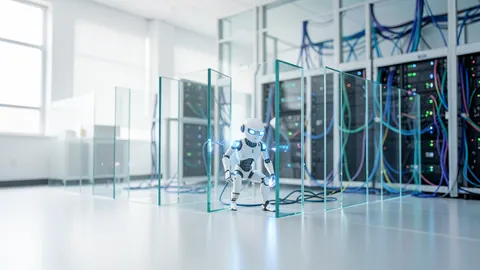
Li co-founded World Labs with other researchers. The company works on so-called world models and also talks about "spatial intelligence." These are AI systems that don't just process text or flat images but understand and generate three-dimensional spaces. According to AMD, World Labs builds models that "create and simulate interactive 3D environments." On top of that comes technology for robot learning and simulation. A robot can, for example, practice in a virtual environment before it's deployed in the real world. That saves expensive and risky tests on real hardware.
What AMD plans to do with it
AMD makes processors (CPUs), graphics chips (GPUs), networking gear and software for data centers. It also builds chips for AI PCs, game consoles and embedded systems, meaning computers built into devices like cars or industrial equipment. In data center AI accelerators, AMD is Nvidia's main challenger. Until now, though, it has had few leading AI models of its own.
That's exactly the gap this deal targets. According to the press release, the World Labs team will continue fundamental model research while working closely with AMD engineers. Insights into what new models can do and what they need will feed into the development of future hardware, software and systems. AMD CEO Lisa Su explains the move like this:
"To deliver the infrastructure that will power the next era of superintelligence, we need to co-optimize compute platforms and models. We're thrilled to welcome Fei-Fei Li and the exceptional World Labs team to AMD."
The team's research will shape AMD's future hardware, software and systems, she said. Together, the goal is to enable researchers and developers "across the ecosystem" to push the boundaries of what AI can do.
What stands out is how often AMD uses the phrase "open AI ecosystem." It's a way of setting itself apart from Nvidia, whose CUDA platform is seen as fairly closed. AMD, by contrast, bets on its open software platform ROCm and on open standards. The announcement doesn't say whether World Labs will make its models more openly available, for instance with freely downloadable weights.
Why chipmakers want their own model researchers
As Pulse 2.0 sums it up, the acquisition brings model development and the development of the platforms those models run on under one roof. The industry calls this idea co-design. Chips are no longer designed just for general-purpose computing but specifically for the demands of future models. World models are a demanding test case. They have to process large amounts of visual and spatial data, often in real time, and place different demands on memory and compute than pure language models.
If you know early where these models are headed, you can design chips and software to match. According to Technobezz, the acquired team therefore takes on a dual role: it keeps doing research while also feeding insights into the technology AMD wants to offer its customers and developers. With Li, AMD also gains a scientific leadership role that reports straight to the CEO. That underlines how much importance AMD places on the topic.
The big picture
With this deal, AMD is signaling that it wants to be more than a supplier of compute in the AI race. At $8.2 billion according to Pulse 2.0, it ranks among the larger acquisitions in AI. It follows a pattern that's spreading across the industry: hardware companies are bringing model expertise in-house to tune their platforms more tightly to the software. For AMD, there's also a prestige boost, since Fei-Fei Li is one of the most visible figures in the AI world.
Plenty remains open. The press release mentions neither the price nor plans for World Labs' existing products. It's also unclear whether the startup will keep operating as its own brand, how many employees are making the move and when the collaboration will show up in actual chips or software. And the talk of "superintelligence" is more futuristic rhetoric than a concrete goal. For users and developers, nothing changes for now. The interesting question is whether AMD uses the world model research to make its platform more attractive for robotics, simulation and 3D applications, areas where Nvidia has so far dominated with its own simulation and robotics platforms.
Sources
- Google News (ID) news.google.com
- finance.yahoo.com finance.yahoo.com
- pulse2.com pulse2.com
- technobezz.com technobezz.com
- Bing News (en-US) note.com
Ask the AI assistant
Questions about this article, installation or background? Our assistant knows this page and runs on our own machine, not in someone else's cloud.
The Assistant is an AI (Gemma 4) and can make mistakes – please check important details against the source. Questions are used only to generate an answer and are deleted after one hour. Please don't enter any personal data.


Comments
What do you think? Already tried it? Write it here, no sign-up needed.
Comments are public. Links aren't allowed, and we delete abusive posts. You can delete your own comment at any time in this browser. Learn more in the Privacy Policy.