
Bug Behind the TV: Ex-OpenAI Engineer Pleads Not Guilty to Eavesdropping
A former OpenAI engineer allegedly hid a recording device wrapped in toilet paper behind a TV in an executive conference room. The 35-year-old Saudi national has now pleaded not guilty, as prosecutors lay out his close ties to the Saudi royal family.

What's happening
A former engineer at OpenAI, the company behind ChatGPT, is on trial in San Francisco, accused of hiding a listening device at the company's headquarters. Abdulrahman Alfozan, 35, a Saudi citizen, pleaded not guilty in federal court on Friday, November 6, 2026. He faces one count: using or attempting to use an electronic device to intercept oral communications.
According to the British newspaper The Sun, citing Courthouse News Service, Alfozan only stated his name and age in the packed courtroom. He confirmed that he understood the charges. He reportedly waved to friends in the gallery as he came in. After the brief hearing, he was taken back into custody. His next court date is November 17. If convicted, he faces up to five years in prison, a $250,000 fine and, according to Cryptobriefing, three years of supervised release. The Sun reports that he could also be deported.
A device wrapped in toilet paper
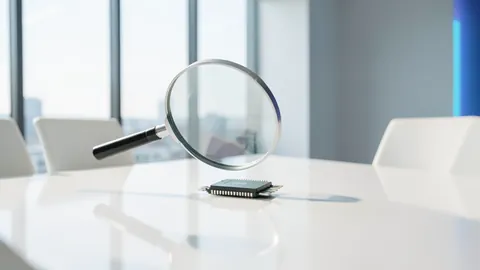
The case file reads like a spy novel, if a fairly improvised one. According to prosecutors, Alfozan plugged the device into a USB port on the back of a TV around September 28, 2026. The TV hung in a conference room on the executive floor. The thumb-sized device was wrapped in toilet paper. OpenAI's security team found it on September 30.
This wasn't just any meeting room. According to the criminal complaint, as quoted by the radio station KQED, only executives and their assistants could book it. It hosted leadership meetings as well as briefings with government officials. According to CNBC, prosecutors write that OpenAI executives met with government officials in that room around the time the device was allegedly plugged in. Highly confidential topics were regularly discussed there: internal research, technical progress, strategic decisions, contacts with government agencies and business relationships.
After the discovery, OpenAI staff installed a camera in the room. On October 5, according to prosecutors, it filmed Alfozan checking behind the TV. That same day, security found a second recording device in a bag Alfozan had left in a printer room. The bag also held his wallet and ID. Surveillance footage allegedly shows him near the room several times between September 8 and September 29. After his arrest, investigators found photos on his iPhone from September 22 to 28, CNBC reports. They allegedly show at least one other hidden device and the connection panels of TVs and other electronics at various locations in OpenAI buildings, including another conference room.
Betrayed by a chatbot
One detail stands out: part of the evidence comes from chatbot histories. According to KQED, a ChatGPT account linked to Alfozan's wife was used to ask how to build an always-on audio recorder, add Wi-Fi, encrypt its memory card and hide its activity. Alfozan himself allegedly asked an AI tool to list the meeting rooms in OpenAI's offices, specifically asking for locations for "Leadership and Exec." Cryptobriefing also reports that OpenAI used its own AI models to track down the device and the alleged culprit.
Experts see this as a warning for every user. Riana Pfefferkorn of the Stanford Institute for Human-Centered AI told KQED:
"Your chatbot conversations are generally less private than you might think."
She points out that when the company itself is the alleged victim, it's more likely to hand over information voluntarily instead of insisting on a court order. Her colleague Jen King adds that if you don't delete your chats or use a temporary chat window, your history is stored indefinitely in most cases.
The Saudi connection
The most explosive part of the filing concerns Alfozan's ties to Saudi Arabia. According to CNBC, he was in "frequent" contact via WhatsApp with a member of the Saudi royal family in 2025 and 2026, most recently on October 5, four days before his arrest. That person allegedly tried to recruit him for a new AI initiative in Saudi Arabia. In May 2026, the person reportedly wrote: "Saudi Arabia needs you more than the US!" Alfozan allegedly replied with "100," signaling full agreement. But he said he wanted to stay at OpenAI until his stock had vested, meaning it was fully his. According to court records, his initial equity package was worth $2.2 million. His base salary started at $325,000 a year and was later raised to $385,000.
One key point: prosecutors don't claim that the royal instructed Alfozan to eavesdrop or steal information. They don't name the person, and they leave open who the recordings were meant to benefit. Prosecutors write that it doesn't matter whether he wanted to profit commercially or help a foreign government, because it's a crime either way. At the same time, the filing says the investigation is ongoing and "could lead to more serious charges." CNBC notes that Alfozan is a venture partner at the Saudi venture capital firm Raed Ventures, where Prince Khalid bin Bader Al Saud has also worked since 2025. The filing, however, doesn't link the prince to the anonymous WhatsApp contact.
Family and travel plans played a big role in the bail decision. According to prosecutors, Alfozan, his wife and their three-month-old son planned to fly to Saudi Arabia on October 12 without a return flight. Officially, it was for two months of parental leave. After his arrest on October 9, his wife and child flew business class to Doha, Qatar, on October 10. A member of the Saudi military allegedly paid for the flight. His wife now lives in Saudi Arabia.
No bail despite a Saudi "blank check"
On October 19, Magistrate Judge Alex Tse ordered Alfozan held until trial, citing a "substantial" flight risk. The Saudi consulate in Los Angeles had offered in writing to cover the full bail. Alfozan himself also wanted to post $1 million in assets. Tse called the Saudi offer "problematic":
"That sounds like a blank check: 'We'll pay whatever the court wants to get him out.' […] But what assurance do I have that they'll protect the interests of the US government?"
Saudi Arabia has no extradition treaty with the US. In a footnote, prosecutors pointed to a 2019 case in the same court. Back then, a Twitter employee accused of spying for Saudi Arabia left the country one day after his employer confronted him, according to US officials in coordination with the Saudi consul general in Los Angeles. He never came back.
Alfozan's lawyer, William Pernik, disagrees. He says his client is a lawful permanent resident who has lived in the US since 2009. He studied at MIT and UC Berkeley and worked at Meta, among other companies. His naturalization interview was scheduled, of all days, for November 6. According to the New York Times, Pernik asked: "If he really were an agent of a foreign government, why wouldn't he have fled immediately?"
Our take
The case shows how much the US now treats frontier AI as a matter of national security. It's being handled by the prosecutors' National Security and Cybercrime Section. FBI Director Kash Patel calls protecting American AI a counterintelligence priority. In June, President Trump had already declared in an executive order that he wanted to shield American intellectual property from adversaries. OpenAI stresses that there's no evidence Alfozan took model weights, source code or customer data. The company is presenting the case as an example of how AI helps defend against threats like this.
A lot is still unclear. So far, the charge is a relatively minor offense: eavesdropping, not espionage. No one has been named as having directed him. Until a verdict, he's presumed innocent. The sources also contradict each other on details: The Sun writes that Alfozan was arrested by the FBI and fired, while other reports say OpenAI fired him first. There's a side effect that affects everyone: the case shows how much chatbot providers store and how quickly that data can become evidence.
Related videos
Sources
- Bing News (en-US) the-sun.com
- cryptobriefing.com cryptobriefing.com
- kqed.org kqed.org
- cnbc.com cnbc.com
Ask the AI assistant
Questions about this article, installation or background? Our assistant knows this page and runs on our own machine, not in someone else's cloud.
The Assistant is an AI (Gemma 4) and can make mistakes – please check important details against the source. Questions are used only to generate an answer and are deleted after one hour. Please don't enter any personal data.

Comments
What do you think? Already tried it? Write it here, no sign-up needed.
Comments are public. Links aren't allowed, and we delete abusive posts. You can delete your own comment at any time in this browser. Learn more in the Privacy Policy.