
ByteDance's Seedream 5.5 can edit an image 100 times without losing quality
ByteDance has unveiled Seedream 5.5, an image generator that promises more realistic photos and legible fine print. New features include up to 100 consecutive edits that leave the rest of the image untouched, plus images with transparent backgrounds. For now, you'll mostly find the model in ByteDance apps like CapCut and Dreamina.
What's going on
ByteDance, the Chinese company behind TikTok, unveiled its new image model Seedream 5.5 on November 9, 2026. It was built by the Seed team, the company's foundational research division, which is also responsible for the Seedance video model. Seedream 5.5 generates images from text descriptions and edits existing ones. ByteDance is pitching it squarely at people who work with images for a living. The goal is to fix the problems that so often make AI images useless in practice: garbled text, shifting colors and edits that quietly wreck parts of the image you wanted to keep.
According to Cryptobriefing, the model is available in ByteDance's own products: the Dreamina image and video tool, the CapCut video editor, the Doubao chatbot and the developer platforms Volcano Engine Ark and BytePlus. All-AI.de also lists BytePlus' Lumina service. This is a closed model. You can't download the weights and run it locally. Instead, you use it through apps or a paid application programming interface (API). ByteDance says a Pro version will follow soon.
What's new: 100 edits and transparent images
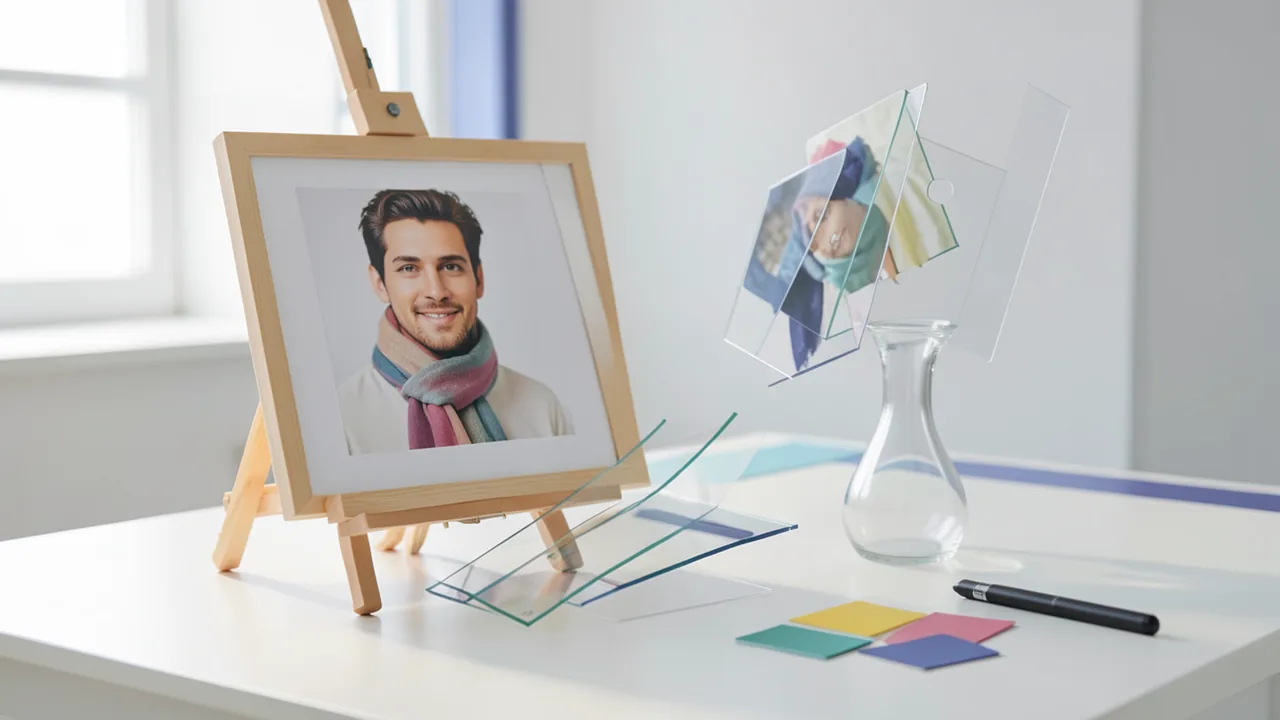
ByteDance calls the headline feature "pixel-level stable multi-turn editing." Here's what that means: you change an image step by step (first the color of a sweater, then the background, then the lighting), and each round builds on the result of the previous one. With many image models, quality slowly degrades along the way, like a copy of a copy. Faces change and colors drift. Seedream 5.5 is supposed to leave everything outside the requested change untouched. ByteDance demonstrates this with a portrait edited 100 times in a row. Another demo swaps out the furniture in a home office while adjusting perspective and shadows to match.
The second new feature is RGBA output. RGBA stands for red, green, blue plus alpha. The alpha channel stores how transparent each pixel is. That means the model can produce images with transparent backgrounds, such as product shots, stickers or graphic elements. Designers can drop these straight onto websites, slides or videos without cutting them out first. According to a comparison article on Breakingac, semi-transparent materials like glass should also be possible.
More realistic photos and legible fine print
According to All-AI.de, Seedream 5.5 renders skin, fabrics and lighting more naturally than its predecessor, Seedream 5.0 Pro. ByteDance's sample portraits show fine backlit hairs and fabric folds in shadow, and in a bar scene, light reflects off the glasses.
Text is no longer just about short headlines. It's now about whole paragraphs. A generated newspaper page about Shakespeare wraps English body text around a portrait and a theater sketch. An infographic on the blue morpho butterfly shows small Chinese characters next to numbered close-ups. Text in images was a weak spot for image generators for a long time, and the Seedream series has leaned hard into it since version 5.0 Pro. According to TestingCatalog, 5.0 Pro already supported more than ten languages, including German, right-to-left Arabic, Japanese and Korean. It could also break a poster down into editable layers.
The numbers, according to ByteDance
All the figures below come from ByteDance itself. There are no independent tests yet.
| Measurement (text test, English/Chinese) | Seedream 5.0 Pro | Seedream 5.5 |
|---|---|---|
| Severe text errors | 2.8 % | 0.4 % |
| Minor text errors | 2.6 % | 1.7 % |
ByteDance says Seedream 5.5 also beat rival models Nano Banana 2.1 (Google) and GPT Image 2.5 Sunburst (OpenAI) in both categories.
In head-to-head image comparisons, reviewers also rated text layout and photorealism. Seedream 5.5 beat both competitors on text structure and looked more realistic when generating new images. When it came to editing existing images, though, Nano Banana 2.1 scored higher on realism. ByteDance discloses this point with remarkable candor. Compared with its own predecessor, the new model scored +55.62 on this task on what's called a GSB scale. GSB stands for "Good/Same/Bad": reviewers compare two images side by side and say which one is better, and zero means a tie. Cryptobriefing reports the figure as a percentage.
ByteDance also says average quality scores and the share of usable images went up in all six use cases it tested. In film and TV and in office tasks, the share of usable results more than doubled.
Pricing and availability
According to Cryptobriefing, an edit at 2K resolution costs around 0.28 yuan (roughly 3 to 4 euro cents), which in some tiers is less than its predecessor, 5.0 Pro. CapCut and Dreamina are also running promotions with temporarily unlimited image generation. For now, the model mostly stays within ByteDance's own ecosystem, and it's not confirmed whether third-party providers will get access. All-AI.de expects more platforms to offer it in the coming days. Cryptobriefing says an expansion to the US market is expected.
Background: Hollywood and ByteDance
The launch comes as ByteDance is patching things up with the film industry. According to Variety, the Motion Picture Association (MPA), the trade group for the major US film studios, and ByteDance have signed a memorandum of understanding on protecting intellectual property that explicitly covers Seedance and Seedream. It follows a cease-and-desist letter the MPA sent in February after the launch of Seedance 2.0, which users had used to create clips featuring lookalikes of Brad Pitt and Tom Cruise. MPA chief Charles Rivkin now speaks of "constructive engagement" and "meaningful guardrails" in Seedance and Seedream. The sources don't say which safeguards are actually built into Seedream 5.5.
Our take
Seedream 5.5 doesn't open up a new category. It's a targeted upgrade for everyday work. Stable multi-turn editing, transparent output and reliable text are exactly where AI images have fallen short in advertising, presentations and product design. That puts ByteDance in direct competition with Google's Nano Banana and OpenAI's GPT Image, at low prices to boot.
One caveat: every benchmark comes from the vendor, and the test methods can't be verified publicly. The comparison article on Breakingac also stresses that it relies only on product descriptions. It says features like real transparency in the exported file, or details staying unchanged over many rounds, still need to be tested. According to Breakingac, Nano Banana 2.1 outputs up to 4K, while no maximum resolution has been given for Seedream 5.5. If you want to try the model, CapCut or Dreamina is currently the easiest way in.
Sources
- Google News (AT) all-ai.de
- Bing News (en-US) cryptobriefing.com
- breakingac.com breakingac.com
- variety.com variety.com
- testingcatalog.com testingcatalog.com
- Bing News (en-US) ainvest.com
- Merkliste: post.smzdm.com post.smzdm.com
Ask the AI assistant
Questions about this article, installation or background? Our assistant knows this page and runs on our own machine, not in someone else's cloud.
The Assistant is an AI (Gemma 4) and can make mistakes – please check important details against the source. Questions are used only to generate an answer and are deleted after one hour. Please don't enter any personal data.


Comments
What do you think? Already tried it? Write it here, no sign-up needed.
Comments are public. Links aren't allowed, and we delete abusive posts. You can delete your own comment at any time in this browser. Learn more in the Privacy Policy.