
Cannes Winner Bruno Dumont Makes an Entire Sci-Fi Feature With Generative AI
French director Bruno Dumont made his new feature, "The End", entirely with generative AI. He spent almost nothing and used no actors and no crew. He generated the images, the performers and the sound from his Paris apartment. The film is set to hit the festival circuit in 2027, where it's likely to spark a fierce debate.
What's going on
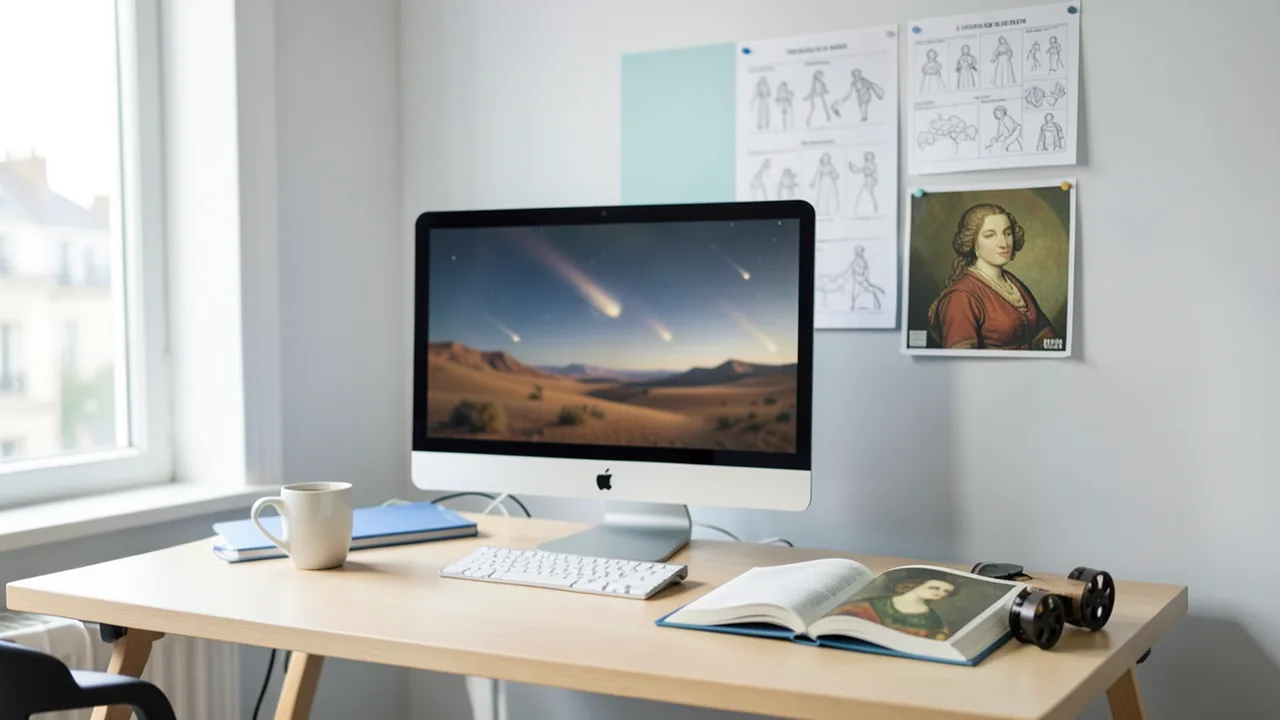
Bruno Dumont is one of France's most uncompromising auteurs. According to an exclusive report in the trade magazine Screen Daily, he has made his next feature, "The End", entirely with generative AI. Generative AI means software that creates new images, video or audio from text prompts. The film had no actors and no conventional crew, and Screen Daily says the budget was minimal. Dumont started the English-language sci-fi thriller in August and has now finished production. According to the Polish site Filmweb, the whole thing took less than three months. He created the images, the performances and the sound in his Paris apartment. The film is due to play festivals in 2027, followed by a theatrical release.
A script that waited 25 years
"The End" follows an ambitious Los Angeles cop trying to solve a crime while earthquakes shake the city and asteroids rain down from the sky. It's set in present-day Los Angeles and the desert around Joshua Tree, and it tells the story of one man's rise and fall as his investigation turns increasingly mystical.
Dumont wrote the script more than 25 years ago, shortly after his 1999 film "Humanité". The elaborate disaster scenes would have cost so much that the project ended up in a drawer. Instead, he made "Twentynine Palms" in 2003, another drama set in California. Only now has generative AI made the original idea feasible. The costs are "on a completely different scale" from the traditional film industry, Dumont says, and the result is "astonishing".
How Dumont works with the machine
Dumont didn't just feed the script into an AI tool. He works scene by scene from his own shot breakdowns, splitting each scene into individual camera setups. He keeps control over performance, staging and editing.
I'm like a director working with a crew, except my crew is a machine. I'm constantly giving it directions.
He says he can ask the virtual performers for "more emotional intensity or anger". He fine-tunes sets, vehicles, costumes and hairstyles down to the last detail. For the characters, he took faces from Flemish paintings and turned them into contemporary people. World of Reel calls this "pretty much the most Dumont thing imaginable". None of the sources say which AI tools he actually used.
Dumont argues that the process isn't fundamentally different from normal filmmaking: the machine supplies the material, and he shapes it through his own artistic choices.
Who Bruno Dumont is
Even if you don't watch arthouse cinema, the name is worth knowing. Dumont won the Grand Prix at Cannes twice, in 1999 for "Humanité" and in 2006 for "Flanders". He made his name working with non-professional actors, often with unusual faces you'd never see in Hollywood. Later he moved into dry, absurdist comedy with works like "Li'l Quinquin" (P'tit Quinquin) and "France". His other films include "Camille Claudel 1915" with Juliette Binoche, the Cannes competition title "Slack Bay" and the Star Wars satire "L'Empire", which won the Silver Bear Jury Prize at the 2024 Berlinale. His latest film, "Red Rocks", premiered this year in the Directors' Fortnight at Cannes, then screened in San Sebastián and New York. "Jeannette", his film about Joan of Arc's childhood, shows how often he has radically switched styles.
Money, freedom and the situation in France
His reasons are partly financial. He struggled to find backers in France for "Red Rocks" and turned to other European countries instead. He's producing "The End" independently and has no international sales agent yet. He wants festival premieres first, then distribution and international sales.
It's getting harder and harder to finance films in France. Today I have complete freedom. I can do whatever I want.
Dumont says generative AI could let auteur cinema "regain radical creative autonomy" and build visual and poetic worlds that were out of reach before, free of financial and industrial constraints. He isn't turning his back on traditional filmmaking, though. In parallel, he's developing a conventionally financed French film with real actors and a real crew with Nicolas Anthomé's Bathysphere Films, the company behind Arthur Harari's Cannes competition film "The Unknown".
The bigger picture
This is the first time an internationally acclaimed auteur and festival regular has made an entire feature with AI alone. Until now, AI films have mostly been experiments by tech companies or newcomers. The interesting part will be how festivals react. World of Reel expects Cannes, Berlin and Venice, Dumont's usual festivals, to face a decision in 2027 and predicts an "ugly" debate. Filmweb also asks which festival will dare to show the film.
Plenty of questions remain. Nobody has seen any footage yet. So far, the only person calling the result "astonishing" is Dumont himself. We also don't know which tools he used, what the exact budget was, or how the rights questions around the AI models' training data play out. For the industry, there's also the question of jobs: this method cuts out actors and crews completely. But the case also shows that AI can make projects possible that used to be realistic only with Hollywood budgets.
Sources
- NewsData (russia) rg.ru
- screendaily.com screendaily.com
- filmweb.pl filmweb.pl
- worldofreel.com worldofreel.com
Ask the AI assistant
Questions about this article, installation or background? Our assistant knows this page and runs on our own machine, not in someone else's cloud.
The Assistant is an AI (Gemma 4) and can make mistakes – please check important details against the source. Questions are used only to generate an answer and are deleted after one hour. Please don't enter any personal data.


Comments
What do you think? Already tried it? Write it here, no sign-up needed.
Comments are public. Links aren't allowed, and we delete abusive posts. You can delete your own comment at any time in this browser. Learn more in the Privacy Policy.