
Cyanogen founder takes on Windows with KORA, a Linux OS with AI baked into the system
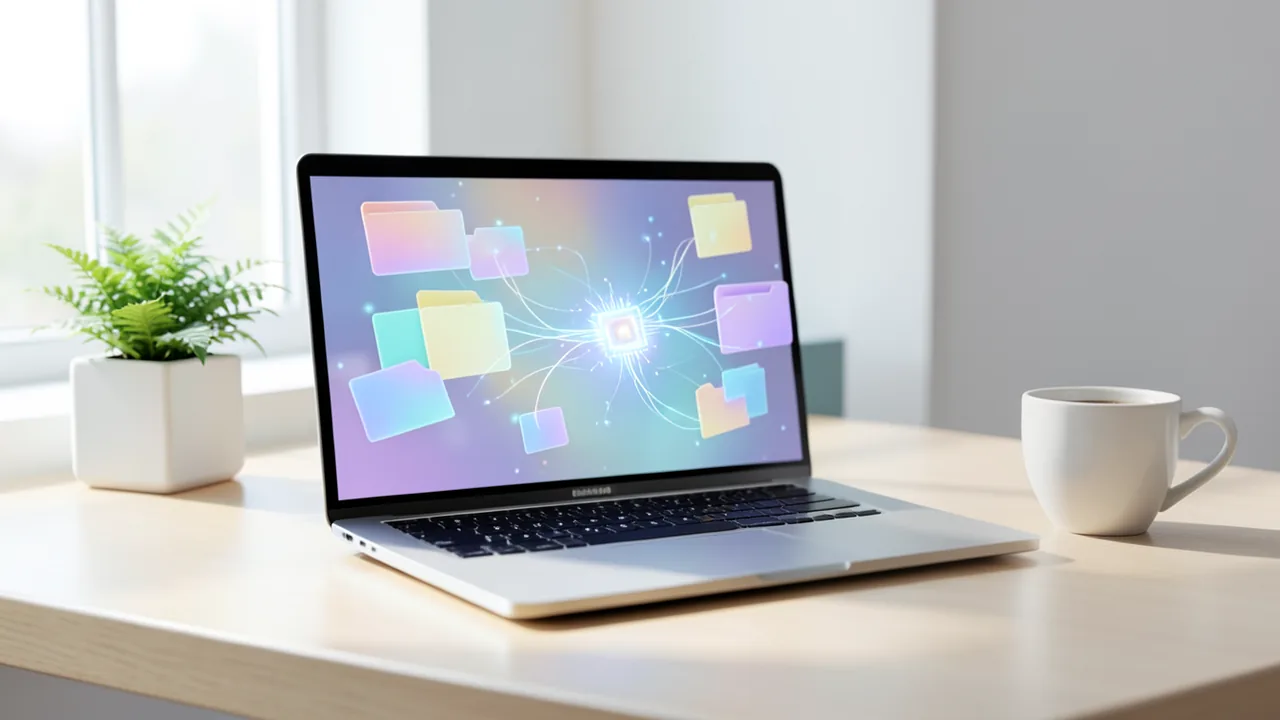
The team behind Cyanogen and Android has unveiled KORA, a Linux-based desktop operating system that makes AI models and agents a core part of the system. Working with Qualcomm, they've got a 26-billion-parameter language model running fully locally on Snapdragon laptops. The catch: it won't ship until 2027.
What's going on
US company KORA Systems unveiled a new desktop operating system called KORA on November 10, 2026. It's built on Linux, and instead of offering AI models and AI agents as a standalone app or browser tab, it makes them a built-in part of the system itself. AI agents are assistants that don't just chat but take actions on their own, like editing files or operating programs.
There are some familiar names behind the project. The CEO is Kirt McMaster, co-founder of Cyanogen, the company that tried to commercialize the alternative Android system CyanogenMod. Chief Business Officer Jon Lagerling used to run Android business development at Google. CTO Frank de Girolami built the gaming Linux distro GameOS. According to PC Watch, investors include Samsung, Square Enix, Polychain, VanEck, Circle and Alumni Ventures.
One thing up front: there's nothing to download yet. KORA is due on PCs in 2027, starting with developers and creators. The press release says pricing and the business model will only be announced shortly before launch. Shiftdelete is already reporting, however, that the OS itself will be free and that KORA plans to make money from subscriptions for AI models and agent services. According to Shiftdelete and Thurrott, regular x64 PCs with Intel and AMD chips will be supported alongside Qualcomm Snapdragon machines.
The idea: AI as a system service, not an app
Here's how KORA explains its approach:
"Every desktop operating system in use today was finished before intelligence arrived. On macOS and Windows, AI lives in a browser tab or an app sandbox. It can't see the machine it runs on, can't control the chip underneath, and can't reach the files, memory and applications around it."
Because Windows and macOS are closed, the company argues, integration stops there. Linux is the only operating system that can be completely rebuilt. KORA says it built the system itself "from the kernel to the shell," meaning from the innermost core of the system all the way up to the user interface. By default, local models run on the machine, and powerful cloud models ("frontier models") get pulled in when needed.
The key building blocks:
- Cortex: a hybrid inference engine. Inference means running an AI model to get a response. Cortex splits that work across the CPU, the GPU and the NPU (a chip block built specifically for AI). It can even hand tasks off to other machines on your home or office network, so everything acts like a single computer. Cortex is proprietary, not open source.
- Neural Workspaces: sealed-off spaces for each project, job or client. The AI only sees the workspace that's currently open, not the whole system. Inside each one, AppArmor, a Linux security module that defines what a program can access, enforces fine-grained permissions for hardware, files, AI tools and connected services, per app and per agent.
- Neural file system: files are indexed by meaning, not just by name and location, so you can search for what's actually in a file. The system also keeps an automatic version history of every file.
- Memory: local models analyze your contacts, email, calendar and selected cloud files and build a "memory" from them that stays on your PC. According to Unite.AI, relevant context is only sent to cloud services with your permission.
- Switching tools without losing context: within the same chat, you're supposed to be able to switch from KORA's own agent to external coding tools like Codex or Claude Code without exporting and re-importing anything.
The model layer is open: you can pick local or cloud models from any provider, "any model from any lab," as the company puts it. A KORA SDK (a developer kit) is meant to give third parties access to projects, memory, context, semantic search and email, within the same permission boundaries. Thurrott reports that KORA will also ship its own AI apps for email, calendar, contacts, tasks, team chat, writing and images.
Qualcomm and the 26-billion-parameter model
KORA and Qualcomm say they've been working together for almost a year. The result is a full Linux desktop running on the Snapdragon X2 Elite, with Cortex spreading AI workloads across the Oryon CPU, the Adreno GPU and the 80 TOPS (trillion operations per second) Hexagon NPU. That setup reportedly lets a language model with 26 billion parameters run fully locally, together with a speech recognition model and an embedding model. The embedding model turns text into number vectors so you can search by meaning. The sources don't say which model it is or how fast it runs.
Qualcomm executive Kedar Kondap says the X2 Elite was built to run advanced on-device AI across the CPU, GPU and NPU. Qualcomm is also upstreaming more X2 Elite support into the official Linux kernel, which Shiftdelete says will benefit every Linux distribution, not just KORA. That matters because Linux on Arm laptops has so far lagged well behind Windows.
According to Unite.AI, KORA estimates that around 70 percent of the model calls it manages will run locally in 2027, with the rest depending on hardware and the task. So that selected Windows programs (x86-64) can run on Snapdragon Linux too, KORA has built its own compatibility and translation technology. How many programs that actually covers is an open question.
From gaming Linux to AI system
KORA grew out of GameOS, a gaming Linux distro from the predecessor company Playtron. Unite.AI says work on KORA started in November 2025. GameOS lives on as a gaming mode called "GameFrame": one click turns the desktop into a console-style interface for PC games. The team says Cyanogen, Android and GameOS together have reached more than a billion devices.
CTO de Girolami is confident:
"Operating systems used to be something only big corporations could build. That era is over. We believe 50 engineers with superhuman capabilities can challenge Windows."
The engineers work alongside AI, with each one doing what used to take a whole team, he says, and KORA is now being built in KORA. According to Shiftdelete (citing TechCrunch), McMaster spoke of at least a fivefold speedup thanks to AI coding tools.
Two systems: HUMAIN OS comes first
A second system is being built on the same foundation: HUMAIN OS, an enterprise operating system developed with HUMAIN, the Saudi AI company owned by the PIF sovereign wealth fund. The partnership was announced on August 31, 2026, and an early version was shown at LEAP 2026 in Riyadh. HUMAIN OS is set to arrive first in 2027 (early 2027, according to Thurrott) on OEM PCs with the Snapdragon X2 Elite. KORA follows later in the year.
| HUMAIN OS | KORA | |
|---|---|---|
| Target audience | Businesses | Developers and creators |
| Launch | 2027, first | later in 2027 |
| Price | not announced | according to Shiftdelete: free OS, paid AI subscriptions |
The target: "AI power users"
McMaster isn't going after the mass market. "Microsoft can keep its billion users," he told TechCrunch, according to Shiftdelete. He says around 45 million people, roughly half a percent of the world's population, account for 80 percent of AI spending, and they use agents and coding tools all day long. Thurrott cites McMaster's forecast of more than 150 million such users spending over $400 billion a year by 2033. The TechCrunch version puts the figure at more than 200 million. According to Shiftdelete, Wired called KORA an operating system for "AI nerds."
Our take
Treating AI as a real system service with clear permissions per workspace is a more interesting idea than yet another chatbot app, and processing personal data locally is a genuine selling point. But for now, KORA is mostly a plan. Paul Thurrott jokes that right now there's just "a website with way too much animation, a few logos, a lot of promises" and a merch store for press only. There's no download, no named PC maker for the consumer version, no subscription pricing and no independent testing of how the 26B model performs, on battery power for example.
On top of that, the parts that actually make it special, Cortex and the interface, are proprietary, even though the system is built on open Linux and Nix. And the market is tough. According to StatCounter, Windows held around 77 percent of the desktop OS market in October, and Microsoft keeps building more AI into Windows itself. Cyanogen also failed partly because it stayed dependent on partners. As McMaster himself puts it, if you take on an incumbent while depending on it, you don't stand a chance. What will decide things in 2027 is which laptop makers sign on and how many Windows programs actually run.
Sources
- Hatena Bookmark IT (JP) pc.watch.impress.co.jp
- Bing News (pt-PT) unite.ai
- shiftdelete.net shiftdelete.net
- phoronix.com phoronix.com
- thurrott.com thurrott.com
Ask the AI assistant
Questions about this article, installation or background? Our assistant knows this page and runs on our own machine, not in someone else's cloud.
The Assistant is an AI (Gemma 4) and can make mistakes – please check important details against the source. Questions are used only to generate an answer and are deleted after one hour. Please don't enter any personal data.


Comments
What do you think? Already tried it? Write it here, no sign-up needed.
Comments are public. Links aren't allowed, and we delete abusive posts. You can delete your own comment at any time in this browser. Learn more in the Privacy Policy.