
Data centers in orbit: FCC clears SpaceX to launch up to a million AI satellites
The FCC has cleared SpaceX to put up to one million satellites carrying AI chips into Earth orbit. The project, called "Starmind," would run solar-powered data centers in space. Astronomers, rivals and space-debris experts say the plan is risky, unrealistic, or both.
What's going on
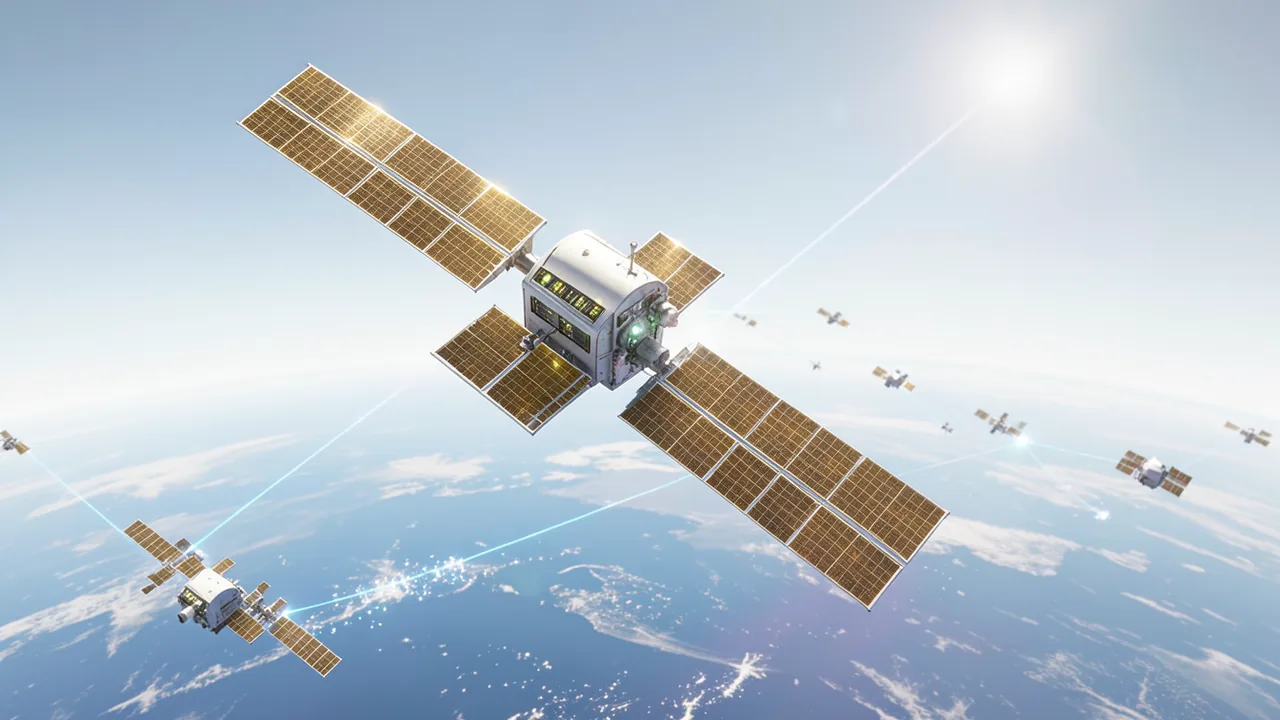
The Federal Communications Commission (FCC), the US agency that handles radio spectrum and satellite licenses, among other things, approved a SpaceX application on November 25, 2026. Elon Musk's space company may now put up to one million satellites into orbit to work as data centers for artificial intelligence. The project is called Starmind. The satellites would run on solar power, handle AI workloads in orbit and beam the results back to Earth.
FCC Chairman Brendan Carr celebrated the decision in a statement:
"This decision opens a bold new frontier for the computing infrastructure that will power America's leadership and growth."
According to Gizmodo, this is the first time the FCC has approved a complete constellation of orbital data centers. A constellation is a network of many satellites working together. Musk said thanks on X, which is now part of SpaceX, calling it "a big win for America and the world."
How Starmind is supposed to work
The basic idea: data centers on Earth need huge amounts of power and often a lot of water for cooling, and they face pushback from local residents. In space, the sun shines almost nonstop, and there are no neighbors to complain. Musk said in March:
"On Earth, you're limited by power. Space has the advantage that it's always sunny."
According to SpaceX's application, as quoted by the Seattle Times, the satellites would orbit at altitudes between 500 and 2,000 kilometers, on paths that keep them in near-constant sunlight. That means they barely need batteries. Instead of water cooling, SpaceX is betting on radiative cooling: heat is shed as infrared radiation into cold space, a bit like a radiator giving off warmth, just without any air around it. The satellites would talk to each other over laser links, sending data via light beams instead of radio. According to CNET, results would reach Earth through the existing Starlink network. SpaceX pitches Starmind as a cheaper, greener alternative to data centers on the ground, but there's no evidence for that yet.
According to Space.com, the first Starmind satellites are slated to launch in the third quarter of 2027 aboard Starship, SpaceX's fully reusable giant rocket. On its last two test flights, Starship deployed a total of 52 next-generation Starlink satellites.
The FCC's conditions
According to Gizmodo, the license includes firm deadlines:
| Milestone | Deadline |
|---|---|
| First operational satellite | November 2033 |
| 10% (100,000 satellites) | November 2035 |
| 50% (500,000 satellites) | November 2038 |
| Full constellation (1 million) | 2040 |
The sources partly contradict each other here: CNET writes that the first satellite must launch by 2030 and that the application was filed in May. Gizmodo and the Seattle Times, on the other hand, give January as the filing date (Gizmodo specifically says January 30).
The FCC didn't wave everything through. SpaceX wanted an exemption allowing it to push satellites above 600 kilometers into so-called graveyard orbits at the end of their lives. These are higher parking orbits where retired satellites stay permanently instead of burning up in the atmosphere. The agency said no, arguing that SpaceX hadn't provided enough information about its planned disposal process.
Staggering numbers and a launch problem
To get a sense of the scale: since the dawn of the space age in 1957, humanity has launched about 28,000 satellites in total, according to Space.com. The largest constellation so far, today's Starlink network, has around 11,000 satellites. CNET puts the figure at 11,195. It took SpaceX seven years to get there. According to Gizmodo, Starmind would increase the number of satellites in Earth orbit roughly fiftyfold. On top of that comes the planned next-generation Starlink network with around 100,000 satellites.
All of this requires an enormous number of launches. According to Space.com, a single Starship can carry at most 60 Starlink V3 satellites. That means around 1,700 launches for 100,000 Starlinks alone, and since each satellite only lasts about five years, replacements would have to go up constantly. One analysis cited by CNET estimates that SpaceX would need roughly 5,000 Starship launches per year for Starmind. Last year, there were 330 rocket launches worldwide in total. Ian Christensen of the Secure World Foundation, an organization focused on sustainable space activities, told CNET:
"We don't have the launch capacity for any of this. Not even SpaceX for its own constellation, let alone the other ones being planned."
SpaceX is already using more and more of its rockets for its own satellites. According to a Reuters analysis, Starlink's share of Falcon 9 missions rose from 54 percent in 2020 to about 79 percent in 2026.
Why AI matters so much to SpaceX
Over the past year, AI has become the core of SpaceX's business strategy. According to Space.com, the company sees a long-term total addressable market of $28.5 trillion, nearly $23 trillion of which comes from enterprise AI applications. At its IPO in June, SpaceX explicitly tied its future growth to the AI business, the Seattle Times reports. Orbital data centers were a central part of its pitch to investors.
SpaceX isn't alone with this idea. Google has launched its own program, "Project Suncatcher," and in October sent its first chips into space on a Planet Labs satellite, riding on a SpaceX rocket. Starcloud has also launched a test satellite. In March, Jeff Bezos' Blue Origin asked the FCC for up to 51,600 satellites for "Project Sunrise," designed to work with its planned TeraWave internet service. That application hasn't been approved yet. Cowboy Space has announced similar plans as well.
Carr frames the whole thing politically. Data centers, he said, are "essential to securing America's leadership in SI." SI stands for "superintelligence," the Trump administration's preferred term for AI.
Fierce criticism from astronomers and rivals
According to the Seattle Times, the application drew more than 1,500 public comments. Amazon, with its Kuiper (Amazon Leo) satellite internet service, Viasat and the American Astronomical Society formally asked for it to be denied. In March, according to CNBC, Amazon called Starmind "a lofty ambition rather than a real plan": SpaceX would need "centuries," and there were few details on how the company intends to deliver on its "big promises." Carr fired back that Amazon should focus instead on the fact that it's missing its own deployment targets.
The critics' main concerns:
- Collisions and space debris: The more crowded the orbit, the more avoidance maneuvers are needed. Today's Starlink satellites detect impending collisions on their own and dodge them, and SpaceX is considered very good at this. But a single crash can leave debris behind for decades. In the worst case, a chain reaction (known as Kessler syndrome) could render parts of orbit unusable for everyone.
- Astronomy: Countless satellites interfere with ground-based observations and brighten the night sky.
- Atmosphere: Satellites burning up on reentry leave behind aluminum particles that can damage the ozone layer. A paper published this week in Earth and Space Chemistry, according to CNET, estimates that the Starmind plan would increase pollutants in the upper atmosphere more than 150-fold compared with the previous year.
The FCC declined to carry out a full environmental review and dismissed objections about the environment and optical astronomy on the grounds that they fall outside its jurisdiction. Astrophysicist Jonathan McDowell, who tracks satellite launches, called that a "blank check" in comments to CNET:
"Launch as many satellites as you can, and we'll just see what happens. I think it's a mistake by the FCC."
Astrophysicist and author Adam Becker was even blunter, telling CNBC that any serious attempt would further pollute the night sky and risk a chain reaction of collisions, "a disaster for all of humanity." SpaceX did not respond to requests for comment from several outlets.
The bigger picture
Above all, the approval is a regulatory signal: the US government wants to actively promote data centers in space and frames them as a matter of national AI leadership. Whether Starmind will ever be built at the approved scale is a completely open question. The number of launches required exceeds anything that exists today many times over. Starship is still in testing. And nobody has shown yet that computing in orbit is actually cheaper and greener than on the ground. Those are company claims. Practical questions the sources don't address also remain open: How do you service broken hardware, and how well do AI chips hold up against radiation in space?
The process itself also deserves scrutiny. The FCC explicitly set aside key environmental and astronomy concerns. Carr publicly picked a fight with rival Amazon and announced the approval on X, the applicant's own platform. For AI users, nothing changes for now. In the long run, though, this will decide whether AI's hunger for power and water on Earth actually gets solved or just gets shifted into orbit, with consequences for a sky we all share.
Related videos
Sources
- Bing News (en-US) space.com
- Bing News (en-US) seattletimes.com
- cnbc.com cnbc.com
- gizmodo.com gizmodo.com
- cnet.com cnet.com
- Reddit r/artificial linkedin.com
- dev.to #ai dev.to
- Zeit Digital (DE) zeit.de
- Bing News (en-US) androguider.com
- Bing News (es-ES) es.finance.yahoo.com
- dev.to #ai dev.to
- Gigazine (JP) gigazine.net
- Google News (DE) news.google.com
Ask the AI assistant
Questions about this article, installation or background? Our assistant knows this page and runs on our own machine, not in someone else's cloud.
The Assistant is an AI (Gemma 4) and can make mistakes – please check important details against the source. Questions are used only to generate an answer and are deleted after one hour. Please don't enter any personal data.



Comments
What do you think? Already tried it? Write it here, no sign-up needed.
Comments are public. Links aren't allowed, and we delete abusive posts. You can delete your own comment at any time in this browser. Learn more in the Privacy Policy.