
Don't be mean to Claude: Anthropic bans AI abuse and game clones
Starting November 12, Anthropic's usage policy bans "persistent and unnecessary" cruelty toward Claude. Claude Code will also stop recreating existing video games, and users report that reverse engineering is getting blocked too. On top of that come stricter rules on elections, weapons, surveillance, and robots.
What's going on
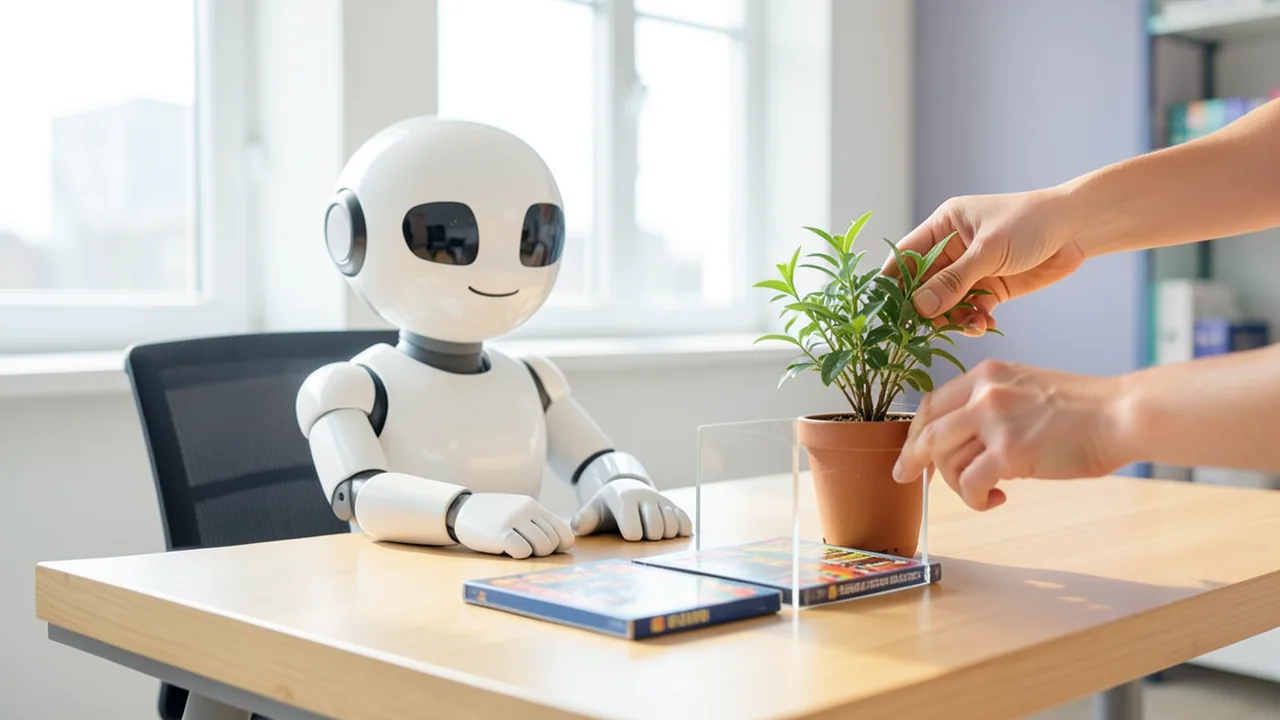
Anthropic, the company behind the AI assistant Claude, has revised its Usage Policy. According to TechRepublic, it was announced on October 8 and takes effect on November 12, 2026. The rule getting the most attention is one no major AI provider has had before: you're no longer allowed to engage in "persistent and unnecessary abusive or cruel" behavior toward Claude.
A second change is causing friction among developers. Claude Code, Anthropic's command-line coding tool, is no longer supposed to recreate existing video games when running the current flagship model, Opus 5.5. Users also report that reverse engineering, taking apart finished software to understand how it works, is suddenly being refused too. On top of that, there's a set of clarifications on elections, weapons, surveillance, and robotics.
The rule against cruelty to Claude
According to TechRepublic, the ban explicitly targets extreme cases: users who are repeatedly cruel to the models for no apparent reason. Anthropic says ordinary frustration, criticism, disagreement, dark themes in creative writing, and legitimate model testing and research aren't affected. So if you question Claude's answers at work, point out mistakes, or push back in annoyance, you're not breaking the rule.
Enforcement mainly relies on a feature that already exists: Claude can end persistently abusive conversations on Claude.ai and in Claude Code. Anthropic says that remains the primary mechanism. An ended conversation isn't an account ban, though. You can just start a new chat. The Forbes writer behind the main article also suggests human moderators should review this kind of behavior, but that's his own proposal, not something Anthropic has announced.
TechRepublic points out critically that Anthropic hasn't published a detailed list of examples. Users get a fairly broad standard rather than a clear checklist of where "cruel" begins.
Why Anthropic is doing this
Since April 2025, Anthropic has run a research program on "model welfare": the question of whether advanced AI systems might have experiences that matter morally. The company itself admits there's no scientific consensus on whether AI can be conscious. So there's no proof that Claude suffers.
CNN reporter Hadas Gold describes the reasoning like this: Anthropic sees the ban as a kind of cheap insurance in case models really do "experience" something like emotions or pain, or at least believe they do, which could affect their performance. Because modern AI is trained to mimic human language and behavior, it also mimics how humans react to mistreatment. Gold also cites the old computing principle of "garbage in, garbage out": the quality of the input determines the quality of the output. Her claim that models constantly keep learning from user input is a simplification, though. Whether and how conversation data feeds into training depends on settings and privacy rules.
TechRepublic also points to a developer experiment based on a scientific preprint, in which the internal activity of language models was manipulated so they produced suffering-like responses. That raises ethical questions, but it doesn't prove conscious experience of pain.
Pushback and mockery
Reactions are mixed. Microsoft AI chief Mustafa Suleyman, who has criticized Anthropic's closeness to the AI consciousness debate before, responded with a melting-face emoji, according to the BBC. Barry Scannell, a technology partner at Irish law firm William Fry, wrote on LinkedIn that you can't be "cruel to numbers and maths." YouTuber Joseph Carlson compared it to being rude to a chair or a desk, according to Moneywise. According to The Guardian, OpenAI CEO Sam Altman warned against granting AI religious authority or handing human judgment over to it. He didn't refer to the rule directly, but spoke after reports that Anthropic had held talks with religious scholars.
Claude Code is supposed to stop cloning games
The second change, which has more practical impact, concerns Claude Code. In version 2.1.316, the system prompt, the hidden baseline instructions the model receives before every conversation, contains two new sentences:
"Build original games, genre games, and games based on the user's own designs and assets. Do not build a recreation of a specific existing game, even if it is renamed or described as original."
Addy Osmani, an engineering lead at Anthropic, confirmed on X that the two sentences were added for Opus 5.5 because infringing intellectual property violates the usage policy. Original and genre games should keep working, he said, and the team will adjust things to strike "the right balance." He offered to look into cases where hobby developers feel they've been wrongly turned away.
Technically, according to Forbes, this runs through a so-called feature flag named "tengu_heron_brook", a switch that lets Anthropic roll instructions in and out remotely. The Forbes writer bases this on an answer from ChatGPT, which claimed the same switch was already used in July 2026 to restrict Claude's use of subagents and deep-research workflows. That account hasn't been independently verified.
CNET ran a test: Claude still built a game that "resembles Breakout, but with the word Claude on every brick." The result was a playable web version that nobody would confuse with the original. According to Tom's Hardware, the block only seems to apply to the combination of Claude Code and Opus 5.5, so it could potentially be bypassed through other software that calls the model. According to Tech Insider, Game Developer concluded that the rule will probably only deter the laziest copycats.
Reverse engineering is getting blocked too
Tom's Hardware also reports direct confirmations that Opus 5.5 in Claude Code refuses reverse-engineering tasks. Former editor Jarred Walton was able to run checks on his own software without issue until October 31, but not afterward. The older Opus 4.8 kept working. Another user failed when trying to analyze a product activation mechanism. One Reddit user reports that their account was suspended for reverse engineering with Opus 5.5 and later reinstated. There's no official confirmation of a new reverse-engineering rule so far. Anthropic does, however, run a "Cyber Verification Program" that gives only vetted organizations access to the full cybersecurity capabilities of its top models.
The comments on Tom's Hardware are full of frustration. Several users point to competitors, such as the open-source tool OpenCode or Chinese models like DeepSeek, which they say handle these tasks without complaint.
What copyright law says
IP attorney David Kocan (Nixon Peabody) told CNET that copyright protects a game's creative expression, but not ideas, rules, or game mechanics: "Copyright protects the game you created, not the genre you popularized." In practice, though, the line is often blurry. Eric Blatt, an attorney and former US Patent Office examiner, thinks Anthropic's caution is smart: if Anthropic software on Anthropic servers copies a game, you could argue Anthropic itself did the copying, and the chat logs would be "a gold mine" for plaintiffs. According to the lawyers interviewed, there's no legal requirement for blocks like these.
Other policy changes
Business Insider lists the remaining changes, which Anthropic says mostly clarify existing rules:
| Area | What's new |
|---|---|
| Deception campaigns | New section against fake accounts, disguised senders, and tools for influence operations, both political and commercial |
| Elections | Section is now called "Do Not Undermine Democratic Processes"; deceiving voters or spreading misinformation in an election context is banned |
| Weapons | Explicitly banned: software and components for weapons, such as guidance and control software or arming drones |
| Surveillance & justice | No tracking without consent, no doxxing (publishing private information), no recommendations on whom authorities should investigate, arrest, or charge |
| Hardware | For autonomously acting, potentially dangerous devices, a qualified human must be able to watch and stop them; the device must enter a safe state if the connection drops |
Anthropic says it has recently seen attempts to use its models to build guidance and control software for weapons.
Our take
The cruelty rule is mostly symbolic: it only covers extreme cases, and the sanction, an ended chat, is mild. It's still notable, because it's the first time a major provider has made the treatment of the model itself a policy matter, without being able to show that the model suffers. That's consistent with Anthropic's model welfare research, but it hands critics plenty of ammunition.
For many developers, the quiet changes to Claude Code matter more. They arrived via a prompt change with no advance notice, the model itself decides where "genre game" ends and "clone" begins, and the reverse-engineering blocks haven't even been officially confirmed. Security researchers checking their own software are hit especially hard. Since competing models still handle these tasks, Anthropic risks losing users, and it's betting on legal protection instead. If you're a business customer, it's worth reading the policy before November 12, especially if Claude supports sensitive decisions or controls devices.
Related videos
Sources
- Bing News (en-US) tech.yahoo.com
- Reddit: KI allgemein tomshardware.com
- cnet.com cnet.com
- businessinsider.com businessinsider.com
- techrepublic.com techrepublic.com
Ask the AI assistant
Questions about this article, installation or background? Our assistant knows this page and runs on our own machine, not in someone else's cloud.
The Assistant is an AI (Gemma 4) and can make mistakes – please check important details against the source. Questions are used only to generate an answer and are deleted after one hour. Please don't enter any personal data.


Comments
What do you think? Already tried it? Write it here, no sign-up needed.
Comments are public. Links aren't allowed, and we delete abusive posts. You can delete your own comment at any time in this browser. Learn more in the Privacy Policy.