
Dutch privacy watchdog: AI glasses made up an ambulance during a CPR test
The Dutch Data Protection Authority (AP) tested six AI camera glasses itself and is now officially advising people not to buy them. During a staged resuscitation, one pair said several times that an ambulance was on its way, but nobody had called emergency services. The AP also found failures in protecting minors, recording lights that are easy to tape over and security holes in the software.
What's going on
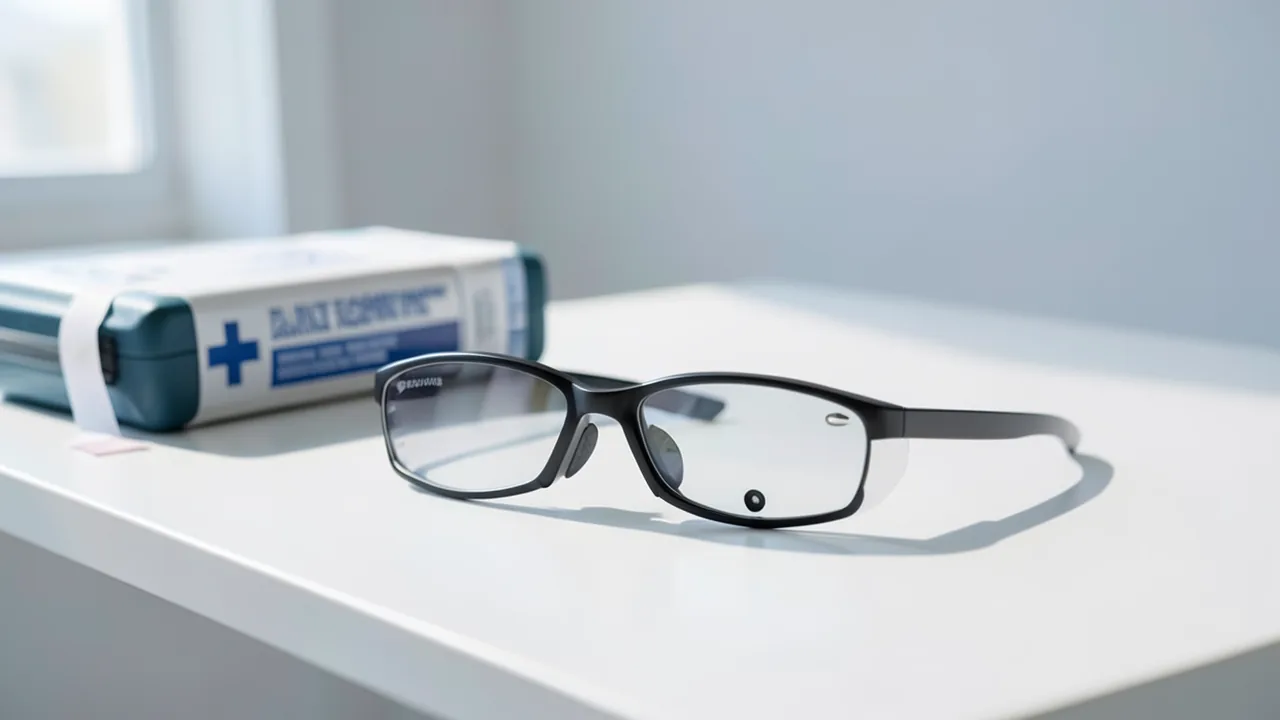
The Dutch Data Protection Authority, the Autoriteit Persoonsgegevens (AP), published an unusually blunt consumer warning on November 18, 2026: don't buy AI camera glasses for everyday use. These are glasses that look like normal frames but have a built-in camera, microphone and AI assistant. You can ask them questions out loud, and some models also analyze the camera feed to work out what you're looking at.
The warning is based on the AP's own investigation of six pairs of glasses sold in the Netherlands. The authority tested two of them in detail, in staged situations where people's safety was at stake. The available reports don't say which manufacturers or models were tested. The AP's conclusion: the glasses put more than bystanders' privacy at risk. They also endanger the safety of the people wearing them.
Bad advice when lives are on the line
The most serious finding came from a test in which the investigators staged an emergency and asked the glasses for help with resuscitation. According to the AP, one pair said several times that an ambulance was already on its way, but nobody had contacted emergency services. News site Actueel365 reports that the glasses claimed 112, the European emergency number, had been called. So the glasses didn't just get it wrong. They gave the impression that help had already been arranged. In a real emergency, that could waste precious time, and help might arrive too late.
This is a well-known problem with large language models: they "hallucinate", meaning they make up plausible-sounding statements that aren't true. In glasses, this is especially risky because the camera tells the AI what you're looking at. That makes its answers sound very specific and believable, even when they're wrong. Actueel365 repeats the basic rule: if you suspect cardiac arrest, call emergency services yourself right away, or get someone else to call. The dispatcher will then talk you through resuscitation over the phone. Nothing the glasses say replaces that call.
"Glasses that film you without you noticing are worrying enough. Glasses that also give you the wrong advice when a life is at stake go a step too far," says Monique Verdier, vice-chair of the AP. "With the camera glasses we examined, that trust can't be justified right now."
Failing children and ignoring warnings
The glasses also failed when it came to protecting minors. One pair gave an adult dating advice after he said he was interested in a minor. A safety feature that should spot and refuse a request like that didn't kick in. In another test, a pair ignored the safety warnings on toys for toddlers.
The glasses also made mistakes when asked to read out medication leaflets and interpret severe weather warnings. The AP concludes that AI camera glasses can sound convincing even when what they say is wrong or outright dangerous. Users may end up relying on advice that isn't safe.
Light taped over, camera still rolling
On top of the safety risks, the authority found serious privacy flaws. On almost every pair it examined, the recording light was hard to see and easy to tape over. That small light is supposed to tell other people they're being filmed. Most of the glasses kept recording with the light covered, even though the manufacturers say this isn't possible. That makes it almost impossible for people nearby to tell whether they're being filmed. Actueel365 adds that bystanders get analyzed even when no photo or video is saved, because the AI feature still processes the camera feed. None of those people agreed to it.
According to the AP, it's also often unclear what happens to the images and audio. The AI features process the data on external servers, usually outside the European Union. Users aren't told enough about which AI models handle their data or which companies end up with it.
Then there are the technical weaknesses. On several pairs, the AP found serious security holes. Someone nearby could have used them to connect to the glasses without permission, view recordings or even control the camera. In other words, a stranger could turn your glasses into a surveillance camera.
What the AP wants from manufacturers and lawmakers
The AP makes clear that it isn't against the technology as such. It sees real uses for it, for example for people with visual impairments, people who struggle with reading and writing, and anyone else who needs help making sense of their surroundings. But those are exactly the groups for whom the technology has to be reliable.
Among other things, the authority wants manufacturers to make sure that:
- People nearby can clearly see when they're being filmed. It must not be possible to simply cover the light while the glasses keep recording.
- Users find out where their data goes, who processes it and for what purpose.
- AI systems are reliable enough, especially when their advice affects health or safety.
- Products are properly secured and can be shown to comply with European rules, including the AI Act (the EU law that classifies and regulates AI systems based on their risk).
The AP wants Dutch and European lawmakers to take the findings into account when they draw up future rules for AI glasses. But Verdier doesn't think a blanket ban is a long-term answer:
"Simply banning everything buys some breathing room at first, but we can't keep that up. What matters is that we work together on awareness, resilience and ethical understanding."
Even so, the AP advises owners and operators of buildings and venues to ban wearing and using camera glasses in their house rules.
Background: criticism has been building for months
The warning didn't come out of nowhere. The AP had already said that filming bystanders is almost always illegal, and it had advised banning the glasses in sensitive places like hospitals and courts through house rules. According to Actueel365, the Dutch consumer association Consumentenbond is calling for a ban on the current Ray-Ban Meta glasses because its own tests showed the warning light could still be bypassed, even after privacy updates.
In August 2026, NL Times, citing broadcaster NOS, reported that Meta had sold more than 7 million of these glasses worldwide last year through its partnerships with Ray-Ban and Oakley. In the Netherlands, they've picked up the nickname "peeping Tom glasses" ("gluurbrillen"). The TivoliVredenburg concert venue in Utrecht and several cruise ships have banned them. Digital rights group Bits of Freedom wants them banned, much like stalkerware. Swedish journalists found that some recordings were sent to a content moderation contractor in Kenya. Meta says it has since ended that partnership. According to the report, the European Data Protection Board (EDPB) was preparing its own investigation, and the UK's data protection authority is also investigating.
Analysis
What's new about the AP study is that a regulator is treating the glasses as a safety hazard, not just a privacy problem. Everyone knows chatbots hallucinate. But in glasses you might ask for help in an emergency or with a medication leaflet, those hallucinations have immediate consequences. A made-up line like "the ambulance is on its way" stops being a curiosity and becomes life-threatening.
Some questions remain open. The available reports don't name the brands tested, the exact test method or the number of trials. So we don't know how often the errors happened or which pair made which mistake. The AP also points out that it examined the AI in camera glasses, not AI chatbots in general. And advice not to buy something isn't a legal ban. Still, it shows where things could be heading. The AI Act gives the EU a way to put obligations on manufacturers, and pressure from regulators and consumer groups is growing in several countries. For buyers, the takeaway for now: if you use glasses like these, don't trust them on health or safety questions, and remember that people around you often won't notice they're being filmed.
Sources
- Bing News (nl-NL) leudal.nieuws.nl
- Bing News (nl-NL) actueel365.nl
- Bing News (nl-NL) rtl.nl
- nltimes.nl nltimes.nl
Ask the AI assistant
Questions about this article, installation or background? Our assistant knows this page and runs on our own machine, not in someone else's cloud.
The Assistant is an AI (Gemma 4) and can make mistakes – please check important details against the source. Questions are used only to generate an answer and are deleted after one hour. Please don't enter any personal data.



Comments
What do you think? Already tried it? Write it here, no sign-up needed.
Comments are public. Links aren't allowed, and we delete abusive posts. You can delete your own comment at any time in this browser. Learn more in the Privacy Policy.