
Facial recognition in Western Australia: 1.38M faces scanned, 122 arrests
Western Australia Police ran a five-month live facial recognition trial. It scanned about 1.38 million faces, leading to 122 arrests and nine false alarms. Civil liberties groups say the 0.00065 percent error rate flatters the technology and are calling for more transparency.
What's going on
Western Australia (WA) Police have completed a trial of live facial recognition. According to the Guardian, 1,380,882 faces were scanned across 100 deployments at 43 locations in the capital region and in rural areas. Police say the result was 122 arrests and nine false alarms. The trial ended on Saturday, October 31, 2026. The other sources provide interim figures: at the government's three-month update, the numbers were 905,117 faces, 209 alerts and 79 arrests.
How the system works
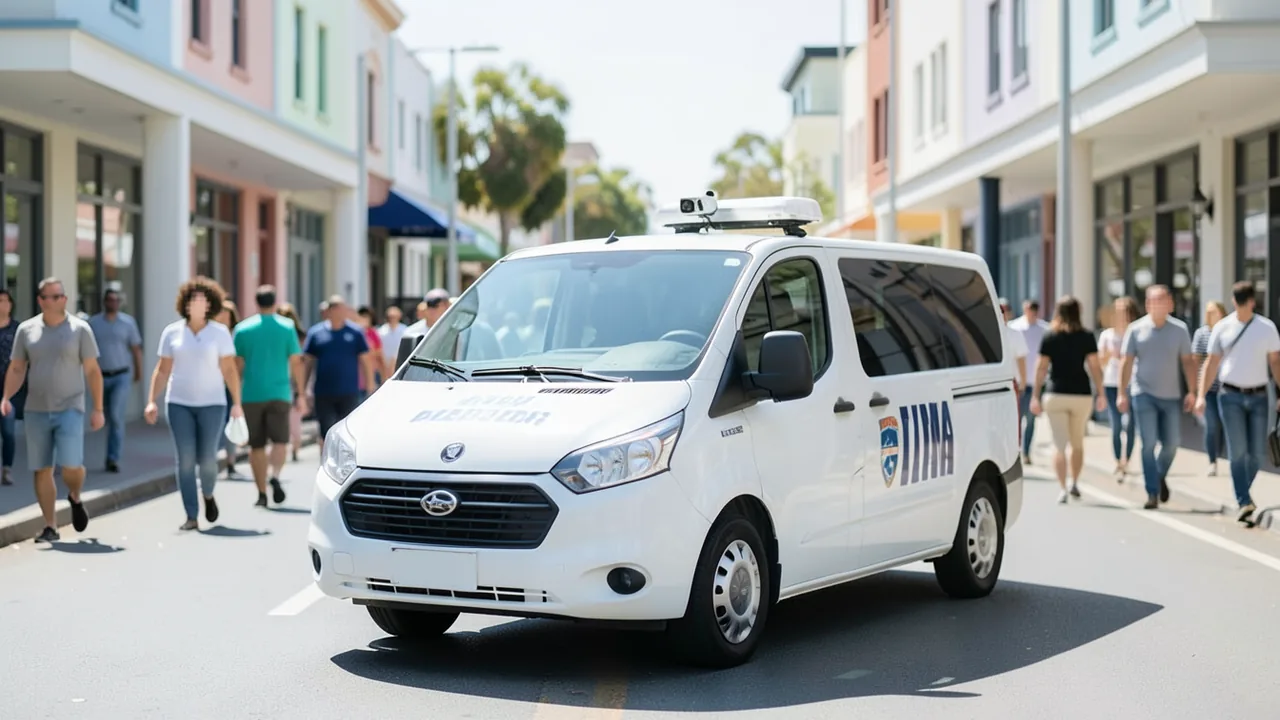
Cameras on or next to marked police vehicles scan faces in designated public areas. The faces are compared against a watchlist drawn from police databases. According to police, images of people who aren't on the list are blurred in real time and deleted immediately. Techtimes reports that the list has around 4,000 entries: people with outstanding warrants, registered sex offenders, missing persons, and people considered a risk to themselves or others. The software comes from NEC (NeoFace). It computes a biometric vector from facial features such as the distance between the eyes or jaw shape, and compares it with the list. If the similarity exceeds a threshold, an alert appears in the vehicle. Officers check it themselves. According to Police Commissioner Col Blanch, an alert alone doesn't justify an arrest.
The numbers
| Metric | Result |
|---|---|
| Faces scanned | 1,380,882 |
| Deployments / locations | 100 / 43 |
| Arrests | 122 |
| Encounters with registered sex offenders | 146 |
| Welfare checks | 10 |
| False alarms | 9 |
At the Perth Royal Show, 223,749 faces were scanned in three deployments. That produced 15 alerts, three arrests and seven contacts with sex offenders. For the interim update, the government gave examples: a 78-year-old man with a warrant over child abuse allegations was arrested in Perth's city center, and a woman with a warrant that had been outstanding for 426 days was arrested in a parking lot.
The dispute over the error rate
Blanch said no false alarm led to an arrest or a complaint, but each one triggered a conversation with the person. The technology is "not perfect," he said. Bill Rowlings of Civil Liberties Australia says police are "heavily sugarcoating" the results. The true error rate only becomes clear once the 122 people arrested have been through court, he argues. If half weren't convicted, it would be 50 percent. He also notes that almost 1.4 million people were scanned without reasonable suspicion.
Techtimes does the math differently: measured against alerts, the error rate in the first week was about 6 percent (2 false out of 33 alerts). By that calculation, an innocent person was approached on roughly every 15th or 16th valid alert. Given NEC's test figures (1 in 6,000), the outlet suspects police are using a conservative threshold. The value hasn't been published. In the government's interim update, false alarms stood at eight out of 209 alerts, or about 4 percent.
Privacy, bias and the law
According to Techtimes, the privacy regulator OIC WA wasn't involved in the planning and warned of "collective privacy harms." Even brief capture counts as data collection, it said. The new privacy law, the PRIS Act, only took effect in its core principles on July 1, 2026, nine days after the trial began. Among other things, it requires bias risks to be assessed. It's unclear whether the impact assessment published by police was independently reviewed. Unlike the EU, Australia has no ban on real-time biometric identification.
Experts warn about bias: facial recognition has historically had higher error rates for darker skin, women and young people. According to The Conversation, Blanch attributed the eight false alarms in the interim update partly to darker skin, lighting conditions and the quality of reference images. The results say nothing about missed people (false negatives) or about differences between population groups. The makeup of the watchlist is also unclear.
Our take
The trial is the first of its kind in Australia and is likely to shape debates in other states. The figures come mostly from the police themselves. The 0.00065 percent rate is measured against all scans, which almost inevitably comes out tiny when you scan a huge number of uninvolved faces. More meaningful would be the error rate per alert, later convictions and breakdowns by group. The internal evaluation is ongoing, and whether and how the technology will be used permanently remains open. The UK and the US show that faulty matches can have real consequences, such as wrongful arrests.
Sources
- The Guardian – KI theguardian.com
- techtimes.com techtimes.com
- theconversation.com theconversation.com
- wa.gov.au wa.gov.au
Ask the AI assistant
Questions about this article, installation or background? Our assistant knows this page and runs on our own machine, not in someone else's cloud.
The Assistant is an AI (Gemma 4) and can make mistakes – please check important details against the source. Questions are used only to generate an answer and are deleted after one hour. Please don't enter any personal data.
Comments
What do you think? Already tried it? Write it here, no sign-up needed.
Comments are public. Links aren't allowed, and we delete abusive posts. You can delete your own comment at any time in this browser. Learn more in the Privacy Policy.