
Fake CEOs, cloned voices: trio charged over alleged $129 million AI fraud
Three people have been charged in New York with using AI to clone the voices, and sometimes the faces, of company executives and lawyers to steal around $129 million. According to the indictment, they targeted the accounting departments of thousands of companies worldwide, including hospitals and a bank.
What's going on
Federal prosecutors in New York have charged three people who allegedly used artificial intelligence to impersonate company executives and lawyers, stealing around $129 million. The case was reported by the Associated Press (published by outlets including the Korea Times) and by the site Headtopics. The defendants are Jacob Soall (41), Sharon Hazan (54) and Guy Sheetrit (42). They face charges of wire fraud, aggravated identity theft and money laundering. The indictment was filed in US federal district court in New York, and the case is being handled by the US Attorney's Office for the Southern District of New York.
According to the indictment, the scheme ran for more than a year and a half and targeted thousands of companies worldwide. The three were arrested between June and September. The indictment says the defendants come from Spain, the UK, Israel and the United Arab Emirates, though the reports don't say which person is linked to which country.
How the scheme allegedly worked
The approach is a souped-up version of classic CEO fraud: scammers pose as a company's boss to pressure employees into making urgent wire transfers. According to court documents, it played out in several stages:
- The email: First, a message went to the accounting department, apparently from the CEO. In it, "the boss" asked for help with a confidential financial transaction.
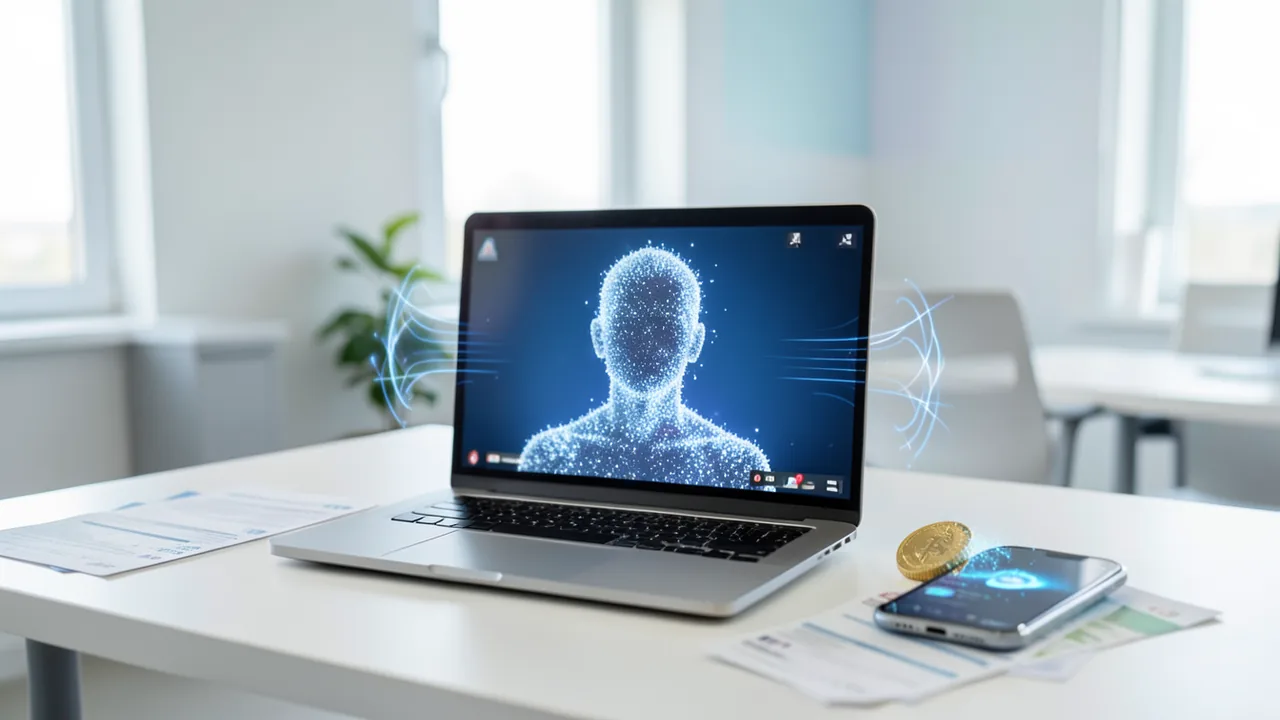
- The AI-powered call: To make the request believable, the scammers then set up a phone or video call. According to the indictment, they used AI to imitate the CEO's voice and sometimes his or her face. In other words, a deepfake: AI-generated fake audio or video that convincingly imitates a real person.
- The fake lawyer: The supposed boss then referred staff to a lawyer at a major law firm. The scammers played that role too.
- The transfer: The fake lawyer told employees to wire large sums to bank accounts around the world.
- The cover-up: According to court documents, the money was converted into cryptocurrency to hide where it came from, then split among the three and other participants.
Bringing in a second person is a clever bit of psychology. When both your own boss and a lawyer from a well-known firm are pushing for a payment, the request feels official, urgent and confidential. That's exactly the mix designed to get past the checks in an accounting department.
A script called "Lawyer Call"
One detail about Jacob Soall stands out. He allegedly specialized in impersonating British lawyers. According to prosecutors, he used a handwritten script for this:
"a handwritten script titled 'Lawyer Call,' which he used to sound like a real lawyer when speaking to and defrauding victims"
So not every part of the scam was high-tech. According to the indictment, AI was mainly used to impersonate the executives, while the lawyer role was apparently played the old-fashioned way, with a prepared script.
Court records say the group used nicknames such as "Rocky Balboa," "Superman Cash" and "Fat Boy." According to prosecutors, Sharon Hazan has a prior record: in 2008, she was convicted in a New York court of conspiracy to commit bank fraud.
The victims: from hospitals to pet food
The victims named in the court documents show how widely the scammers cast their net:
| Victim | Location |
|---|---|
| Hospital systems | Missouri and California (USA) |
| Bank | Rhode Island (USA) |
| Financial technology company (fintech) | United Kingdom |
| Investment fund company | Massachusetts (USA) |
| Pet food maker | Florida (USA) |
The reports don't say how much money each victim lost, or how many of the "thousands" of companies contacted actually paid. It's also unknown which AI tools the scammers used.
What the defendants face and what's still unclear
If convicted, they face up to 20 years in prison on each count, except for aggravated identity theft, which carries two years. All three are presumed innocent until proven guilty.
Much remains unclear. The court docket, which normally lists defense attorneys, was still sealed in online court records on Thursday evening. According to AP, prosecutors didn't immediately respond to a request for comment. It's also unclear whether there are other suspects (the indictment mentions money distributed to "other participants") and whether any of the stolen money has been recovered.
The FBI is using the case as a warning. James C. Barnacle Jr., Assistant Director in Charge of the FBI's New York field office, said:
"As criminals continue to weaponize new technologies, the FBI remains committed to rapidly adapting our capabilities to identify, pursue, and stop those who seek to harm New Yorkers and the businesses that operate here."
The bigger picture
This is one of the largest known fraud cases in which AI-cloned voices and faces allegedly played a central role. The basic idea isn't new: email-based CEO fraud has been around for years. What's new is that the classic safeguard, "if in doubt, call your boss or get them on video," no longer reliably works when AI can recreate a voice and a face. People are far easier to convince when they see and hear someone they trust than when they just get an email.
For companies, the lesson is clear: approval of large payments should never depend on a single phone or video call. Fixed processes help, such as the four-eyes principle, calling back on known numbers you look up yourself rather than ones given during the call, and code words agreed in advance. The red flags are exactly the ones in this indictment: secrecy, time pressure, and a supposed lawyer brought in who supplies overseas bank accounts.
One caveat: so far, all details come from the indictment and statements by law enforcement. There's no public evidence of how the AI fakes were made or how convincing they were. Only a trial will show which allegations hold up.
Sources
- Merkliste: koreatimes.co.kr koreatimes.co.kr
- Merkliste: headtopics.com us.headtopics.com
Ask the AI assistant
Questions about this article, installation or background? Our assistant knows this page and runs on our own machine, not in someone else's cloud.
The Assistant is an AI (Gemma 4) and can make mistakes – please check important details against the source. Questions are used only to generate an answer and are deleted after one hour. Please don't enter any personal data.



Comments
What do you think? Already tried it? Write it here, no sign-up needed.
Comments are public. Links aren't allowed, and we delete abusive posts. You can delete your own comment at any time in this browser. Learn more in the Privacy Policy.