
HeyGen Avatar 6: Digital twins that gesture to the script and talk for 28 minutes
HeyGen has launched Avatar 6, an AI model that turns a single photo or a short video clip into 2K talking videos of a person. Gestures follow what the script is saying, and videos can run for almost half an hour. An independent blind test puts HeyGen in first place, but it also shows where the limits are.
What's new
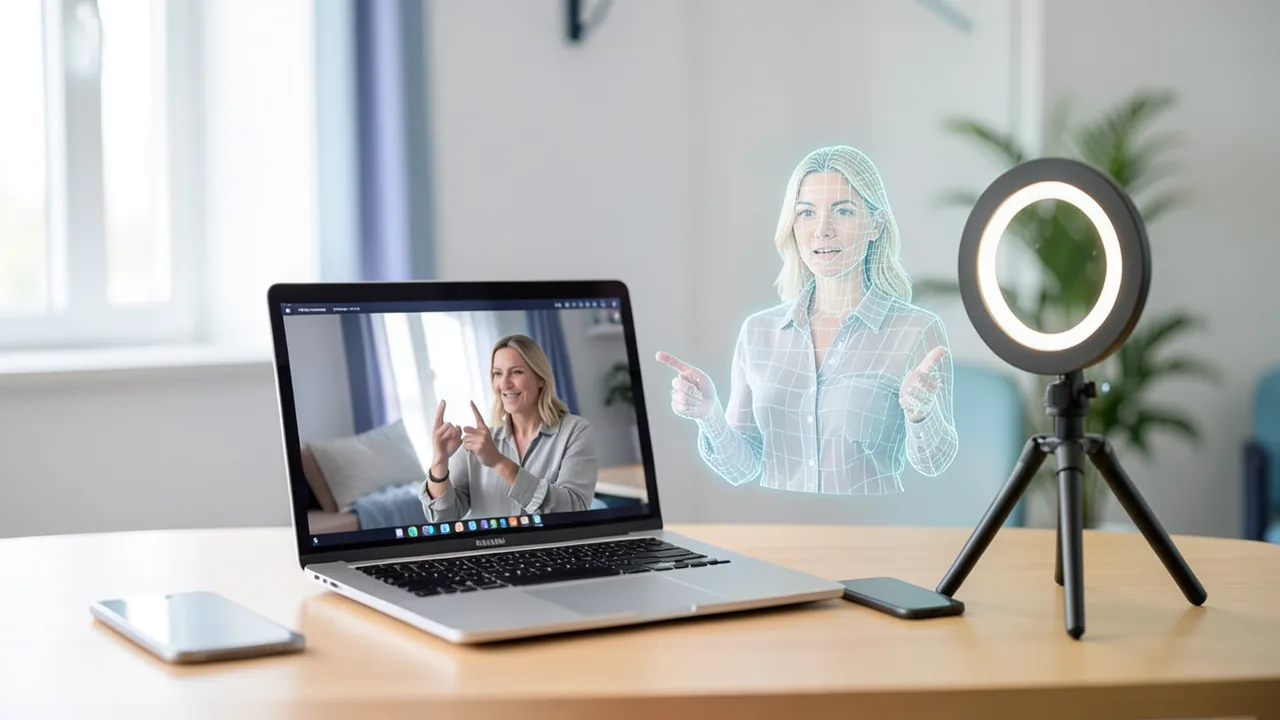
On November 17, 2026, Los Angeles-based HeyGen released Avatar 6, its new AI model for talking avatars. These are digital doubles: from a single photo, plus an optional short video clip, the model generates videos in which the person says any text you give it and moves the way they actually move. The model is available now in the HeyGen web app, the mobile app and through the API. It comes in two versions: Avatar 6 Quality and Avatar 6 Turbo, which uses an accelerated inference pipeline to deliver results faster.
Avatar 6 is "audio-driven": the speech track decides what happens on screen, including lip movements, facial expressions and gestures. According to the press release, 30 seconds of video is enough to create an avatar. HeyGen says you get more varied movement if you upload more footage, which you can also pull straight from YouTube, Instagram or TikTok. Existing "Personal Avatars" are switched to Avatar 6 automatically, so you don't need to record anything new.
This is a commercial product. The model weights are not publicly available.
How it's built
According to HeyGen's technical report, as analyzed by Unite.AI, Avatar 6 is made up of several in-house components:
- a generator that produces the actual video,
- a super-resolution stage that upscales the image and restores fine detail such as skin texture and hair,
- a motion planner that decides which gesture comes when,
- and HeyGen Voice, the company's own speech model, which reads the text in the person's voice.
HeyGen says HeyGen Voice ranked first on the Artificial Analysis leaderboard at launch. Shortly before Avatar 6, the company also introduced "HeyGen Video", its first general-purpose video model. Together, these give HeyGen its own stack for video, voice and avatars and make it less dependent on third-party models.
One key technical change is the inference-time context window, meaning how much material the model keeps in view at once while generating. According to the press release, it grew tenfold, from about 3 to 30 seconds. This is meant to make movement less repetitive. Looping, recurring gestures have so far been a telltale sign of AI avatars.
Gestures that match the content
The headline feature: Avatar 6 reads the meaning of the script and decides on its own where pointing, counting or a directional movement fits. If you want more control, you can set mood, facial expression or hand movements separately. Written motion prompts let you tie an action to a specific point in the text, such as a wave during the greeting or counting on fingers during a list. The motion planner times these actions precisely to the right words. In between, the person's usual body language is supposed to stay intact.
HeyGen CEO Joshua Xu explains the focus on natural-looking delivery like this:
"People decide in seconds whether a video feels like a person is talking to them, and if it doesn't, they stop listening."
Long videos, two speakers and targeted fixes
Many avatar tools still produce fairly short clips. HeyGen, by contrast, shows continuous videos of 25 to 28 minutes, each generated from a single audio track with no repeating loops. The runtime simply follows the length of the speech. The same technology also puts two speakers in one frame. One demo shows a two-minute podcast with a host and a guest, cutting between wide shots and close-ups of both.
The editor for existing videos is especially useful. You can swap out individual words or add a gesture, and the model regenerates only the part that changed. The new words are synthesized in the person's voice. In HeyGen's comparison of 20 edits, Avatar 6 changed 34.4 percent of frames on average. MiniMax H3-max, Wan 3.0, Seedance 2.5 and HappyHorse Edit changed 99.7 to 100 percent, which means they effectively regenerate the whole video. So if you want to fix a slip of the tongue in a finished presentation, you don't have to regenerate the entire recording and lose the rest of the take.
How realistic is it? Numbers and an independent test
HeyGen claims that in a Turing-style test, 84 percent of participants found the avatar just as realistic as the real person. Unite.AI explains what's behind that number: external raters watched a real video and an Avatar 6 video side by side and had to pick the real one. In 42.2 percent of 270 responses, they picked the AI video. Since pure guessing would give 50 percent, HeyGen doubles the figure and arrives at an "indistinguishability score" of 84.4 percent. The test used 20 external raters and featured 76 people. In standalone tests with no direct comparison, raters judged Avatar 6 clips with the person's own voice to be real 65.1 percent of the time. For genuinely real recordings, the figure was 78.9 percent.
Against general-purpose video models, some of HeyGen's own comparisons were close (only responses with a clear preference were counted):
| Comparison | Source material | Avatar 6 share |
|---|---|---|
| vs. Wan 3.0 | Photo | 50.1% (essentially a tie) |
| vs. Kling 4.0 | Video footage | 54.9% |
| vs. Seedance 2.5 | Video footage | 72.4% |
New Measure's Avatar Arena is more independent. There, video creators compared two videos with the same script without knowing which vendor made them, shown in random order. Avatar 6 came first in both categories, with an Elo score of 1,197 for personal avatars and 1,237 for stock presenters. Elo is a rating system borrowed from chess that builds a ranking from many head-to-head matchups; the average here is 1,000. Votes were counted from October 27 to November 16, 2026.
New Measure itself flags the limits of the results. Participants were self-selected, the typical script was 62 words long, and in 97 percent of comparisons both videos were 35 seconds or shorter. So the results tell you nothing about long videos or languages that saw little testing. On speed, HeyGen falls behind: personal avatar videos typically took about three minutes, compared with about one minute for Runway GWM-1 Avatars. One in ten HeyGen videos took longer than nine and a half minutes. Those times don't include avatar setup or speech preparation.
API, limits and consent
In the API, the models are called heygen-avatar-6 and heygen-avatar-6-turbo. The default resolution there is 1080p, not 2K. With the Model API, you send a reference image or video plus an audio file. The Application API instead starts from an existing HeyGen avatar and a script with a voice or audio. There, Avatar 6 currently only works for requests with a single avatar. Raw image jobs, Studio scenes, batch processing and scene editing aren't supported. If you don't specify a model, you still get the previous model, Avatar IV.
With deepfake technology, consent is everything. For an avatar built from video footage, HeyGen requires the person to read a consent statement on camera that includes a session-specific one-time code. The system then checks whether that person matches the person in the training footage. All API customers can use photo references, as long as the person pictured has agreed. Realistic video references are limited to enterprise customers. According to the documentation, consent for video references is verified before submission. However, some contracts can skip this step after a case-by-case review. According to the press release, third-party platforms may only generate photo-based and virtual avatars. Realistic videos of real people stay on HeyGen's own platform.
HeyGen also shares its own company figures: more than 40 million users in 196 countries, more than 118 million videos created, use at 85 percent of Fortune 100 companies and over 200 million US dollars in annual recurring revenue (ARR) since June. In its own survey of more than 1,000 small business owners, 71.6 percent said they had recorded a video for their business at some point and then never published it. That's exactly the audience HeyGen is going after.
Our take
Avatar 6 goes after two well-known weaknesses of AI avatars: movements that keep repeating and the limit to short clips. For companies that churn out training, marketing or explainer videos, script-aware gestures and especially targeted edits of individual passages are real progress. New Measure's blind test backs up HeyGen's claim to lead on short clips.
But much of this rests on the vendor's own numbers. The "84 percent" figure sounds more impressive than it is: in reality, raters took the AI video for the real one in 42.2 percent of direct comparisons. Nobody has independently checked the nearly half-hour demos yet, and the most important comparison, against Wan 3.0, was essentially a tie. On speed, Runway is clearly faster. It's also unclear how strict the consent check really is when large customers can bypass it by contract. The more realistic these digital doubles get, the more that question matters.
Sources
- Unite.AI unite.ai
- finance.yahoo.com finance.yahoo.com
- goodmenproject.com goodmenproject.com
- prnewswire.com prnewswire.com
Ask the AI assistant
Questions about this article, installation or background? Our assistant knows this page and runs on our own machine, not in someone else's cloud.
The Assistant is an AI (Gemma 4) and can make mistakes – please check important details against the source. Questions are used only to generate an answer and are deleted after one hour. Please don't enter any personal data.


Comments
What do you think? Already tried it? Write it here, no sign-up needed.
Comments are public. Links aren't allowed, and we delete abusive posts. You can delete your own comment at any time in this browser. Learn more in the Privacy Policy.