
Inworld open-sources a tiny 48 kHz voice isolation model that runs in real time
Voice AI company Inworld has released a model that pulls voices out of recordings and strips away background noise, at 48 kHz and under the permissive Apache 2.0 license. At roughly 60 million parameters, it's small enough to run cheaply and quickly, even in real time.
What's going on
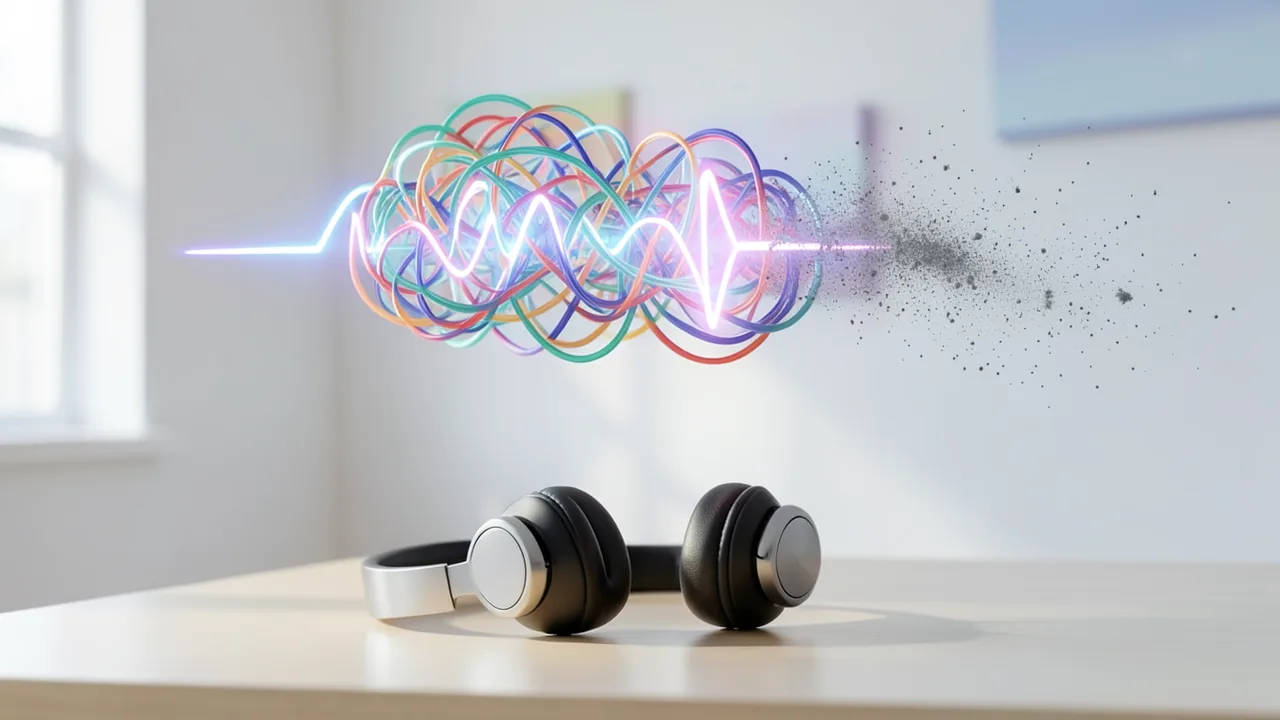
US-based Inworld AI is best known for its text-to-speech models, meaning software that turns text into spoken audio. Now the company has released a freely available speech isolation model. It finds the human voice in an audio recording and separates it from everything else: street noise, music, keyboard clatter, room noise.
The release got noticed on November 18, 2026, in the r/LocalLLaMA forum. Someone there shared a demo video that Victor Mustar had originally posted on X. The Reddit user wrote that Inworld's voice models are "already pretty good" and called this release "a nice surprise for the open-source community."
Key specs
According to the post, the model comes in two variants built for different jobs:
| Variant | Parameters | Processing | Chunk size | Typical use |
|---|---|---|---|---|
| Offline / non-streaming | 64M | full segments | 8 seconds | cleaning up finished recordings |
| Real-time / streaming | 58M | continuous stream | 20 milliseconds | live calls, streams, voice assistants |
Also worth knowing:
- 48 kHz sample rate: The audio signal is measured 48,000 times per second. That's the studio and video standard, and well above the 16 kHz many speech models use. It keeps the high frequencies of the voice intact, such as sibilants.
- Apache 2.0 license: A very permissive open-source license. You can use the model commercially, modify it and build it into your own products.
- Training data: around 10,000 hours of audio.
Offline vs. real time
The two variants handle audio differently. The offline variant looks at 8 seconds at a time, so it has more context to work out what's voice and what's noise. That suits finished recordings like podcasts, interviews or videos, where waiting a bit doesn't matter.
The real-time variant works with tiny 20-millisecond chunks, one fiftieth of a second. That means it can process audio as someone speaks, with very little delay. You need that for video calls, livestreams or voice assistants that have to understand you over background noise. The tradeoff is less context, so the offline variant will probably do a slightly cleaner job on difficult recordings. No independent measurements exist yet.
What it can't do
The Reddit post flags an important limitation: the model is not a speech enhancement or restoration tool. Programs like Resemble Enhance try to make a bad recording sound better overall. They rebuild muffled highs, smooth out distortion and make a cheap mic sound like a studio. Inworld's model doesn't do any of that. It just separates the voice from everything else. A noisy recording from a bad headset will sound less noisy afterwards, but it won't sound like a better microphone.
The upside, according to the post: the model is "cheap and fast to run." At about 60 million parameters, it's tiny by today's standards. Text-based language models often have a hundred to a thousand times as many.
What you need to try it
Because it's so small, the requirements are modest. The model files are likely a few hundred megabytes at most, probably less. A GPU speeds things up but isn't strictly necessary at this size. The model should generally run on a regular laptop CPU, including Apple Silicon Macs, and in Google Colab. A GPU with 1 to 2 GB of VRAM is more than enough. Keep in mind, though, that the source doesn't list official system requirements, a specific repository or installation instructions. These figures are estimates based on the model's size. You'll most likely need some Python know-how, since audio models like this usually don't come with a one-click app the way Ollama does for LLMs.
The bigger picture
Speech isolation isn't new. There are commercial services for it, features built into video editors and several open-source projects. What makes Inworld's release interesting is the combination: a license that allows commercial use, 48 kHz, a true real-time variant and a very small footprint. That makes it a good building block for voice applications. A voice agent, for example, could filter out noise before speech recognition without noticeably slowing down. It's also a smart strategic move for Inworld, which sells tools for real-time voice AI.
Plenty is still unclear. There are no published benchmarks against well-known alternatives. How reliably the model handles multiple speakers, music with vocals or heavy reverb is unknown. And 10,000 hours of training data is solid but not huge. The community says the demo looks promising. How good the model really is, only your own tests on real, messy recordings will tell.
Sources
- Reddit r/LocalLLaMA reddit.com
- finance.yahoo.com finance.yahoo.com
- markets.financialcontent.com markets.financialcontent.com
Ask the AI assistant
Questions about this article, installation or background? Our assistant knows this page and runs on our own machine, not in someone else's cloud.
The Assistant is an AI (Gemma 4) and can make mistakes – please check important details against the source. Questions are used only to generate an answer and are deleted after one hour. Please don't enter any personal data.



Comments
What do you think? Already tried it? Write it here, no sign-up needed.
Comments are public. Links aren't allowed, and we delete abusive posts. You can delete your own comment at any time in this browser. Learn more in the Privacy Policy.