
Is Huang really the sole guardian of open US AI? We ran the numbers
According to Reuters, Trump and Vance helped put Jensen Huang back in charge of Nvidia because he "alone" protects America's open-weight models. We dug into downloads, usage data, benchmarks and model cards. The verdict: Nvidia does matter for open US AI, just not in the way the White House claims.
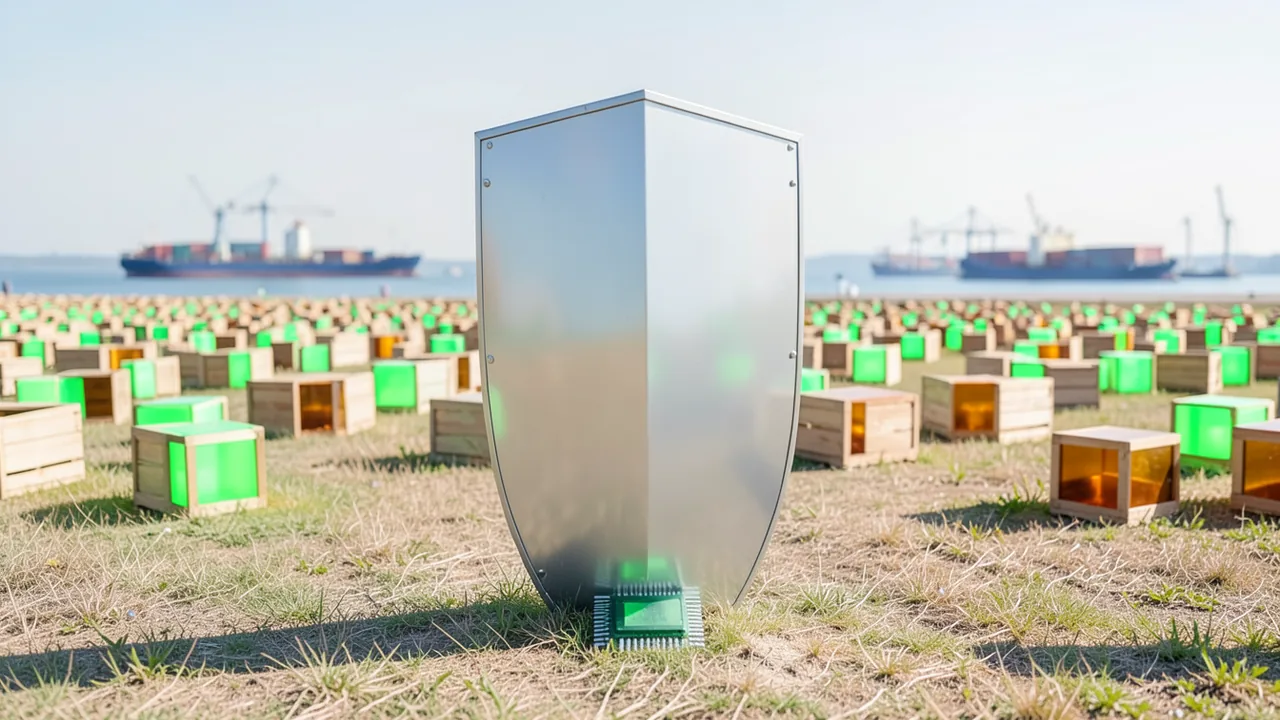
What's going on
As of Monday, November 23, 2026, Jensen Huang is back as CEO of Nvidia. He had stepped down on November 12 after reports surfaced of several affairs, one of them with an alleged Chinese spy. According to Reuters, Donald Trump and JD Vance personally intervened to bring him back. Both were reportedly convinced that Huang alone protects America's open-weight models, meaning AI models whose weights anyone can download and modify. Semafor adds that the pitch cast Huang as a champion of open models and a counterweight to closed providers such as Anthropic and OpenAI. Nvidia board chair Harvey Jones said:
"The board is convinced that Jensen is the right person to lead Nvidia."
That rationale has been making headlines around the world ever since. We put it to the test: how much of open US AI actually depends on Nvidia and its Nemotron model family?
Downloads: Nemotron is in the game, but not leading it
For our sample, we queried each organization's most-downloaded models through the Hugging Face API on November 23. The API counts downloads over the past 30 days. Because we only looked at the top lists, the totals are lower bounds, not complete market shares.
| Model family (developer) | Downloads, 30 days | Basis |
|---|---|---|
| Qwen (Alibaba, China) | approx. 134.9M | Top 25 |
| Gemma (Google) | approx. 24.8M | 12 Gemma models in the top 25 |
| DeepSeek (China) | approx. 21.8M | Top 15 |
| Llama (Meta) | approx. 9.7M | Top 15, almost all older Llama 3 models |
| Nemotron language models (Nvidia) | approx. 8.6M | incl. third-party quantizations |
| gpt-oss (OpenAI) | approx. 7.8M | 20B and 120B |
| Inkling (Thinking Machines) | approx. 1.8M | all models |
| Olmo (Ai2) | approx. 0.8M | Olmo models in the top 15 |
By our count, Nemotron accounts for about 16 percent of the nearly 54 million downloads across the US families listed. Qwen alone has two and a half times as many as all the US families combined. Among Microsoft's 20 most-downloaded models, there's not a single language model from the Phi or Aion series.
One number surprised us: Nvidia's most-downloaded model isn't a Nemotron at all. It's Qwen3.6-35B-A3B in Nvidia's 4-bit NVFP4 format, with 3.77 million downloads. Quantization means storing a model's numbers at lower precision so it gets smaller and faster. Add up every version of a Chinese model in Nvidia's top 25 (Qwen variants plus Kimi K2 Thinking) and you get about 5.0 million downloads. The seven Nemotron language models on the same list reach 5.3 million. In other words, Nvidia distributes Chinese models almost as heavily as its own.
Longer time frames tell the same story. In the ATOM Report by Nathan Lambert and Florian Brand, Nvidia leads the new US providers with 30.7 million cumulative downloads (August 2025 to March 2026). But OpenAI's gpt-oss hit 79 million, Meta 476 million and Qwen 942 million. According to Hugging Face's spring report, Chinese models accounted for 41 percent of downloads between February 2025 and February 2026, US models for 36.5 percent. Hugging Face itself urges caution: the 200 most-downloaded models make up 49.6 percent of all downloads, and automated systems inflate the numbers.
Usage: On OpenRouter, Nvidia really is ahead, in a small niche
OpenRouter is a routing service that lets developers access many models through a single API. Here, Nvidia looks better. According to an analysis of OpenRouter's rankings by Finitizer (30 days to November 13), Nvidia accounted for 3.9 percent of all tokens, or 32.8 trillion tokens. Nemotron 3 Ultra ranked 13th with 1.9 percent, Nemotron 3.5 Super VL 19th with 1.4 percent. No Gemma or gpt-oss model made the top 25. Chinese labs reached 67.5 percent combined, DeepSeek alone 36 percent.
OpenRouter's own newsletter, "The Token State of Play," put open models at 72 percent of tokens in mid-September and Chinese labs at 69 percent. Our math: if nearly all Chinese tokens go to open models, that leaves only a few percentage points for all open models from outside China. Within that niche, Nemotron is the largest identifiable US offering. In the week starting November 16, Nvidia ranked ninth among providers for text requests, with 1.4 percent.
Benchmarks: The best open US model isn't from Nvidia
Artificial Analysis' Intelligence Index rolls many tests into a single score. Current version 5.0.1, open models:
| Model | Developer | Score |
|---|---|---|
| Kimi K3.1 Pro | Moonshot (China) | 46 |
| Hy4 | Tencent (China) | 35 |
| DeepSeek V4.1 Flash 1017 | DeepSeek (China) | 33 |
| GLM-5.3 | Z.ai (China) | 32 |
| Inkling 2 Small | Thinking Machines (USA) | 31 |
| Muse Spark Open | Meta (USA) | 25 |
| Beam 1.0 | Reflection AI (USA) | 18 |
| Nemotron 3.5 Super VL | Nvidia (USA) | 14 |
| Nemotron 3 Ultra | Nvidia (USA) | 12 |
| gpt-oss-120b | OpenAI (USA) | 4 |
| Gemma 4 31B | Google (USA) | 4 |
That puts Nvidia only fourth among US developers. We couldn't find the 48-point score for Nemotron 3 Super that's been circulating. Older scores aren't comparable because the index has been rescaled. According to The Decoder, Nemotron 3 Ultra scored 38 points at launch in June; Nathan Lambert cited 23 points in September.
That said, the two models ahead of Nemotron are indirectly tied to Nvidia. According to Business Insider (cited by TradingKey), Nvidia has invested in Reflection AI and Thinking Machines. TechCrunch reports that Reflection trained Beam on Nvidia GB300 chips, which it sources through deals with SpaceX and Nebius worth more than $7 billion.
"Made in USA," built on Qwen
We checked the model cards of the latest US releases:
| Model | Developer | Base model |
|---|---|---|
| DaisyRose-27B | RadixArk | Qwen3.8-27B |
| Clairic (27B) | Cloudflare | Qwen3.8-27B |
| Clairic-flash (9B) | Cloudflare | Qwen3.5-9B |
| Inkling 2 Mini / Small | Thinking Machines | own model |
| Beam 1.0 | Reflection AI | own pre-training (23.8T tokens) |
| Muse Spark Open | Meta | own model |
| Aion 1.0 Instruct | Microsoft | own model (Phi Silica line) |
| Nemotron 3.5 Lightning | Nvidia | own model |
So three of the ten models are built on Qwen, and those are exactly the ones from startups and infrastructure companies. According to its model card, Cloudflare's decision model Clef is also post-trained on Qwen3.8-27B. We left Maxwell-V1.0-Flash out of the count: we couldn't verify who's behind it or what country the team is from. The pattern matches the ATOM Report. In February 2026, 69 percent of all new derivative models were based on Qwen, and only 11 percent on Llama. According to Hugging Face, there are more than 113,000 Qwen derivatives.
Where Nvidia's real leverage lies
Nvidia's actual influence lies less in Huang himself than in structures:
- Hugging Face: On September 3, Nvidia announced it would acquire the most important platform for open models for $12.93 billion. The deal isn't expected to close before the first half of 2027. According to Reuters, the US Department of Justice is examining whether it would give Nvidia control of a key distribution channel for AI models. Nvidia has pledged that the platform will stay open and won't require Nvidia hardware. The company says it has already published more than 500 models and 250 datasets there.
- Nemotron 4: According to The Information, the largest variant will have at least 1 trillion parameters. Nvidia only confirms that it's working on it. Reports on the budget conflict: figures cited include $28 billion through 2031 or $7 billion through fiscal 2028. For comparison: Kimi K3 has 2.8 trillion parameters, DeepSeek V4 Pro 1.6 trillion.
- Investments and licenses: Nvidia is investing in Reflection AI and Thinking Machines and is paying $6 billion to license Poolside's technology. Nemotron 3.5 Lightning ships under the relatively permissive OpenMDW-1.1 license.
- Lobbying: On July 24, Huang shared an open letter from 25 companies opposing "premature restrictions" on open models. According to CNBC, signatories included Nvidia, Microsoft, Meta and Palantir; OpenAI and Anthropic were absent. Later reports mention latecomers such as OpenAI and Google, but we couldn't verify the full list.
What happened during Huang's eleven-day absence is telling. According to TechCrunch, interim CEO Colette Kress reaffirmed the company's commitment to open source, and insiders expected no impact on Nemotron.
The dissenting voices
On November 22, Yann LeCun accused Anthropic CEO Dario Amodei of exaggerating AI risks in order to get open models banned, calling it "a new form of medieval obscurantism." Anthropic counters that it has "never advocated a ban on open-weight models" and is instead calling for mandatory safety testing. Anthropic stock briefly fell more than 4 percent to $84.61 on November 23. TradingKey linked the drop to open models but itself called that conclusion premature. In Congress, Republicans including John Curtis, Pete Ricketts and John Cornyn have also criticized Huang's reinstatement. Huang is expected to testify before the Senate Banking Committee in December.
Our take
The claim that Huang "alone" protects open US AI doesn't hold up against the data. On benchmarks, Nvidia ranks fourth among US developers; on downloads, it trails Gemma and Llama. And the US startups shipping new models quickly mostly build on Qwen. The only place Nvidia is genuinely out front is API usage via OpenRouter, and even there, in a very small niche.
Our assessment: Nvidia is still central to open US AI, but as infrastructure and financier. It invests in the labs ahead of Nemotron, supplies the chips they train on, distributes quantizations (including of Chinese models) and may soon own the platform through which all open models are distributed. That depends on budgets, contracts and antitrust regulators, not on one person. It remains to be seen whether Nemotron 4 can actually catch up with China's best. Equally open is whether a Hugging Face acquisition would strengthen open AI or create a new bottleneck in the hands of the chip monopolist.
Sources
- Reuters via Yahoo Finance: Trump saw Nvidia's Huang as protector of open-weight AI models ca.finance.yahoo.com
- Semafor: Huang reinstatement came at Trump's behest semafor.com
- Nvidia-Blog: NVIDIA to acquire Hugging Face blogs.nvidia.com
- Investing.com (Reuters): DOJ-Prüfung der Hugging-Face-Übernahme investing.com
- Artificial Analysis: Open-Weights-Modelle artificialanalysis.ai
- Artificial Analysis: Leaderboard offene Modelle artificialanalysis.ai
- OpenRouter-Newsletter: The Token State of Play openrouter.ai
- OpenRouter Rankings openrouter.ai
- Finitizer: AI Token Usage by Model and Lab (Nov 2026) tools.finitizer.com
- Hugging Face: State of Open Source, Spring 2026 huggingface.co
- arXiv: The ATOM Report arxiv.org
- ATOM Project: Relative Adoption Metric atomproject.ai
- Hugging Face API: Nvidia-Modelle nach Downloads huggingface.co
- Hugging Face API: Google-Modelle nach Downloads huggingface.co
- Hugging Face API: Qwen-Modelle nach Downloads huggingface.co
- Hugging Face API: Nemotron-Suche huggingface.co
- Hugging Face: cloudflare/clairic huggingface.co
- Interconnects: The current balance of power in open models interconnects.ai
- The Decoder: Nemotron 4 aims for one trillion parameters the-decoder.com
- TechCrunch: Reflection debuts Beam techcrunch.com
- VentureBeat: Meta unveils Muse Spark Open venturebeat.com
- CNBC: Nvidia, Microsoft, Meta warn against premature restrictions cnbc.com
- TradingKey: Anthropic Shares Drop Over 4% After Jensen Huang Returns tradingkey.com
- MIT Technology Review: The open-source movement wants Jensen Huang back technologyreview.com
- Winzheng (TechCrunch-Zusammenfassung): Jensen Huang's exit puts Nvidia's support for open source in question winzheng.com
Ask the AI assistant
Questions about this article, installation or background? Our assistant knows this page and runs on our own machine, not in someone else's cloud.
The Assistant is an AI (Gemma 4) and can make mistakes – please check important details against the source. Questions are used only to generate an answer and are deleted after one hour. Please don't enter any personal data.
Comments
What do you think? Already tried it? Write it here, no sign-up needed.
Comments are public. Links aren't allowed, and we delete abusive posts. You can delete your own comment at any time in this browser. Learn more in the Privacy Policy.