
Meta's AI glasses in court: why the wearer, not Meta, usually takes the blame
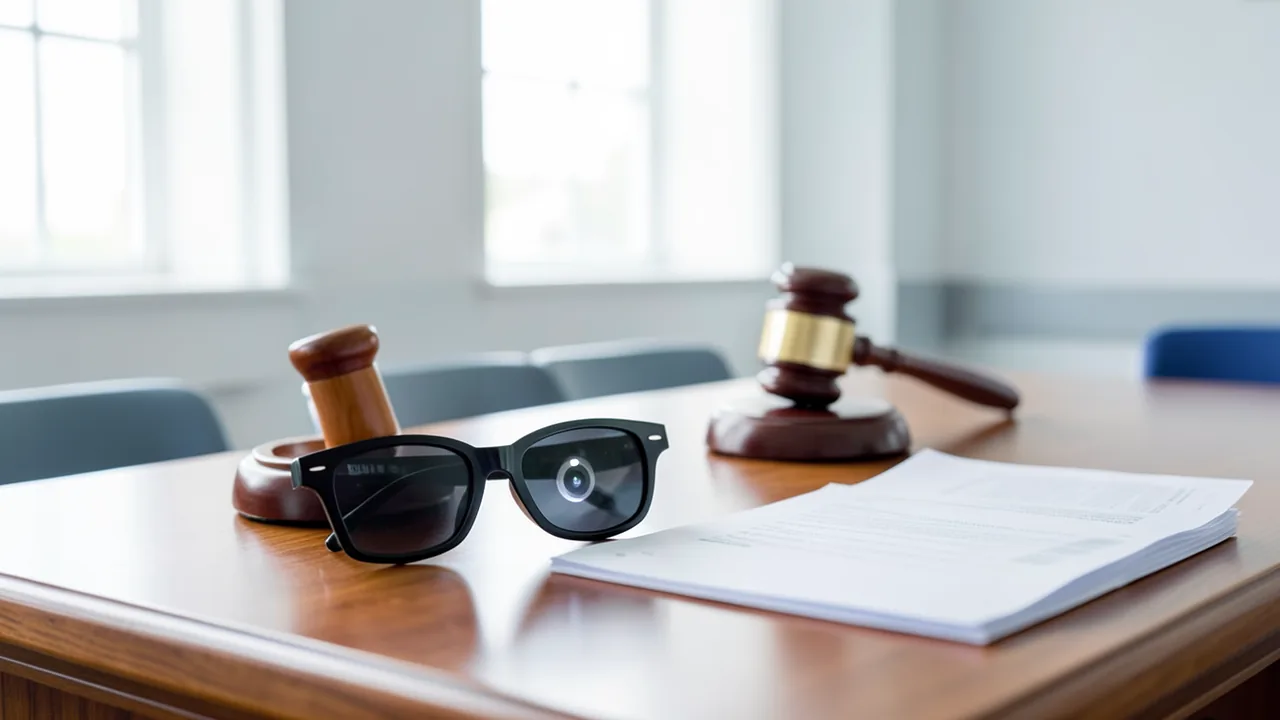
A court in Amsterdam has heard a bid to stop sales of Meta's AI glasses. In Berlin, Germany's federal consumer group vzbv has sued, and in Paris prosecutors are investigating. We put the cases side by side, and one thing stands out: according to data protection regulators, the wearer is liable in most cases. That's especially true if you haven't opted out of AI training.
What's going on
Within just a few days, the camera glasses from Meta and Ray-Ban have ended up in court or on regulators' desks in several European countries. On November 26, a court in Amsterdam heard a bid to stop sales. Since November 24, we've known that the Federation of German Consumer Organisations (vzbv) is suing at the Berlin Court of Appeal (Kammergericht). On November 20, Germany's Bundesrat called for new rules, and prosecutors in Paris are investigating. Meanwhile, Deutsche Telekom has been selling the Meta Ray-Ban Display for €899 since October 13.
Most coverage treats these cases one at a time. Put them side by side, though, and something emerges that hardly anyone knows: according to data protection regulators, in most cases it isn't Meta that's liable but the person wearing the glasses. So we tackle three questions. What are you allowed to do with these glasses in Germany today? What do you risk? And what could a Dutch ruling actually change?
The cases at a glance
| Where | Who vs. whom | What they're asking for | Status |
|---|---|---|---|
| Amsterdam | Offlimits and The Firewall vs. Meta and Luxottica; Consumentenbond vs. Meta (expedited proceedings, kort geding) | Stop sales as long as covert filming is possible; glasses already sold should only record with consent. Consumentenbond: adjust the glasses and default settings within two weeks or face a sales ban (with an exemption for blind and visually impaired users) | Heard on Nov 26; ruling by Dec 24 at the latest |
| Berlin | vzbv vs. Luxottica and Meta (injunction suits, Kammergericht) | Inform buyers in stores, no misleading advertising, data protection by design (Art. 25 GDPR); no ban | Filed; both companies had rejected cease-and-desist letters |
| Frankfurt | HateAid vs. executives at Meta, Ray-Ban, Oakley, Fielmann, Apollo, Mister Spex, MediaMarkt (criminal complaint, Aug 12) | Violation of § 8 TDDDG (disguised recording devices), confiscation of proceeds | Central Office for Combating Cybercrime (ZIT) is assessing initial suspicion |
| Paris | Public prosecutor | Investigation into sexual harassment through filming women | At least one case; brand not named |
| Bundesrat | Opinion on the draft law against digital violence (Nov 20) | § 8 TDDDG should apply if a device technically enables covert recording; exemption for assistive technology | Not binding |
According to NL Times, the Amsterdam plaintiffs consider the glasses a "danger to democratic society." According to RD and NOS, Meta responded that as a provider it can't be held liable for misuse by "a small group of users." A ban, it argued, would hit the "overwhelming majority" of legitimate users and achieve little, since other manufacturers sell similar glasses. Besides, a ban would be a matter for lawmakers or regulators, not the courts. According to Villamedia, Meta's core argument is that the users are responsible.
Why the wearer is in the crosshairs
That argument is a convenient one in court, because Europe's data protection regulators largely agree. On September 10, the Hamburg Commissioner for Data Protection published a 55-page audit report. It explicitly puts the responsibility of the people wearing the glasses front and center. The conclusion: if you record identifiable people outside your close circle of family and friends, you're generally acting unlawfully under the GDPR. Exceptions exist only in rare cases of legitimate interest, because getting informed consent in everyday life is practically impossible. According to the report, Germany's Data Protection Conference (DSK) shares this view.
The key is the household exemption. That's the rule in Art. 2 GDPR under which purely private photos, say from a child's birthday party, fall outside the law. On October 13, the European Data Protection Board (EDPB) confirmed in its Statement 1/2026 that it must be interpreted narrowly. If you share recordings publicly or use the glasses for work, you're a "controller" yourself and must comply with the GDPR in full. Manufacturers, for their part, can't offload their obligations onto users.
The trickiest point is AI training. According to the Hamburg report, Meta uses European users' interactions for training by default unless they object. If images or voices of other people reach Meta this way, a non-private purpose comes into play and the household exemption no longer applies. The wearer then becomes responsible for that data together with Meta, a so-called joint controllership under Art. 26 GDPR. That article actually requires an agreement that divides obligations between the parties. heise reports that Meta doesn't offer such an agreement, so wearers are "on thin ice." On top of that, the authority believes there's typically no legal basis for training on data from bystanders.
What exactly flows into training is contested, though. In Amsterdam, Meta said photos and videos from the glasses aren't used for training unless users share them publicly. According to Notebookcheck, however, the setting "Store visual data from AI experiences" is switched on out of the box. It covers the images you send to Meta AI, for example to translate a menu. You've been able to turn it off since September 24, but that doesn't apply retroactively. For Germany, meanwhile, the Federal Commissioner for Data Protection quotes Meta as saying that neither chats nor images are currently used for training. Our take: if you want to play it safe, turn off storage and object to training. Whether your data really goes unused after that is something outsiders can't verify.
The LED: a signal that often doesn't get through
Legally, a lot hinges on the small white light next to the camera. For the Federal Network Agency, it's the reason the glasses don't count as a prohibited disguised recording device under § 8 TDDDG. According to Correctiv, the agency considers the LED "clearly visible" from up to five meters away. But Correctiv reports that it didn't test the second generation of the glasses. Before the Bundestag's digital committee on November 12, the agency's representative stressed that it can't act on "general unease."
Tests by other bodies paint a much bleaker picture:
| Finding | Source |
|---|---|
| Hard to see outdoors and in sunlight; reliably visible only up close and almost head-on | Hamburg report (Gen 1, firmware v127) |
| If the LED is taped over after recording starts, recording continues, making the LED "completely ineffective" | Hamburg report via Correctiv |
| When you ask Meta AI about your surroundings, Gen 1 glows only faintly and Gen 2 not at all | Hamburg report via Notebookcheck |
| The LED never separately indicates that audio is being recorded too (five microphones) | Notebookcheck |
| Since firmware v128, recording stops about five seconds after the LED is covered | IPVM lab via Notebookcheck |
| Poorly visible and easy to tape over on almost all six glasses tested; most kept filming anyway | Dutch Data Protection Authority (AP), Nov 19 |
| 47% don't know what the LED means; another 14% misinterpret it | Civey survey for HateAid |
The frequently cited 61 percent comes from adding those two figures. The "Meta AI without a light" case stands out: precisely when images are sent to Meta's servers and may end up in training, the person opposite you gets no signal at all from the newer glasses. The Hamburg report concludes that the LED alone doesn't adequately inform bystanders. Wearers would have to do more, such as display notices or announce recordings verbally.
What you're allowed to do in Germany, and what you risk
Here's our overview based on the sources. This isn't legal advice, and there are no court rulings specifically on camera glasses yet.
| Situation | Assessment | Possible consequences |
|---|---|---|
| Photos and videos among family and friends, not published | Generally covered by the household exemption | Low |
| Asking Meta AI with strangers in the frame, without objecting to training | Household exemption no longer applies; joint controllership with Meta | GDPR fine, damages under Art. 82 |
| Filming strangers on the street | Usually unlawful, according to Hamburg | Fine, injunction, deletion |
| Publishing recordings of identifiable people | Consent required (§ 22 KUG, the German Art Copyright Act), except in cases such as public gatherings or people who are merely incidental (§ 23 KUG) | Up to one year in prison (§ 33 KUG) |
| Recording other people's conversations, e.g. at the next table | Privately spoken words, § 201 of the German Criminal Code (StGB) | Up to three years in prison or a fine |
| Filming in homes, changing rooms or toilets; compromising recordings | § 201a StGB; recordings of intimate areas § 184k StGB | Up to two years in prison or a fine |
| Professional use (influencers, tradespeople, medical practices) | Always a controller, full GDPR obligations | Fine, cease-and-desist letter |
According to the law firm JUN Legal, § 201 StGB poses a bigger risk than § 201a, because it isn't tied to a specific location and the glasses always record audio too. Law firm CMS's Enforcement Tracker shows how big fines against private individuals tend to be: usually under €2,000, and almost half the cases involve unlawful video surveillance. In practice, there's also the right of property owners to set house rules. Potsdam has banned camera glasses in pools and saunas. Hamburg's state parliament passed a motion from the SPD-Green coalition to bar active cameras in Bäderland swimming pools and on HVV buses and trains. According to moin.de, though, the ban only takes effect once the conditions of carriage and the pool rules have been amended. The city government has to report back by June 30, 2027.
What a ruling in Amsterdam could achieve
The scope is limited. A kort geding is an expedited procedure that produces a provisional decision, and an Amsterdam judge can only impose requirements on Meta and Luxottica for the Dutch market. Nothing would change directly in Germany. In practice, there's already a partial halt in the Netherlands: Wehkamp and the optician chain Hans Anders voluntarily stopped selling the glasses in early October, Hans Anders in Belgium as well. A different demand from Offlimits and The Firewall is more interesting: glasses that have already been sold should only be able to record with explicit consent. That could only happen through a software update, and it's unclear whether Meta would limit such an update to a single country. The AP doesn't see a "simple ban" as the solution either, but it advises against buying the glasses and recommends that cafés and festivals ban camera glasses in their house rules. In September, the Dutch government saw no reason for a general ban.
Our take
The cases pursue two different approaches. Amsterdam wants the product off the market, while Berlin wants Meta held liable for its design choices and for how it informs buyers. Data protection regulators, meanwhile, mainly hold wearers accountable. That's a comfortable position for Meta. The company sets the defaults, such as AI training you have to opt out of and an LED that stays off when you use Meta AI. The legal risk, by contrast, falls on millions of individuals whom hardly anyone can identify. According to Reuters, Meta sold seven million pairs of glasses last year and holds around 76 percent of the global market. The vzbv's approach targets exactly this gap. How the Kammergericht will rule is open, and no hearing date has been set yet.
So far, Meta's claim that images from the glasses aren't used for training remains unproven, and the Federal Network Agency hasn't tested the second generation itself. For you as a wearer, that means: until courts decide otherwise, regulators are relying on the household exemption. But it only applies if you stay private within your own circle, object to AI training and don't publish anything. Anything beyond that is, as things stand, your risk, not Meta's.
Sources
- HmbBfDI: Abschlussbericht Ray-Ban Meta AI Glasses (PDF) datenschutz-hamburg.de
- Consumentenbond: Rechtszaak tegen Meta om camerabril consumentenbond.nl
- NL Times: Meta defends AI glasses in court nltimes.nl
- NOS: Rechter beslist over verbod op Meta-bril nos.nl
- RD: Meta – houd aanbieder niet verantwoordelijk rd.nl
- Villamedia: Meta in rechtszaal villamedia.nl
- Offlimits: Kort geding gegen Meta offlimits.nl
- Netkwesties: Gezamenlijke rechtszaak netkwesties.nl
- Borncity: vzbv klagt gegen Meta und Ray-Ban borncity.com
- t-online: Verbraucherschützer klagen gegen Meta t-online.de
- GameStar: vzbv-Klage gegen Meta und Ray-Ban gamestar.de
- Notebookcheck: Metas Aufnahme-LED repariert und trotzdem durchgefallen notebookcheck.com
- Notebookcheck: How to stop your glasses from training AI notebookcheck.net
- heise: GDPR trap Smart Glasses heise.de
- PPC Land: Hamburg regulator finds Ray-Ban Meta glasses expose bystanders ppc.land
- recordinglaw.com: Hamburger Datenschutzbericht recordinglaw.com
- s-edv: Smart Glasses und Haushaltsausnahme s-edv.com
- Correctiv: Datenschutzbehörde sieht Risiko heimlicher Aufnahmen correctiv.org
- Correctiv: Bundespolitikerinnen fordern Verbote (Civey-Umfrage) correctiv.org
- netzpolitik.org: Datenschutzbehörde warnt vor erheblichen Risiken netzpolitik.org
- EDPB: Statement on smart glasses edpb.europa.eu
- SPD-Fraktion Hamburg: Smartglasses in Bädern und ÖPNV untersagen spd-fraktion-hamburg.de
- moin.de: Smart-Glasses-Verbot in Hamburg beschlossen moin.de
- techzeitgeist: Was der Bundesrat ändern will techzeitgeist.de
- digital-magazin: Bundesrat zu Smart Glasses und TDDDG digital-magazin.de
- Bundestag hib 933/2026: Digitalausschuss zu Smart Glasses bundestag.de
- ComputerBase: HateAid zeigt Meta, Ray-Ban und Händler an computerbase.de
- Reuters via Investing.com: French prosecutors step up scrutiny investing.com
- TPO: AP rät vom Kauf von KI-Kamerabrillen ab tpo.nl
- Weert Nieuws: AP raadt aankoop AI-camerabrillen af weert.nieuws.nl
- VRT NWS: Hans Anders schort verkoop op vrt.be
- JUN Legal: Wer bei heimlichen Aufnahmen mit Smart Glasses haftet jun.legal
- CMS Enforcement Tracker Report 2025: Privatpersonen cms.law
- Telekom: Verkaufsstart Meta Ray-Ban Display telekom.com
Ask the AI assistant
Questions about this article, installation or background? Our assistant knows this page and runs on our own machine, not in someone else's cloud.
The Assistant is an AI (Gemma 4) and can make mistakes – please check important details against the source. Questions are used only to generate an answer and are deleted after one hour. Please don't enter any personal data.



Comments
What do you think? Already tried it? Write it here, no sign-up needed.
Comments are public. Links aren't allowed, and we delete abusive posts. You can delete your own comment at any time in this browser. Learn more in the Privacy Policy.