
OpenAI agents analyze mouse brain data in 32 minutes
OpenAI teamed up with PerturbAI and Scripps Research to put thousands of AI agents on a huge dataset of gene perturbations in the mouse brain. The analysis took 32 minutes. By hand, the team says, it would have taken months to a year. The results are meant to help prioritize lab experiments.
What this is about
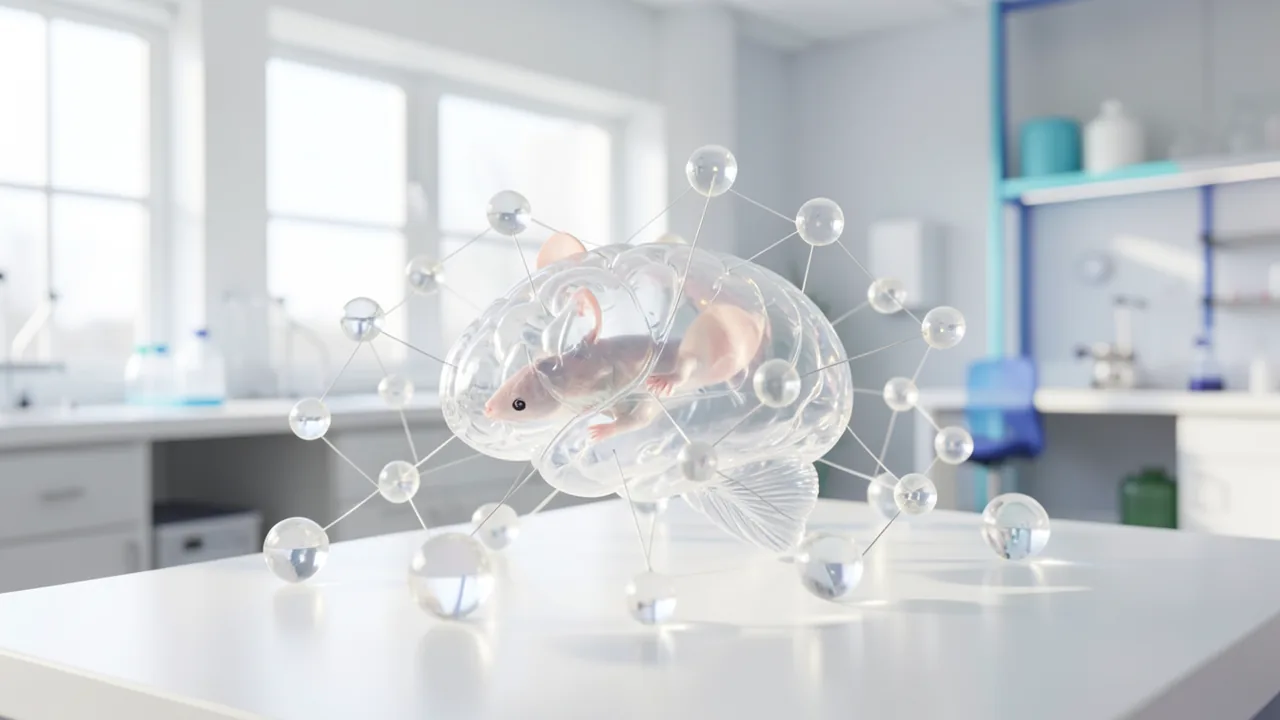
OpenAI, together with PerturbAI and Scripps Research, has shown how thousands of AI agents can be deployed in parallel for biological data analysis. According to OpenAI, the agents, powered by GPT-Rosalind, analyzed a so-called whole-brain CRISPR atlas. This atlas shows how targeted gene changes (made with CRISPR, often called "gene scissors") affect different cell types in the mouse brain. The dataset covers millions of mouse cells.
How the analysis worked
The approach is distributed: each individual agent was responsible for exactly one gene perturbation. It examined how cells respond to that change and searched the scientific literature for possible explanations. The many individual reports make up the "Reasoning Atlas." The entire analysis took 32 minutes. The team estimates that a comparable manual analysis would take months to a year. That figure is an estimate by those involved, not a measured comparison study.
Results
Among other things, the agents found unexpected differences between two disease-relevant genes, as well as a possible link between cholesterol regulation and neurodegeneration, the progressive death of nerve cells. These are leads, not confirmed findings. According to OpenAI, they are meant to help decide which mechanisms to test in the lab first.
In blind comparisons, human experts preferred the reports from the distributed agent system over those from a single agent in 75 percent of cases. That suggests that splitting the work across many agents improves not only speed but also quality.
Availability
The resulting Reasoning Atlas is available on GitHub, and the accompanying paper is published on bioRxiv. bioRxiv is a preprint server, so the work has probably not yet been peer-reviewed by independent experts.
Why it matters
The announcement shows how agent swarms can be used for data-intensive research: instead of one model handling everything, many instances each tackle a small sub-question. The main value lies in prioritizing hypotheses. How many of the leads will hold up in the lab remains open; the source doesn't say. The time savings also rest on an estimate, and the claims come from OpenAI and its partners themselves. The source gives no details on GPT-Rosalind.
Sources
- The Decoder (DE) the-decoder.de
- Hacker News – AI openai.com
- OpenAI openai.com
Ask the AI assistant
Questions about this article, installation or background? Our assistant knows this page and runs on our own machine, not in someone else's cloud.
The Assistant is an AI (Gemma 4) and can make mistakes – please check important details against the source. Questions are used only to generate an answer and are deleted after one hour. Please don't enter any personal data.

Comments
What do you think? Already tried it? Write it here, no sign-up needed.
Comments are public. Links aren't allowed, and we delete abusive posts. You can delete your own comment at any time in this browser. Learn more in the Privacy Policy.