
Scylla's Band v4: Tiny open-source voice model speaks German – and sings
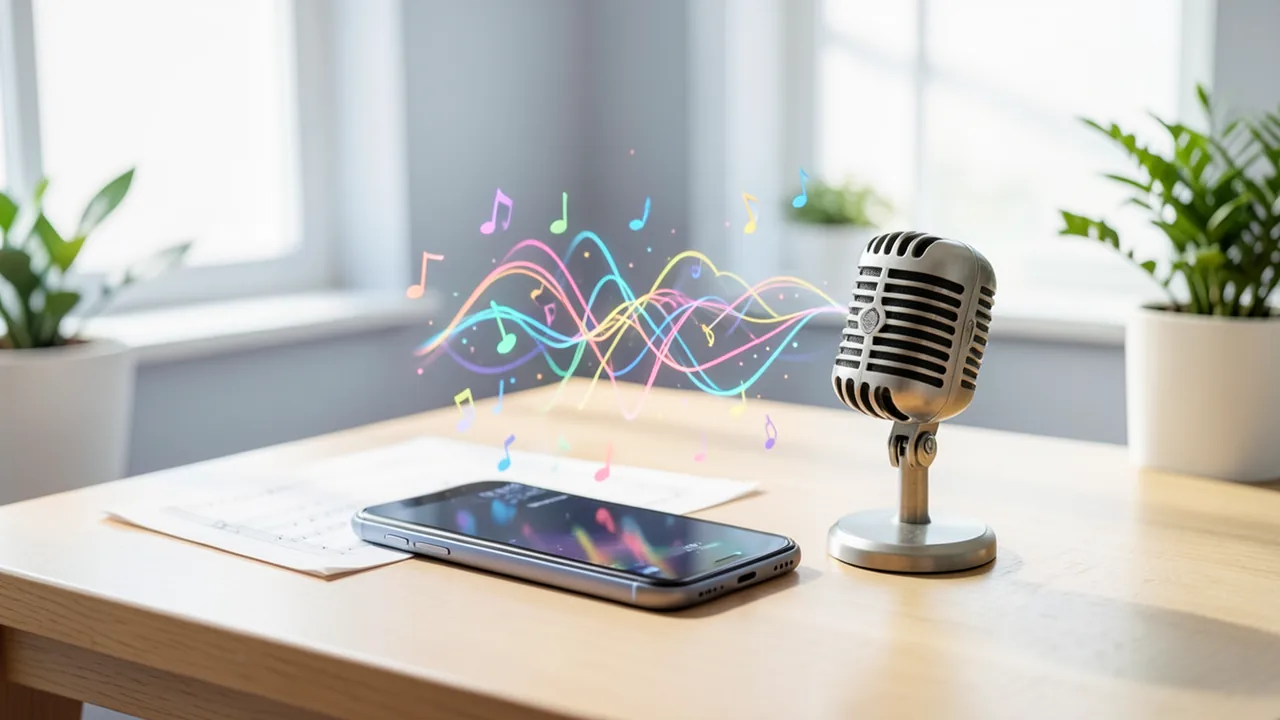
A solo developer spent almost a year building Scylla's Band v4, a free text-to-speech model with only about 131 million parameters. It runs on smartphones, speaks seven languages including German, and can sing English lyrics from a score. It's released under the permissive Apache 2.0 license, with ports for iOS, Android and the browser.
What's going on
On the Reddit forum r/LocalLLaMA, a developer has unveiled Scylla's Band v4, an open-source text-to-speech model (TTS: a model that turns written text into spoken audio). He says it was a one-person project he worked on for almost a year, and that he had to learn how to build a TTS model from scratch along the way. His goals: the model had to be fast, small enough for a phone and multilingual, and it had to do something other small TTS models can't. So it sings.
According to the post, the weights and code are on GitHub and Hugging Face under the Apache 2.0 license. That license also allows commercial use, so you can build the model into your own apps, for example. In the demo video, all the speech and singing come from the model itself. The instruments and effects were added afterwards.
What the model can do
The model has about 131 million parameters. On top of that comes a separate phonemizer with 30 million parameters. It converts written text into phonetic notation so the model knows how each word is pronounced. For comparison, large language models often have tens or hundreds of billions of parameters. Scylla's Band is a lightweight.
The key features, according to the developer:
- 14 voices and seven language variants: English (US and UK), Spanish, French, German, Italian and Vietnamese. Every voice can speak every one of these languages.
- Per-line control: You can set intensity, speaking rate and pitch separately for each line of text.
- Multi-voice dialogue: Inline tags, meaning markers placed directly in the text, let you switch between speakers.
- Streaming: Audio starts playing while the rest is still being generated, so you don't have to wait for the whole text to finish.
- Singing: The model sings from a JSON score, a machine-readable text file that lists the note and the duration in beats for every word. You can choose between pop and ballad styles. For now, singing is English only.
Numbers and speed
Speed is the standout feature. The developer gives figures for the time to first audio with the model already loaded:
| Device | Time to first audio |
|---|---|
| Apple M5 Max | approx. 30 ms |
| iPhone 17 Pro Max | approx. 70 ms |
| Samsung Galaxy Z Fold 8 (CPU only) | approx. 120 ms |
On a desktop CPU, the model reportedly runs more than 30 times faster than real time: a minute of speech takes under two seconds, no graphics card required.
There are quality figures too. The word error rate (WER) for English is 0.85 percent. To measure it, a speech recognizer transcribes the generated audio and counts how many words it gets wrong. Lower is better. The UTMOS score is 4.35, an automatic estimate of how natural people would find the voice on a scale up to 5. Both numbers come from the evaluation for the Open TTS Leaderboard, but the developer says the submission there is still pending. So the figures haven't been independently verified yet, and he doesn't give separate numbers for German.
Runs on almost anything
What's unusual is how many platforms are supported right out of the gate. Alongside the original PyTorch weights, there are versions for:
- LiteRT (Google's runtime for Android and mobile devices)
- Core ML and Core AI (Apple's frameworks for iPhone, iPad and Mac)
- ONNX Runtime (a cross-platform format for Windows, Linux and more)
- WebGPU (so the model runs directly in the browser)
There's also a C++ runtime with a C interface that handles text normalization and phonemes. Text normalization means numbers, dates and unusual words are converted into pronounceable words before reading, so that "3/12" doesn't come out as gibberish. There's sample code for Python, iOS and Android, and the developer says both phone apps have their own Sing tab. Benchmarks from real devices are included as well. The Reddit post cuts off at this point, so further details on the sample apps are missing.
What you need to try it
The requirements are very modest. You don't need a graphics card: according to the developer, the model runs well above real time on an ordinary desktop CPU, as well as on current smartphones and Apple silicon Macs. With about 160 million parameters in total, it needs very little RAM; a few gigabytes should be plenty. The download is probably a few hundred megabytes, though the source doesn't give exact file sizes. The WebGPU version also lets you use it in the browser. For the Python route, you need a Python environment with PyTorch. Google Colab works too, but at this size you don't really need it.
The bigger picture
There are already a number of small TTS models that run locally. Kokoro, for example, is similarly compact and widely used in the community. Scylla's Band v4 stands out for three reasons: the singing feature, German support across all 14 voices, and the wide range of ready-made ports from the browser to the smartphone. For app developers, the Apache 2.0 license and the C interface make it easy to build into their own products.
Some questions remain open, though. All the figures come from the developer himself, and the leaderboard submission is still pending. The quality numbers apply to English only, so you'll have to judge the German pronunciation for yourself. Singing only works with a prepared score and only in English, so you can't just type in some lyrics. And as a one-person project, maintenance and future development depend on a single individual. Still, for a free model that talks and sings on your phone, it's a remarkable result.
Sources
- Reddit r/LocalLLaMA reddit.com
Ask the AI assistant
Questions about this article, installation or background? Our assistant knows this page and runs on our own machine, not in someone else's cloud.
The Assistant is an AI (Gemma 4) and can make mistakes – please check important details against the source. Questions are used only to generate an answer and are deleted after one hour. Please don't enter any personal data.


Comments
What do you think? Already tried it? Write it here, no sign-up needed.
Comments are public. Links aren't allowed, and we delete abusive posts. You can delete your own comment at any time in this browser. Learn more in the Privacy Policy.