
Smart glasses detector apps sound the alarm but can't tell if you're being filmed
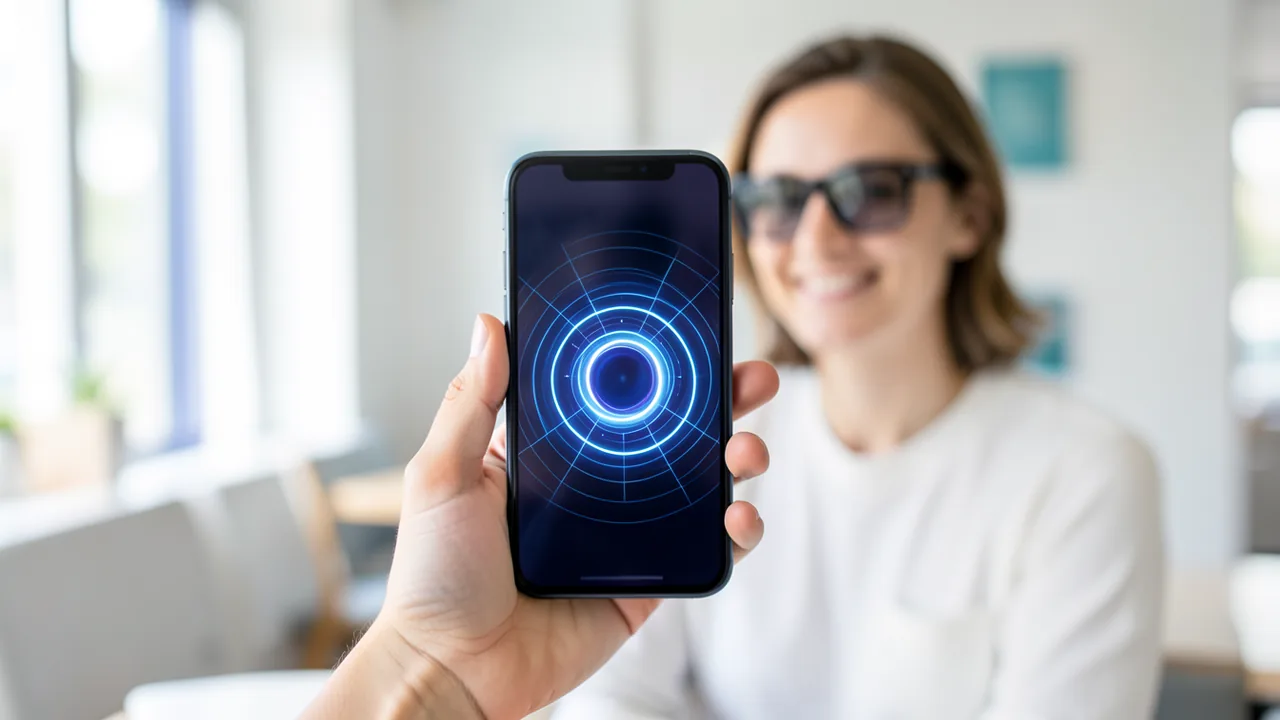
New iPhone and Android apps such as Zuckoff, AntiZuck and Nearby Glasses use Bluetooth to warn you when smart glasses are nearby. They can't tell you whether anyone is recording. One app even climbed to No. 3 in the paid US App Store charts.
What this is about
Smart glasses like the Ray-Ban Meta look like ordinary glasses, but they have a camera, a microphone and, in some cases, AI features. If you're standing next to someone wearing a pair, you can barely tell whether you're being filmed. In response, a small group of apps has emerged that scan for such glasses via Bluetooth and warn you. According to CNET, they include Zuckoff (iOS), Antizuck Smart Glasses Scanner and Nearby Glasses (Android). Several outlets, including CNET, Digital Trends, Mixed News and Malwarebytes, have looked at the apps.
How the detectors work
The apps don't connect to anything. They passively listen for Bluetooth advertising signals ("advertisements"), which devices broadcast to announce themselves. These contain manufacturer IDs, service identifiers (UUIDs) and name patterns, which the app uses to recognize glasses from Meta, Luxottica (Ray-Ban Meta), Snap and others. It roughly estimates distance from signal strength, but it has no sense of direction.
The Zuckoff website explains the limitation itself: glasses broadcast most loudly when they're switched on, being paired or taken out of the case. Once paired with the owner's phone, they go quiet. So silence doesn't prove nobody is filming, and a hit doesn't prove someone is.
Digital Trends describes AntiZuck: it shows hits on a radar screen with a proximity estimate and a confidence score, remembers repeat sightings, sends local notifications and lets you hide known devices (such as your own glasses). It detects Meta Ray-Bans, Snap Spectacles, Amazon Echo Frames and RayNeo. Meta Quest headsets can also trigger false positives. The developer of Nearby Glasses warns about this too. According to Malwarebytes, his Android app is available via Google Play or GitHub.
What a comparison of four apps shows
Mixed News examined four iPhone apps that were newly released or updated between September 28 and October 1: Spectre, Spex, Smart Glass Finder and AntiZuck. None can detect whether a camera is recording. Two say so in their App Store descriptions. Spectre's promotional graphic, however, promises "Know when you're recorded," which contradicts what the app can actually do.
| App | Brands listed | Minimum iOS | Prices (US, per Mixed News) |
|---|---|---|---|
| Spectre | 19 | iOS 26 | Pro $0.99/month or $4.99/year |
| Spex | 9 | iOS 18 | Pro one-time $3.99 |
| AntiZuck | 4 | iOS 18 | Pro $9.99 one-time, $8.99/year or $2.99/month |
| Smart Glass Finder | – | iOS 18.2 | not stated |
With version 1.1.0, AntiZuck went from a paid app to a free one with a paid tier; earlier buyers received Pro Lifetime. According to Mixed News, the paid tiers don't offer better detection, but persistence: alerts with the app closed, longer history and exclusion lists for your own glasses. Zuckoff's premium tier costs $10 a year and keeps scanning in the background.
Worth noting: according to Mixed News, there is no independent test of any of these apps, and the confidence scores come from the apps themselves.
Why the apps are in demand
Zuckoff developer Pawel Szydlowski told CNET he was annoyed by social media videos showing pranks or pickup lines aimed at unsuspecting women, with no blurring. He is planning an Android version. According to Malwarebytes (citing 404 Media), Nearby Glasses developer Yves Jeanrenaud sees his app as a "tiny part of the resistance against surveillance technology." The trigger was reports of secret recordings, for example in massage parlors and during immigration raids.
Digital Trends points to a BBC report saying young adults at parties are increasingly watching out for cameras, and to a YouGov survey: 54% of Americans consider filming and sharing strangers without consent mostly or always unacceptable.
The arms race: switching off the LED
CNET reports that hobbyists are disabling the recording LED on smart glasses, either by bypassing the hardware or with software patches. Journalist Joanna Stern showed in a video how a hacker removed the LED on her Ray-Ban Meta for $100. According to Mixed News, California's governor vetoed a bill that would have made disabling the recording light a criminal offense; the Dutch government doesn't want to enforce design requirements for camera glasses.
Now what? Social norms and alternatives
What do you do when you get an alert? Leave, or ask the person to take the glasses off. Uttara Ananthakrishnan of the University of Washington says smart glasses shift "the burden of privacy entirely onto the person being photographed." Even Realities is deliberately betting on glasses without a front camera with the G2 (late 2025); CEO Will Wang told CNET that something worn on your face should also respect the people around you.
Szydlowski hopes the app becomes unnecessary, much like AirTag detection is now built into iOS and Android. If Meta or Snap deliberately hid their glasses from detectors, he says, that would be another blow to accountability.
Our take
The apps are a technical stopgap for a social and legal problem. They give you a hint, not proof, and they can create a false sense of security: a quiet radar doesn't mean "no glasses here." False alarms from Quest headsets are possible, and without independent testing, the developers' claims remain unverified. The market is still interesting: demand shows that acceptance is an issue manufacturers have to deal with. Solutions built into the operating system or requirements for the glasses themselves would be more effective.
Sources
- Google News (GB) cnet.com
- digitaltrends.com digitaltrends.com
- mixed-news.com mixed-news.com
- malwarebytes.com malwarebytes.com
Ask the AI assistant
Questions about this article, installation or background? Our assistant knows this page and runs on our own machine, not in someone else's cloud.
The Assistant is an AI (Gemma 4) and can make mistakes – please check important details against the source. Questions are used only to generate an answer and are deleted after one hour. Please don't enter any personal data.



Comments
What do you think? Already tried it? Write it here, no sign-up needed.
Comments are public. Links aren't allowed, and we delete abusive posts. You can delete your own comment at any time in this browser. Learn more in the Privacy Policy.