
Tokens as a commodity: Apple rations them, Alibaba sells them for 1 fen on livestream
In the same week, Apple cut its engineers' daily AI budget from $300 to $200, while in China Alibaba sold around 100,000 monthly AI passes for one fen each on Li Jiaqi's livestream. We ran the numbers on what a million tokens costs in a corporate budget, in a subscription and as a Singles' Day bargain. The upshot: the price depends less on compute than on subsidies, strategy and token-hungry agents.
What's going on
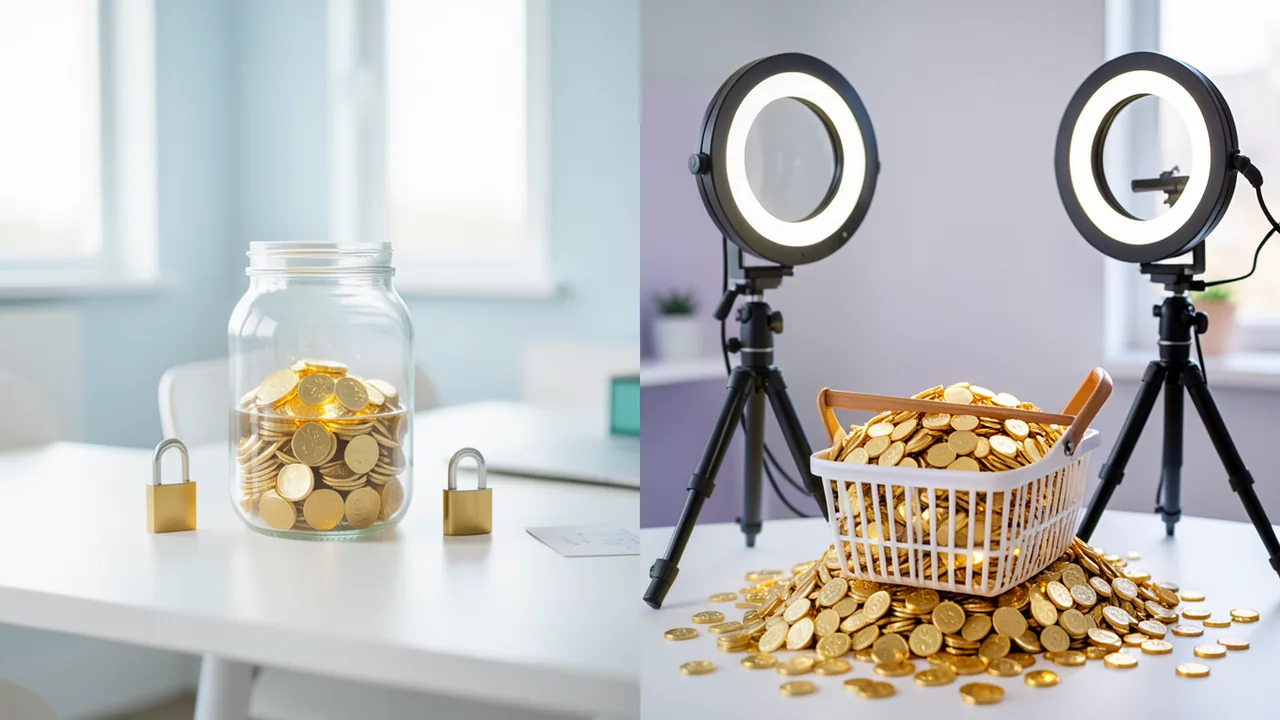
Two stories from the same week. On November 4, Bloomberg reported that Apple had cut the daily AI budget for some engineers from $300 to $200. Two days earlier in China, Alibaba vice president Chen Yusen, head of Qwen Office (千问办公), joined the shopping livestream of Li Jiaqi, the country's best-known live-commerce host. There he sold monthly passes for AI office work for one fen, or 0.01 yuan. In one case, tokens, the compute and billing units of language models, are being rationed. In the other, they're being dumped like lipstick.
Our take: tokens are becoming a consumer good. Their price depends less on actual compute costs than on subsidies, on lock-in strategies (attempts to tie customers to your own ecosystem) and on agents that don't know when to stop.
Silicon Valley: first a token race, now rationing
At Apple, it's a U-turn. According to Startup Fortune, Bloomberg had reported just a few months ago that teams with budgets of up to $300 a day were more likely to have headcount requests rejected if they spent well below that budget. Now there's a cap. For some engineering teams, $100 is on the table; outside engineering, $100 already applies in many cases, and $25 is possible for some teams. If you need more, you can request an exception. According to The Decoder, employees can use Claude, ChatGPT and Gemini, and some teams are expected to switch to cheaper or on-device models. But according to Bloomberg, only a few employees ever used the full $300 anyway. So the actual savings are probably smaller than the headline suggests.
Apple isn't alone. Since June, the industry has been calling this "tokenminimizing", the counterpart to the earlier "tokenmaxxing", when maximum usage was seen as a sign of progress:
| Company | Budget per person | Source |
|---|---|---|
| Apple (engineers) | $300 → $200 per day, some planned at $100 | Bloomberg |
| Microsoft Cloud & AI | approx. $100,000 → approx. $10,000 per month (cap) | The Information, per follow-up reports |
| Uber | $1,500 per month per tool | TNW, SemiAnalysis |
| Tesla | $200 per week, xAI beta products exempt | The Information, per Electrek et al. |
| Atlassian | $500–2,000 per month | TNW |
| Companies cited by SemiAnalysis | $250 (defense contractor) to approx. $2,000 (Workday, Stripe) | SemiAnalysis |
For comparison, here's Apple's new limit converted to a month: with 21 working days, $200 a day comes to around $4,200. That's almost three times Uber's per-tool cap. With Claude Opus 5.5 ($20 per million output tokens), $200 buys about 10 million output tokens a day. According to SemiAnalysis, Anthropic itself says the average developer spends $150 to $250 a month on Claude Code.
According to TNW, Uber had already burned through its entire 2026 AI coding budget by April. At Meta, an internal leaderboard called "Claudeonomics" showed around 73.7 trillion tokens in 30 days. The frequently cited $221 million, however, is an extrapolation at list prices, not a confirmed bill.
China: tokens in the shopping cart
In China, the opposite is happening at the same time. According to 新京报 (Beijing News), the first 50,000 Qwen Office passes were gone in ten minutes; after half an hour, it was almost 100,000. The figure of "around 2 trillion tokens" comes from the Qwen Office team's own sales data, according to Sina Finance, and hasn't been independently verified. In total, 20 trillion were put on the shelf. What's in a pass is stated in points, not tokens. According to The Paper, it's 500 points, one pass per person, redeemable until December 30. Other reports also mention bonus and new-customer points. On the livestream, 500 points were said to be enough for about 50 presentations or 160 Word documents. None of the reports says which models are behind it.
There's infrastructure behind this. On September 3, Tmall launched a token top-up center ("AI空间站") with Alibaba Cloud, Zhipu, Kimi, MiniMax and DeepSeek. On the first sales day of Double 11 (October 20), the category's sales rose 450 percent, according to Tmall. Reports differ on the comparison period, and there are no absolute figures. According to 每日经济新闻 (National Business Daily), JD gave away token packages for 0.01 yuan on November 2, one billion tokens in the first hour. ByteDance has been selling Doubao Work subscriptions on a Douyin livestream every day since October 26. According to 21财经 (21st Century Business Herald), China Telecom has been testing token packages from 9.9 yuan a month since May, the way people used to buy mobile data.
Away from the livestream, things look more sober. According to 21财经, Zhipu's Tmall store sold only a few hundred packages, and the discount was 3 yuan (115 instead of 118 yuan). Most providers sell at list price. Chen Yusen compares tokens to gasoline:
"Just as our cars need gasoline and our home appliances need electricity, the fuel for AI work is the token."
Doing the math: what does a million tokens cost?
With 2 trillion tokens across just under 100,000 passes, we get at least 20 million tokens per pass. That gives us the following comparison (yuan roughly converted at 7 per dollar):
| Offer | Price per 1M tokens (input/output) |
|---|---|
| Qwen Office pass on livestream (calculated) | approx. 0.0005 yuan (< $0.0001) |
| Qwen Office pass, regular price 28 yuan (calculated) | approx. 1.4 yuan (approx. $0.20) |
| Ling 3.0 Tiny (Ant Group) on OpenRouter | $0.015 / $0.045 |
| qwen-flash, Alibaba Cloud Bailian (list price) | 0.15 / 1.5 yuan (approx. $0.02 / $0.21) |
| qwen3.7-max, Bailian (list price) | 12 / 36 yuan (approx. $1.70 / $5.10) |
| Gemini 4 Argon through Nov 30 / from Dec 1 | $2 / $10 → $4 / $20 |
| Claude Sonnet 5.5 / Opus 5.5 / Fable 5.1 | $2/$10 · $4/$20 · $10/$50 |
| Global usage-weighted average (Silicon Data, Sept.) | $0.97 |
Even at the regular price, the Qwen pass comes in below the input price of Alibaba's own flagship model. On the livestream, it's a good 200 times cheaper than Ling 3.0 Tiny, the cheapest API offer on our list. That price has nothing to do with compute costs anymore. Two caveats still apply: the 20 million is an allowance, not actual usage, and nobody knows which model processes the tokens. With small models, a token is worth less than with large ones. One online observer quoted by The Paper points out that the same text uses 20 to 50 percent more or fewer tokens depending on the model.
Subscriptions: flat rates with fine print
In between sit subscriptions. They too package tokens so you can't see the unit price. At the end of October, Anthropic renamed "Max 20x" to "Ultra". The 20x factor only applied to the 5-hour limit; the weekly limit was ten times Pro. Verified Ultra customers lose the 5-hour limit, but they don't get more weekly allowance. According to the pricing page, Max ($100) and Ultra ($200) now also include $100 and $200 in API credit, respectively. In December, OpenAI is merging the ChatGPT and Codex allowances for Plus, Pro and Business into a single shared pool measured in tokens. How big it is isn't stated on the help page. Google is adding Gemini 4 Argon to its app subscriptions (AI Pro for $19.99), but the subscription doesn't include API tokens.
Our assessment: whether it's 500 points at Qwen, "10x Pro" at Anthropic or an unquantified pool at OpenAI, every provider measures in tokens internally and sells bundles externally. That's how mobile data is sold, not electricity.
Why cheap tokens make for expensive bills
Here's the paradox: tokens get cheaper, yet the bill gets bigger. According to TNW, agentic tools have tripled companies' AI bills, even though per-token prices have fallen sharply. According to The Paper, Gartner estimates that a reasoning agent uses 5 to 30 times as much per task as a chatbot. How chatty a model is also matters: Ling 3.0 Tiny generated around 210 million output tokens in Artificial Analysis's test run, against a median of 63 million. According to Artificial Analysis, Gemini 4 Argon needs around 62,000 output tokens per task, GPT-6 Astra 27,000. So from December, an Argon task costs $3.98, versus $3.26 with Astra.
For China, CAICT describes the same pattern. Daily consumption was around 500 trillion tokens in June, almost four times as much as in December 2025. At the same time, the normalized list price of domestic models rose from 6.8 to 13.46 yuan (reports are inconsistent about the unit). The livestream's 2 trillion tokens thus equal about 0.4 percent of a single day of Chinese consumption.
And agents are barely reaching consumers yet. On November 4, Uber reported that out of around 320 million trips and orders in Halloween week, exactly four rides were booked through AI agents.
The bigger picture
Both worlds are chasing the same goal: control over the flow of tokens. In Silicon Valley, that means steering usage toward in-house offerings. Tesla exempts xAI's beta products from its cap, Microsoft is reportedly pushing Copilot, and Meta its own tool MetaCode. In China, companies are buying habits: 70 laptop models are set to ship with Qwen Office preinstalled, and Alibaba has bundled its token businesses into a dedicated unit since March. Investor Zhou Zhifeng asks the key question: do customers stay because of subsidies, or because the product is irreplaceable? Nobody knows yet how many of the 100,000 buyers will renew. According to a report cited by The Paper, annual subscription retention for AI apps is 21.1 percent, just under 10 points below other apps.
Our assessment: a price of one fen says nothing about the cost of AI. It's marketing, just as Apple's $300 was signaling. The honest metric is the price per completed task, and hardly any provider publishes it so far. Consumer protection is another concern: according to Sina Finance, many token products exclude the 7-day return window, and according to a guide on 什么值得买 (SMZDM), Zhipu's personal subscriptions are non-refundable as a rule. If you hoard tokens like toilet paper, you could end up sitting on expired allowances.
Sources
- Sina Finance: 李佳琦的购物车,装下了AI的“下半场” finance.sina.com.cn
- Tencent News: Li Jiaqi verkauft Token news.qq.com
- Sohu / 新京报: Token im Livestream sohu.com
- The Paper: 1分钱卖Token,阿里图什么? thepaper.cn
- The Paper: 从囤纸巾到囤Token thepaper.cn
- 京报网: 20万亿Token im Livestream news.bjd.com.cn
- Sina Finance: Quelle der 2-Billionen-Zahl cj.sina.com.cn
- 人人都是产品经理: Token als neuer Spieler im Doppel-11 woshipm.com
- 投资界 / 21财经: 天猫能在双11把Token卖成大众消费品吗? news.pedaily.cn
- 21财经: 天猫能在双11把Token卖成大众消费品吗? m.21jingji.com
- NetEase / 每日经济新闻: Doppel-11 KI-Dienste 163.com
- 什么值得买: GLM-Token im Doppel-11 post.smzdm.com
- The Paper: Rechnung steigt, nicht der Stückpreis (CAICT) thepaper.cn
- Tencent News: Inlandspreis verdoppelt, globaler Preis unter 1 Dollar news.qq.com
- Alibaba Cloud Model Studio: Modellpreise help.aliyun.com
- Startup Fortune: Apple cuts AI token budgets startupfortune.com
- The Decoder: Apple kürzt interne KI-Budgets the-decoder.de
- AI Times: Apple kürzt KI-Budget aitimes.com
- Implicator: Apple Cuts Some Engineers' AI Budgets implicator.ai
- TNW: Tokenminimizing thenextweb.com
- TNW: Atlassian AI wallets thenextweb.com
- SemiAnalysis: TokenBudgeting newsletter.semianalysis.com
- Tech Startups: Microsoft cuts AI budgets techstartups.com
- Electrek: Tesla caps employee AI spending electrek.co
- Unite.AI: Uber AI agents booked four rides unite.ai
- lmspedia: Gemini 4 Argon Pricing lmspedia.org
- Claude Pricing claude.com
- max.nardit.com: ChatGPT and Codex shared usage limits max.nardit.com
- OpenRouter: Ling 3.0 Tiny openrouter.ai
Ask the AI assistant
Questions about this article, installation or background? Our assistant knows this page and runs on our own machine, not in someone else's cloud.
The Assistant is an AI (Gemma 4) and can make mistakes – please check important details against the source. Questions are used only to generate an answer and are deleted after one hour. Please don't enter any personal data.


Comments
What do you think? Already tried it? Write it here, no sign-up needed.
Comments are public. Links aren't allowed, and we delete abusive posts. You can delete your own comment at any time in this browser. Learn more in the Privacy Policy.