
US grounds every flight nationwide, three days after AI air traffic system goes live
On Friday, November 13, the FAA halted all departures across the United States after communications failed at every air route traffic control center. Just three days earlier, the agency had rolled out an AI system costing almost a billion dollars nationwide. The vendor denies any link, but officials say they're looking into it anyway.
What happened
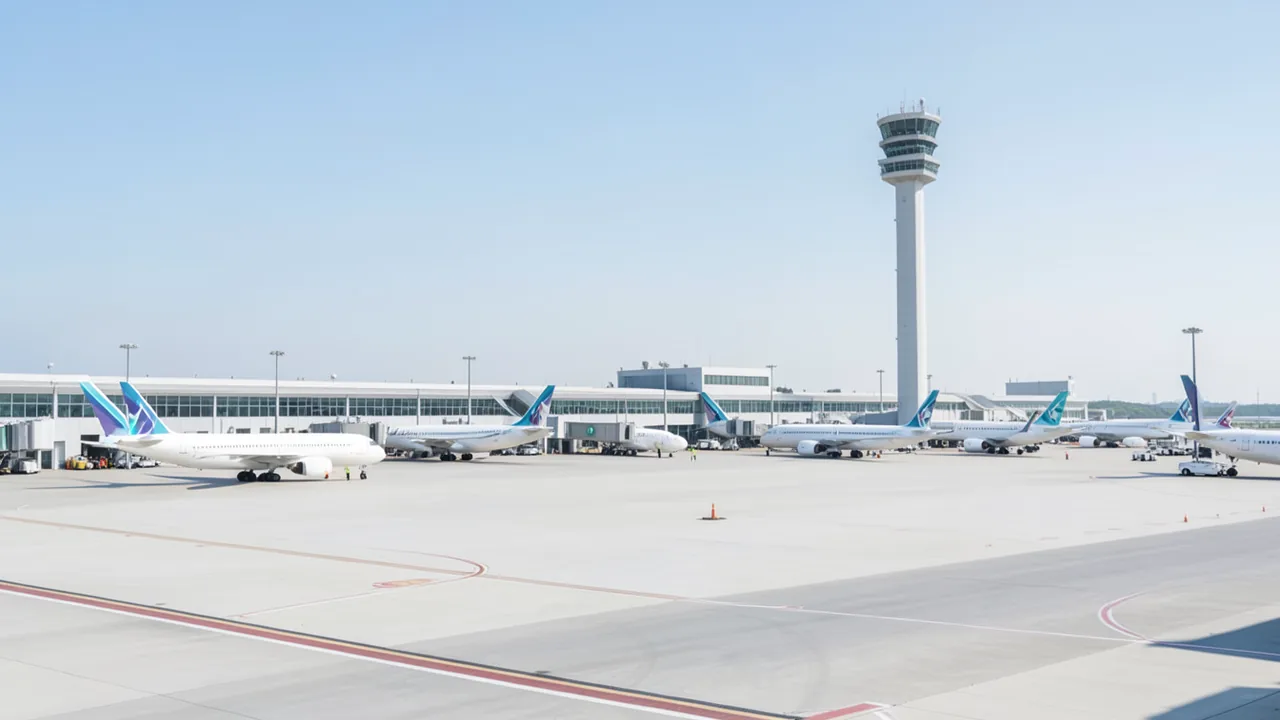
On Friday afternoon, November 13, 2026, the US Federal Aviation Administration (FAA) did something it almost never does: it stopped every plane in the country from taking off. At first, the agency justified the ground stop, an order for all aircraft to stay on the ground, only with "extraordinary circumstances and safety reasons." Later, it pointed to a "temporary telecommunications outage."
The timing is politically awkward. On November 10, just three days earlier, the FAA had expanded an AI-powered advisory system for air traffic controllers to all of US airspace. It's called SMART (Strategic Management of Airspace Routing Trajectories). Whether the two events are connected is still unclear. The vendor says they aren't. Officials say they're checking.
What went down
Transportation Secretary Sean Duffy wrote on X that the stop was due to a "communications issue affecting all Air Route Traffic Control Centers" and that FAA technicians were investigating. Air Route Traffic Control Centers (ARTCCs) are large regional air traffic control facilities. They handle aircraft at cruising altitude between departure and destination airports. According to the FAA, there are 22 of them.
The FAA still hasn't said exactly what broke. CNN cites an unnamed aviation source who said radar systems and radio frequencies failed at the same time, and that even controllers didn't know why. A CNN correspondent described the problem as affecting the communications used to assign aircraft their routes through the airway network.
Preliminary reports show no sign of a cyberattack. The FAA told heise online that an attack on its IT systems was not the cause. Microsoft had suffered global outages the day before, but according to heise, the White House ruled out any connection.
The impact on air traffic
- According to the Hindustan Times, the FAA issued its order at 3:54 p.m. Eastern. Departures were to remain suspended until 11:30 p.m.
- Reuters reports that at least 7,000 flights were held or canceled. Somewhat earlier, FlightAware's misery map had logged 2,438 delays, according to Mashable.
- Domestic flights already in the air were allowed to land. The FAA decided on international flights case by case. The agency says it knew the location of every flight at all times.
- According to Flightradar24, no plane took off from Chicago O'Hare for more than two hours. At New York's JFK and Washington's Ronald Reagan National Airport, the last aircraft departed at 3:35 p.m.
- Canada's air navigation service Nav Canada said it was not affected and offered to take in diverted US flights. Still, according to heise, it put precautionary "traffic management measures" in place at Toronto, Montréal, Calgary and Vancouver.
- In after-hours trading, shares of American, United and Delta fell 1 to 2 percent and JetBlue dropped 3 percent, according to Reuters.
Full nationwide ground stops are extremely rare in the US. Previous ones came after the September 11, 2001 attacks and on January 11, 2023. That time, the NOTAM system, which warns pilots about hazards along their route, went down after an employee accidentally deleted a file. That stop lasted about 90 minutes.
What SMART is and what it does
SMART was built by Air Space Intelligence (ASI), a US government contractor. According to heise, the system runs in the cloud, meaning on servers in an external data center rather than on FAA machines. It pulls in data from around 200 sources covering weather, flight routes, traffic volume and control center staffing. From that, it generates recommendations, such as how to reroute individual flights. Officially, humans review these recommendations before they reach controllers. So SMART doesn't direct aircraft itself. It advises controllers.
Costs and testing at a glance:
| Item | Details |
|---|---|
| Cost | $875 million (per Ars Technica, cited by Crooks and Liars); Futurism says "almost a billion" |
| Trial period | since September 21, first in the airspace around Washington, D.C., later also in Florida, according to heise |
| Flights rerouted during trial | 180 |
| Savings per flight (FAA figure) | an average of 10 minutes and nearly 80 gallons (about 300 liters) of fuel |
| Nationwide launch | November 10, across all 22 centers |
The benefit figures come from the FAA itself and haven't been independently verified. According to the FAA's November 10 announcement, SMART is meant to "reduce delays and fuel burn and improve the travel experience." Secretary Duffy had hyped the system on X in September as a "GAME CHANGER."
Observers are critical of the short trial period of just a few weeks. On top of that, the air traffic controllers' union says it was involved in neither development nor testing. Airlines, on the other hand, back the rollout.
Denials, an investigation and a fight over words
ASI was quick to reject any connection:
"The current ground stop is not based on, and is not a result of, the SMART system, any other ASI product, or our integration with the FAA and air traffic control."
Markwayne Mullin of the Department of Homeland Security sounded more cautious. When a TV reporter pointed out the striking timing, Mullin replied, according to Futurism:
"We're looking into that. We're working with our colleagues across all agencies."
Boing Boing criticizes Mullin for spending the ground stop quibbling over terminology, namely insisting that SMART not be called "AI," instead of explaining what actually happened. Neither the FAA nor the Department of Transportation has said what exactly failed. Mashable notes that there's currently no evidence linking the outage to SMART.
Background: old tech, thin staffing
The FAA's IT is widely seen as badly outdated. According to Mashable and heise, the agency doesn't plan to stop using floppy disks until 2028. In 2025, a faulty copper cable at Newark airport knocked out radar and radio, causing delays and cancellations. Then there's the shortage of air traffic controllers. In February 2025, according to heise, the government, with Elon Musk in the lead, laid off several hundred employees in Air Traffic Operations. Controllers apparently weren't among them, but maintenance, administrative and technical support staff were.
Our take
Based on what we know right now, the only link between SMART and the outage is timing. What's been described so far is a failure of radar and radio. That points more to an infrastructure problem than to a bad recommendation from an advisory system. But until the FAA and the Department of Transportation name the cause, that's not confirmed.
Whatever the cause, the case raises questions. An AI system for air traffic controllers was tested for only a few weeks in a single region, the controllers themselves weren't involved, and it runs in the cloud. Futurism highlights a risk inherent to such systems: an AI model can "hallucinate," confidently producing wrong results. Bad advice to controllers could have serious consequences with tens of thousands of people in the air at once. Futurism also notes that the American public is already skeptical of AI, as the midterm elections showed. Even the suspicion is likely to erode trust further. Only an open investigation into the cause will bring clarity.
Related videos
Sources
- Futurism futurism.com
- Boing Boing boingboing.net
- heise – KI (DE) heise.de
- crooksandliars.com crooksandliars.com
- mashable.com mashable.com
- hindustantimes.com hindustantimes.com
- Mashable mashable.com
Ask the AI assistant
Questions about this article, installation or background? Our assistant knows this page and runs on our own machine, not in someone else's cloud.
The Assistant is an AI (Gemma 4) and can make mistakes – please check important details against the source. Questions are used only to generate an answer and are deleted after one hour. Please don't enter any personal data.



Comments
What do you think? Already tried it? Write it here, no sign-up needed.
Comments are public. Links aren't allowed, and we delete abusive posts. You can delete your own comment at any time in this browser. Learn more in the Privacy Policy.