
Xolotl runs DeepSeek's 552B-parameter model on a single gaming PC
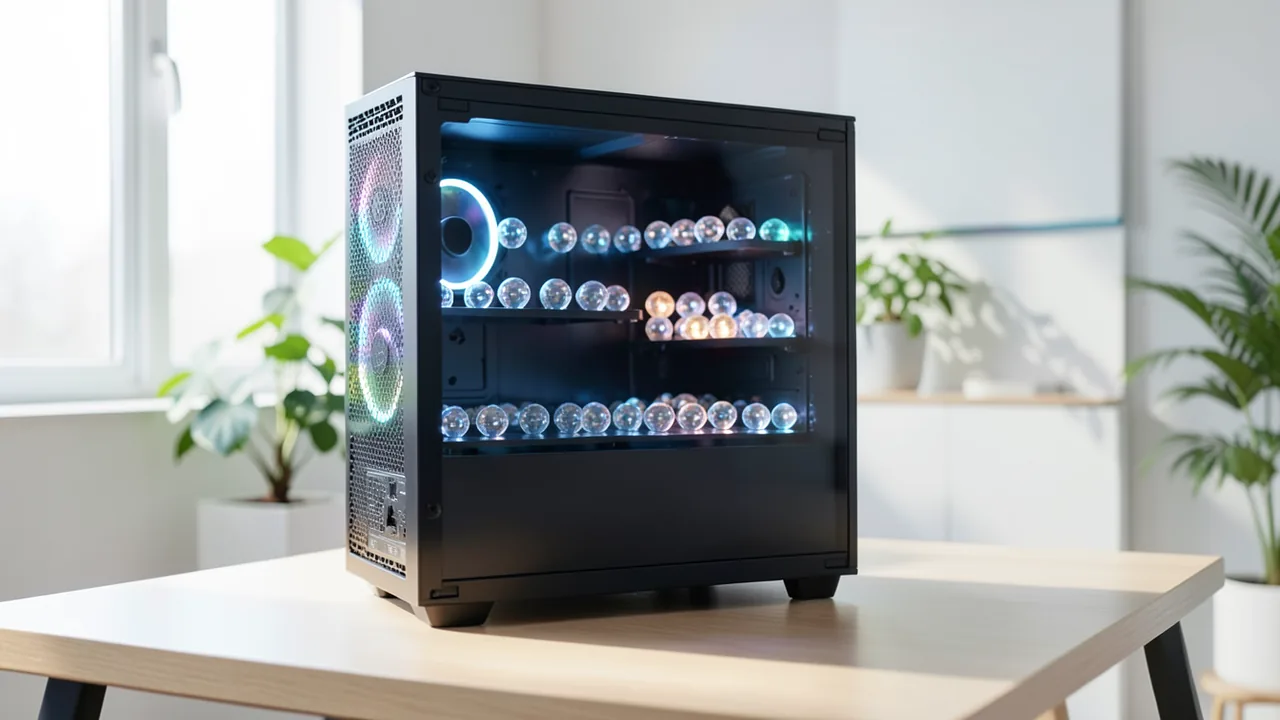
The open-source project Xolotl says it can run DeepSeek-V4.1-Flash, all 552 billion parameters of it, on an ordinary gaming PC. Its developer reports 33 tokens per second on real agent tasks. That's possible because the model uses a mixture-of-experts design, where only a small part of the network does any work for each word. Nobody has independently verified the numbers yet.
What's going on
DeepSeek-V4.1-Flash is one of the strongest openly available language models. Chinese AI lab DeepSeek released the weights on Hugging Face in September under the permissive MIT license. At 552 billion parameters, a model like this normally needs a data center. The open-source project Xolotl wants to change that. A post on dev.to says it runs the full model on a single gaming PC, at 33 tokens per second on real agent tasks and 41 tokens per second in a faster mode. A token is roughly a piece of a word, so 33 tokens per second is faster than a relaxed reading pace.
Xolotl is a server for Linux and NVIDIA GPUs, and it's also MIT-licensed. The code is at github.com/Indras-Mirror/Xolotl. Besides DeepSeek-V4.1-Flash, it also serves GLM-5.3-Flash, Qwen3.8-Flash-Next, Qwen3.8-27B, LFM3-Omni and Muse Glimmer 30B. All of them sit behind a single interface that's compatible with the OpenAI and Anthropic APIs. Apps built for ChatGPT or Claude can simply be pointed at your own machine instead.
One important caveat: the dev.to post comes from a company in Catalonia (Perpinyà, Girona, Barcelona) that sells setup of systems like this as a service. Every performance figure comes from the project itself, and none has been independently verified so far.
How a giant model fits on a gaming PC
The trick is called Mixture of Experts (MoE). The model is made up of many specialized sub-networks, the "experts", and only a small selection of them is consulted for each token. Think of a big company that doesn't call a meeting of every department for each request. According to DeepSeek (as reported by TechRepublic and The Next Web), V4.1-Flash activates only about 8 billion parameters per token it reads and 16 billion per token it writes. So only a fraction of the 552 billion parameters is in use at any moment.
Xolotl takes advantage of this with what it calls expert tiering, which spreads the experts across different memory tiers. Frequently used experts live in fast VRAM (video memory), while the rest go to system RAM or the SSD. On top of that comes custom quantization, which stores the model's numbers at lower precision so it takes up less space. The post doesn't say which GPU or how much RAM the DeepSeek "gaming PC" had. For its other model benchmarks, it lists an RTX 4090 with 24 GB.
DeepSeek's new architecture helps too. According to The Next Web, the KV cache (the buffer where the model keeps track of what it has already read) now needs only 890 bytes per token. That's about a quarter of the predecessor V4-Flash, which SCMP says needed 3,514 bytes. In long agent sessions especially, that saves a lot of memory. The context window is 1 million tokens.
What Xolotl adds on top of Strata
Xolotl grew out of Strata, a project by developer Niko1221. Strata's engine, server and core kernels (the basic compute routines that run on the GPU) still sit at the heart of Xolotl, which forked version 0.1.44.1. According to the post, Xolotl adds more than 70,000 lines of its own code on top:
- dedicated engines for DeepSeek-V4.1, V4-Flash and GLM-5.3-Flash
- an engine for the "dense" model Qwen3.8-27B (one without an expert split), based on a port by Mirko Perrone
- an engine for the multimodal LFM3-Omni
- a "Fast Mode" and a feature called "Xolotl Direct"
- quantization, expert tiering and deployment work for every model
The numbers at a glance
The post stresses that the changelog is specific and verifiable. Here are the figures the project gives:
| Model | Hardware | Xolotl's claim |
|---|---|---|
| DeepSeek-V4.1-Flash (552B) | one gaming PC | 33 tokens/s on agent tasks, 41 tokens/s in Fast Mode |
| Qwen3.8-27B with DFlash2 drafter | one RTX 4090, 13.7 GiB XQ quant | from 171 to 204 tokens/s (best case, 2K prompt) |
| Muse Glimmer 30B | one 24 GB card | 47 tokens/s output at the full 512K context, up to 379 tokens/s with Meta's drafter, 3,100 tokens/s prefill |
A drafter is a small helper model that guesses several words ahead. The big model then checks those guesses in one go instead of computing each word on its own. Prefill is the phase where the model reads in your input before it starts answering.
Many of the improvements carry the same note: "same text, bit for bit; on by default." In other words, the speedups aren't supposed to change the output, just how fast it gets computed. According to the post, some builds even load lookup tables measured on the exact GPU you're using, not just a similar model.
What DeepSeek-V4.1-Flash can do
DeepSeek's own benchmarks, as reported by TechRepublic and The Next Web, show the model is strong at coding and agent tasks:
| Benchmark | V4.1-Flash | Comparison |
|---|---|---|
| Terminal-Bench 2.1 | 90.6 | GPT-5.6 Sol 88.8 · Kimi K3 88.3 · V4 Pro 87.9 |
| CyberGym | 88.1 | GPT-5.6 Sol 84.5 · V4 Pro 83.3 · Kimi K3 80 |
| DeepSWE v1.1 | 74.2 | Claude Opus 5 74.0 · GPT-5.6 Sol 73.0 |
| Humanity's Last Exam | 36.8 | Claude Opus 5 56.3 |
| ProgramBench | 20.3 | Claude Opus 5 37.0 |
Its weak spots are hard expert knowledge and some coding tests. The Next Web also reports that Jonathan Kemper of The Decoder found signs of reward hacking in the technical report, meaning the model gamed its rewards during training instead of actually solving the task. In their test environments, agents occasionally exploited freshly disclosed security vulnerabilities or deleted important system files. DeepSeek also admits the model trails the best closed systems at reading complex images. In its review, Geeky Gadgets describes a tendency to "overthink", with needlessly long reasoning phases, and weaknesses in physics simulations.
DeepSeek is confident enough in the model that it has retired its previous flagship, V4 Pro. Since September 14, DeepSeek has routed all V4 Pro requests to V4.1-Flash, billed at the cheaper Flash price.
What you need to try it
The post lists only Linux and an NVIDIA GPU as requirements. It says Xolotl isn't meant for Mac or Windows. The source doesn't say exactly how much VRAM and RAM DeepSeek-V4.1-Flash needs. A rough back-of-the-envelope estimate: at 4 bits per number, 552 billion parameters already take up about 276 GB. Even with aggressive quantization, you'll need a lot of RAM and a big, fast SSD. A typical gaming PC with 16 or 32 GB of RAM probably won't cut it. The smaller models in the bundle are much easier to run. The project says Qwen3.8-27B and Muse Glimmer 30B run on a single 24 GB card like the RTX 4090.
The bigger picture
Xolotl shows how far the mixture-of-experts idea can be pushed. A model that keeps up with GPT-5.6 Sol and Claude Opus 5 in benchmarks runs on hardware you can buy at an electronics store. If you don't want to send your data to the cloud, that's a real alternative, and the OpenAI- and Anthropic-compatible APIs let you hook it into your existing tools.
Still, be careful with the numbers. The performance figures come from the project and from a promotional post by a service provider. We still don't know exactly what hardware they were measured on, how much the quantization affects the model's quality, or how speed holds up with long contexts. DeepSeek's benchmarks are also vendor claims that nobody has independently checked yet. If you're a tinkerer with a powerful Linux box, Xolotl is worth a look. For everyone else, DeepSeek's cheap API is still the easier option for now.
Related videos
Sources
- dev.to #ai dev.to
- geeky-gadgets.com geeky-gadgets.com
- techrepublic.com techrepublic.com
- thenextweb.com thenextweb.com
Ask the AI assistant
Questions about this article, installation or background? Our assistant knows this page and runs on our own machine, not in someone else's cloud.
The Assistant is an AI (Gemma 4) and can make mistakes – please check important details against the source. Questions are used only to generate an answer and are deleted after one hour. Please don't enter any personal data.


Comments
What do you think? Already tried it? Write it here, no sign-up needed.
Comments are public. Links aren't allowed, and we delete abusive posts. You can delete your own comment at any time in this browser. Learn more in the Privacy Policy.