
A Bandage, Not a Patch: What Shirudo Does and Where AI Kernel Code Stays Risky
OpenAI and Cisco want AI agents to write small protective programs for the Linux kernel that block an attack until the real patch has been tested. We went through the docs, the threat model and real cases from the past few weeks. Our verdict: Shirudo is no CrowdStrike 2.0. It won't cure rushed patching either, and hardly anyone can run it in production today.

What this is about
For weeks, systems across the US have been going down. The official explanation: companies and agencies are rushing out security updates because AI models are finding vulnerabilities at an unprecedented pace. Microsoft President Brad Smith said on CBS's "Face the Nation" on November 22:
"Frankly, I think we have to brace ourselves for the coming months, because this isn't something that gets solved in a couple of weeks."
He called Microsoft's own outage a "perfect storm": a four-month-old update collided with a fresh one at exactly the moment network traffic was shifting. The next day, the US cybersecurity agency CISA added two actively exploited vulnerabilities to its KEV catalog and gave federal agencies until November 26 to fix them. One is CVE-2026-133968 in MONAI Label (CVSS 9.8), the flaw behind the AI agent attack on university servers. The other is CVE-2026-134624 in N-able MailAssure (CVSS 9.3).
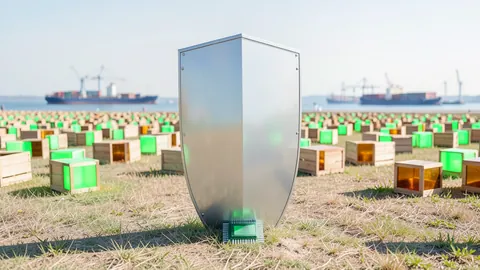
On the same day, November 23, OpenAI and Cisco released Shirudo (Japanese for "shield"). The idea: a bandage instead of immediate surgery. An AI agent such as OpenAI's Codex writes a small program that blocks exactly the behavior a known attack depends on. That program is loaded into the running Linux kernel without a reboot and holds the line until the real patch has been tested. OpenAI President Greg Brockman sums it up like this: finding a vulnerability today doesn't mean you can patch every system tomorrow.
So our question is: is this a safer path than rushed patching? Or does it bring exactly the pattern into the kernel that took down millions of machines in the CrowdStrike outage of July 2024?
How the bandage works
Shirudo is built on eBPF, which lets you run small programs inside the kernel without changing its source code. Think of them as plug-in modules that dock at fixed points. The most important of these are LSM hooks: checkpoints where the kernel asks, before sensitive actions, whether a process is allowed to do something, such as write a file, launch a program or open a network connection. A shield can say "no" there.
Here's the workflow according to the Shirudo docs and the Isovalent blog:
- Reproduce: The agent recreates the attack and looks for the best place to defend against it, in the kernel or in the Java runtime.
- Write: The shield ("upatch" in the docs, "Shield" in the marketing) is plain BPF C. There is deliberately no custom rule language, because agents handle code best, according to Daniel Borkmann and John Fastabend at the Linux Plumbers Conference.
- Sign and distribute: The operator signs the package with the post-quantum scheme ML-DSA-87 and stores it in an OCI registry, a package store like the ones used for container images. Target machines pull new packages themselves via a timer that runs every minute.
- Check: The kernel checks the signature first, then runs the verifier. This in-kernel checker rejects programs that could access memory they shouldn't or run out of control.
- Log: Every load and unload is recorded in the TPM, a security chip on the motherboard. With
shirudo attest, the operator gets a chip-signed attestation they can verify offline. That means they don't have to rely on a report from a machine that may itself be compromised.
One principle in the threat model stands out: "Root is not trusted just because it is root." Even an attacker with admin rights shouldn't be able to remove or forge shields without the operator's signing key.
The accounts of an observe mode differ. According to Cisco, a shield is only "armed when the evidence says it is safe" and removed again once the real patch lands. In the technical docs, we found no dedicated switch between observing and blocking. Instead, there are pure "detector" programs that only count how often a dangerous code path is hit. The kernel tutorial shows exactly that: for an IPv6 vulnerability (CVE-2026-63984), the author chose logging because the kernel doesn't allow blocking at that point.
Tetragon: a rebuild with a family resemblance
Accounts differ on whether Shirudo builds on Tetragon, the eBPF security tool from Isovalent, which Cisco has owned since 2023. The Register writes that Shirudo is "based on" Tetragon; The Hacker News talks about Tetragon's "foundations". Isovalent itself is more direct: Shirudo is "a rewrite of Tetragon, built for agents". Tetragon works with YAML rules and has a monitor mode and an enforce mode. Shirudo relies on code and signatures instead.
Here's the awkward part: on a machine running Shirudo, Tetragon no longer works. According to the interoperability docs, Cilium, Falco's eBPF driver, bpftrace and bcc also fail, because only signed loaders are allowed to load eBPF programs. Even trickier: BPF-based systemd settings such as IPAddressAllow= or RestrictFileSystems= are "silently not applied". So if you turn on Shirudo, you can lose existing protections without noticing.
Case check: what can be shielded and what can't
We held three recent cases up against the documented capabilities. The assessment is our own, based on the docs, and not backed by our own tests.
| Case | Type of bug | Directly shieldable via eBPF? | What's realistically possible |
|---|---|---|---|
| nginx2root, part 1 (CVE-2026-123007) | Memory bug in nginx's HTTP/2 code | Barely, the bug is in the application, not the kernel | Config http2 off; contain the fallout (no spawning shells, no unknown connections) |
| nginx2root, part 2 (SCTP kernel flaw) | Use-after-free in the kernel, no kernel patch at disclosure | Yes, access could be blocked in advance | Forbid SCTP sockets via LSM hook, even if SCTP is built into the kernel |
| MONAI Label (CVE-2026-133968) | Path traversal plus authentication disabled by default | Partially | Block writes to certain file names, e.g. files Python loads at startup |
| Java4Shell | Bug in the JVM's Base64 decoder | No, not via eBPF | Java agent with input validation (as in the demo) |
nginx2root shows both sides. According to Xint, the SCTP flaw has been in the kernel since Linux 4.15 (2018), and there was no kernel patch at the time of disclosure. The recommended workaround, install sctp /bin/false, only kicks in when the module is loaded via modprobe. If SCTP is compiled in or already loaded, it doesn't help. This is exactly where a shield on the LSM hook for socket creation could step in. It's the same strategy as the repo examples for CVE-2026-31431 (af-alg-block): you don't fix anything, you switch the feature off. As one HN commenter pointed out, the kernel upatches in the repo are "mostly monitors", and the exception disables features instead of fixing them.
In the MONAI case, according to Amazon, the AI agents wrote a file that the Python interpreter loads automatically at startup. The bundled app-sandbox module can block specific programs from creating or writing files with forbidden name patterns. The repo includes ready-made sandboxes for Apache and PHP-FPM, aimed at the PHP flaws found by Calif. The docs say explicitly that this doesn't fix PHP. It only stops what the attacker does next. The root cause, an upload interface that is open by default with no authentication, is a logic flaw in the application. No kernel hook can fix that.
With Java4Shell, Shirudo leaves the kernel world entirely. The protection is Java bytecode that validates input to Base64$Decoder.decode0. According to the docs on Java agents, this path is "not a security boundary". Root can start the JVM without the agent. On top of that, the agent only affects JVMs started after it has been loaded. OpenAI and Isovalent, on the other hand, stress that the protection was attached to the running Elasticsearch process. The vendors don't explain how the demo pulled that off without a restart.
Our rule of thumb: eBPF shields are a good fit for vulnerabilities with a clear entry point in the kernel, such as a system call, a protocol or a file access. They also work for containment after a program has been hijacked. They barely reach memory bugs deep inside an application, or logic flaws. And according to the FAQ, anyone already running code in the kernel bypasses "any check in that kernel".
Is this CrowdStrike inside the Linux kernel?
The comparison is obvious. In the CrowdStrike outage on July 19, 2024, a new content file ("Channel File 291") expected 21 input fields according to the root cause analysis, but the code supplied only 20. The interpreter in the kernel driver then read past the end of a memory region, and Windows crashed. Microsoft estimated that around 8.5 million devices were affected.
| CrowdStrike 2024 | Shirudo | |
|---|---|---|
| What goes into the kernel | Content file for a proprietary kernel driver | eBPF program |
| Check before execution | Vendor's buggy content validator | Signature plus kernel verifier |
| Result of a memory bug | System crash | Load rejected (assuming the verifier is bug-free) |
| Distribution | To everyone at once | Pulled via timer, controllable via selectors; staged rollout as a vision |
| Result of a logically wrong rule | – | Service blocks legitimate requests |
So the verifier prevents exactly the type of failure seen in 2024: a memory access into the void. But it isn't infallible. An audit commissioned by the eBPF Foundation in 2024 found a flaw that let a privileged attacker read and write arbitrary kernel memory. More importantly, the verifier checks whether a program runs safely, not whether it makes sense. The Shirudo threat model puts it this way: "Shirudo establishes provenance, not correctness." A badly scoped shield won't crash the machine. But it can take down a service by rejecting real requests. That's exactly the kind of outage the US is going through right now.
Microsoft drew two lessons from 2024. Security software on Windows is supposed to move out of the kernel into user mode, and updates to security products should be rolled out "gradually, using deployment rings and monitoring", according to Microsoft. On the first point, Shirudo deliberately goes the opposite way, deeper into the kernel. On the second, everything depends on how operators use it. The vendors envision human approval for every shield, but Isovalent also talks about "tunable autonomy".
What you can actually use today
Honestly: for production servers, almost nothing. According to the GitHub README, Shirudo is a pre-release. The system requirements call for:
- a bpf-next kernel, i.e. the development branch, with several patches shipped by Shirudo (test kernel:
7.4.0-rc1-bpf-next+). No standard distribution kernel meets this. - TPM 2.0. There is no mode without a TPM.
- systemd 256, a dracut initrd and a Unified Kernel Image, meaning kernel, boot environment and boot options in a single signed file.
- clang/LLVM 23 and OpenSSL 3.5 on the operator's machine.
The related kernel work on signed BPF loaders isn't finished upstream yet. A 13-part patch series from KP Singh was still under review in May 2026. According to the FAQ, no target system has booted on riscv64 yet. The FAQ gives no performance overhead figures. If you want to try it, there's a quickstart with a local VM and a software TPM. A technical webinar follows on December 15.
Reactions on Hacker News are mostly skeptical. One user stresses that this is "definitely not a simple 'vibe-code your patch' platform". Others worry that teams will use shields as a permanent fix and never patch properly, much like web application firewalls. The Register notes that the offering is "not entirely altruistic", since it could boost demand for Codex. The principle isn't new anyway: VMware, Palo Alto Networks and Rapid7, among others, offer virtual patching. What's new is the AI agent as author and the end-to-end chain of signatures and TPM attestation.
Our take
Shirudo is no CrowdStrike 2.0. Signatures, the verifier and the TPM log are far sturdier guardrails than a content validator with a logic bug. For vulnerabilities with a clear entry point, like the unpatched SCTP flaw from nginx2root, a shield that switches a feature off really is safer than hastily throwing a fresh kernel onto legacy systems.
But Shirudo only partly solves the real problem behind the current wave of outages. Outages happen where untested changes flow into complex systems. An AI-generated shield is exactly that kind of change, just smaller and with proof of origin. No signature tells you whether it lets real traffic through; only a test under real load does. So far there is exactly one demo, by the vendors themselves, with no published false-block rates. Add a kernel requirement that hardly any shop can meet today, plus the silent disabling of other protections. For operators who have to act by November 26, Shirudo isn't an option. As a blueprint for distributing emergency bandages in a traceable, tamper-proof way, though, it deserves to be taken seriously.
Sources
- GitHub: shirudo-dev/shirudo github.com
- OpenAI: Introducing Shirudo openai.com
- Isovalent-Blog: Cisco and OpenAI introduce Shirudo isovalent.com
- Cisco Newsroom: Cisco and OpenAI Launch Shirudo newsroom.cisco.com
- Shirudo-Doku: Threat model docs.shirudo.dev
- Shirudo-Doku: System requirements docs.shirudo.dev
- Shirudo-Doku: Interoperability docs.shirudo.dev
- Shirudo-Doku: Java agents docs.shirudo.dev
- Shirudo-Doku: Kernel-fix tutorial docs.shirudo.dev
- Shirudo-Doku: FAQ docs.shirudo.dev
- Shirudo-Doku: How it works docs.shirudo.dev
- GitHub: shirudo app-sandbox upatch github.com
- GitHub: shirudo kernel-cve upatches github.com
- Linux Plumbers Conference: shirudo – BPF live-patching infra for the agentic era lpc.events
- The Register: Cisco and OpenAI pitch eBPF kernel plugins theregister.com
- The Hacker News: OpenAI and Cisco unveil AI-assisted runtime thehackernews.com
- Help Net Security: Cisco/OpenAI Shirudo helpnetsecurity.com
- Xint: nginx2root Remote Code Execution xint.io
- SecurityOnline: CISA KEV MONAI Label und MailAssure securityonline.info
- Technology.org: Brad Smith warnt vor monatelangen Ausfällen technology.org
- Quartz: Brad Smith warned AI patching rush risks more outages qz.com
- TechTarget: CrowdStrike details errors that led to mass IT outage techtarget.com
- Microsoft: Helping our customers through the CrowdStrike outage blogs.microsoft.com
- Windows Blog: The Windows Resiliency Initiative blogs.windows.com
- Linux Foundation: Threat Model and Independent Verifier Audit of eBPF linuxfoundation.org
- LWN: Signed BPF + IPE Policies (KP Singh) lwn.net
- Tetragon-Doku: Enforcement tetragon.io
Ask the AI assistant
Questions about this article, installation or background? Our assistant knows this page and runs on our own machine, not in someone else's cloud.
The Assistant is an AI (Gemma 4) and can make mistakes – please check important details against the source. Questions are used only to generate an answer and are deleted after one hour. Please don't enter any personal data.


Comments
What do you think? Already tried it? Write it here, no sign-up needed.
Comments are public. Links aren't allowed, and we delete abusive posts. You can delete your own comment at any time in this browser. Learn more in the Privacy Policy.