
AI-Designed Viruses Target Killer Bacteria — First Patient Treated
US startup Radical Numerics used its AI model Omnii-1 to redesign bacteria-killing viruses and, for the first time, gave them to a human with an antibiotic-resistant infection. The lab numbers look impressive — but the company won't say whether the patient was helped, and none of it has been peer-reviewed.
What happened
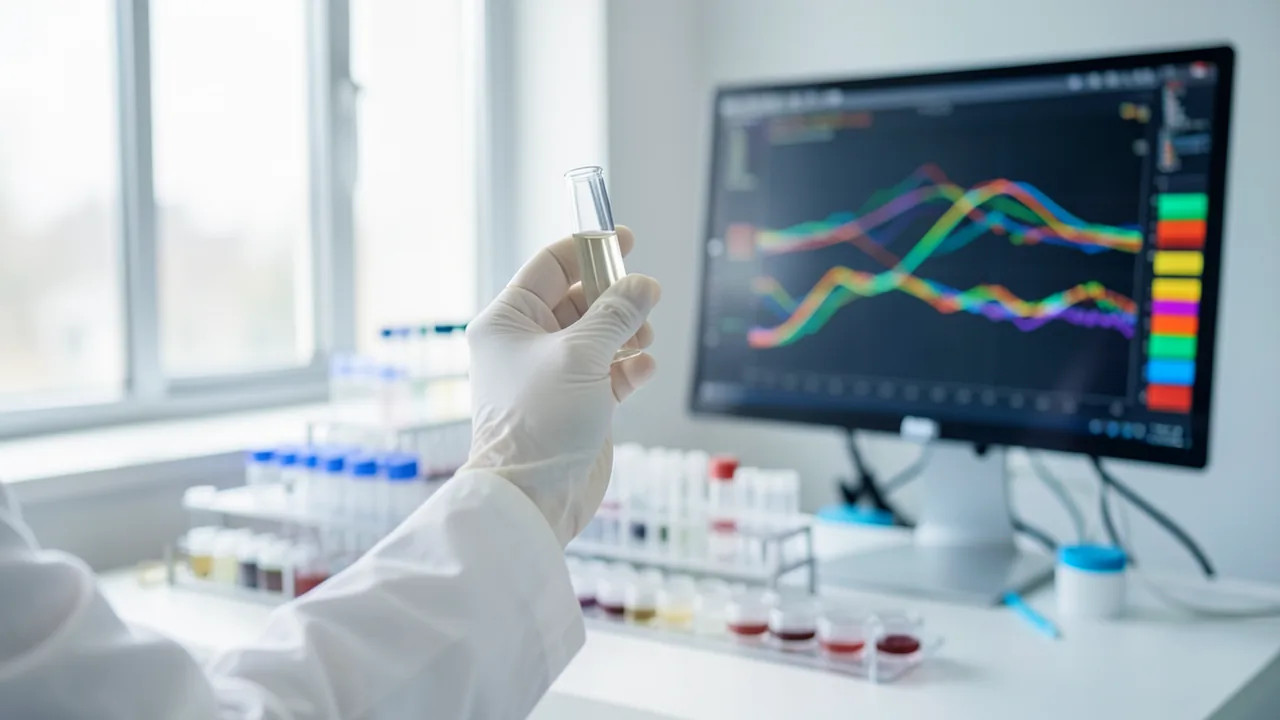
On October 20, 2026, California startup Radical Numerics announced that bacteriophages — viruses that infect only bacteria, never human cells — had been redesigned with the help of an AI model and then administered to a patient for the first time. The person had an infection with the gut bacterium Escherichia coli that, according to the company, responded neither to antibiotics nor to any of the available natural phages. The preparation was given via the compassionate use pathway, an exception route at the US Food and Drug Administration that lets seriously ill people access unapproved treatments outside clinical trials when no satisfactory alternative exists.
The details were published as a technical report on the company's website, alongside the introduction of the underlying model, Omnii-1. There is no independent peer review. And the most important piece of information is missing: the company won't say whether the patient got better.
Why anyone would prescribe a virus
The backdrop is antibiotic resistance — bacteria that no longer respond to standard drugs. According to estimates published in The Lancet, such resistance directly caused roughly 1.14 million deaths worldwide in 2021 and was associated with some 4.71 million deaths in total. Another Lancet model, cited by Futura Sciences, projects nearly 40 million deaths between 2025 and 2050.
Phage therapy is not an invention of the AI era; it is more than a century old. Once penicillin and its successors became widely available, the West lost interest; the approach continued to be developed in Georgia and Poland. With the resistance crisis, it is now enjoying a revival. A consensus guideline published in Nature Medicine in September 2026 concluded, according to ZME Science, that carefully manufactured phage preparations can generally be considered safe based on current data — while also calling for quality controls, close monitoring and better clinical trials.
The practical problem is precision fit. A phage recognizes only certain surface structures, and therefore only a handful of bacterial strains. Researchers compare it to a lock and key: if the key doesn't fit, the virus never gets through the door. Until now, labs have had to comb through collections and environmental samples to find a matching virus for each individual patient — a process that can take weeks or months. That is exactly the search the AI is meant to short-circuit.
What Omnii-1 is and what it did
According to the company, Omnii-1 is a multimodal genome model: it was trained on biological sequence data and on experimentally measured phage-host interactions from both proprietary and public databases. In other words, it learns patterns in DNA segments much as a language model learns patterns in text, and it is meant to predict which virus can infect which bacterial strain.
An important caveat: no virus was invented from scratch here. The starting point was the T7 phage, which infects E. coli and has been studied for decades. Only the genome segment for the protein gp17 was altered — the protein sits in the virus's tail fibers and handles binding to the bacterium. The rest of the genetic blueprint was left intact, the company says. Science writer Carl Zimmer describes the phage in the New York Times as a "microscopic Apollo lander" — a spherical protein shell holding the DNA, standing on six leg-like appendages.
The lab numbers
Unlike the patient details, the report is specific about the lab results. The core obstacle in reengineering phages is that almost any intervention renders the virus nonfunctional.
| Metric | AI designs (Omnii-1) | Random variants |
|---|---|---|
| Share of functional variants (at 11–15 amino acid changes) | 69.9 % | 4.8 % |
| Maximum number of protein substitutions in improved versions | 28 | 5 |
Of 6,694 variants whose activity could be measured, 2,161 worked better than the original T7 phage. In a further test, Omnii-1 was pitted against two specialized prediction systems across 37 E. coli strains that did not appear in training. According to the report, Omnii-1 covered "91.4 percent of eligible strains with just two phages," beating both comparison methods. The model is said to learn interaction patterns across species boundaries as well, for instance for the hospital pathogen Pseudomonas aeruginosa.
CEO Eric Nguyen hopes to cut the time to a matching preparation from months to days: "We think we can do this in a few days." Worth noting: only the computational design step gets faster. Manufacturing, lab testing, purification and safety checks still take as long as they take.
A precursor: in August, researchers from Stanford and the Arc Institute designed complete viral genomes with AI for the first time. Of 302 selected variants, 285 were produced and 16 were functional. Human use was not on the table then. Three members of that team, including Nguyen, later founded Radical Numerics.
What experts criticize
The caution is palpable. Harvard microbiologist Michael Baym, who was not involved in the work, told the New York Times:
"If it works, that would be fantastic."
But he said he would rather wait until the treatment is finished and it's possible to judge how novel the resulting viruses actually were. Evolutionary microbiologist Brandon Berryhill warned, according to IBTimes, that lab experiments cannot reliably predict how a synthetic phage behaves inside a complex infection in the body; being able to generate active phages on a computer doesn't explain why a treatment succeeds or fails.
The risks are well known, too, and have nothing to do with the AI: if a very large number of bacteria break apart at once, released endotoxins can trigger fever and dangerous inflammatory reactions. Preparations have to be laboriously purified of bacterial debris. Some phages can shuttle genes between bacteria (transduction) — in the worst case, resistance or virulence genes; that's why strictly lytic, well-characterized phages are preferred. And bacteria can develop resistance to phages just as they do to antibiotics. Cocktails of multiple phages are meant to blunt that.
Radical Numerics cites confidentiality agreements and patient privacy for its silence: even limited clinical details could make the person identifiable. The technical report, incidentally, doesn't name the FDA at all, referring instead in general terms to the requirements of "relevant regulatory authorities"; company representatives named the FDA clearance under the expanded access program to the New York Times. A submission for peer review is planned, to the extent the patient's consent permits disclosure. The company itself writes that observations from a single patient cannot establish safety or efficacy.
Our take
The case is a milestone in public messaging, but not yet medical proof. The lab portion is the genuinely notable part: a model that lifts the hit rate for functional redesigns from around 5 to around 70 percent would be a real productivity jump in a field where a lot of searching yields little. That assumes the numbers hold up under independent scrutiny — which is precisely what's missing so far, and a corporate blog post is no substitute.
For patients with multidrug-resistant infections, the direction still matters: personalized phage cocktails in days rather than months would be a huge difference, because such infections rarely leave time to spare. The information policy remains the sticking point. That the treatment outcome of all things stays under wraps while the announcement draws maximum attention invites skepticism — even if the privacy rationale is plausible for a single case. Controlled clinical trials and a peer-reviewed publication are the bar. Until then: interesting start, outcome unknown.
Related videos
Sources
- Bing News (fr-FR) futura-sciences.com
- Bing News (en-US) zmescience.com
- ibtimes.co.uk ibtimes.co.uk
- contagionlive.com contagionlive.com
- forklog.com forklog.com
Ask the AI assistant
Questions about this article, installation or background? Our assistant knows this page and runs on our own machine, not in someone else's cloud.
The Assistant is an AI (Gemma 4) and can make mistakes – please check important details against the source. Questions are used only to generate an answer and are deleted after one hour. Please don't enter any personal data.
Comments
What do you think? Already tried it? Write it here, no sign-up needed.
Comments are public. Links aren't allowed, and we delete abusive posts. You can delete your own comment at any time in this browser. Learn more in the Privacy Policy.