
Ant Group's Ling-3.2-flash claims wins over Claude Opus 5 at a fraction of the price
China's Ant Group has released Ling-3.2-flash, a language model that understands images, video and text. Ant says it beats Anthropic's Claude Opus 5 on three benchmarks, and it costs a fraction as much. It's free for the first two weeks.
What's going on
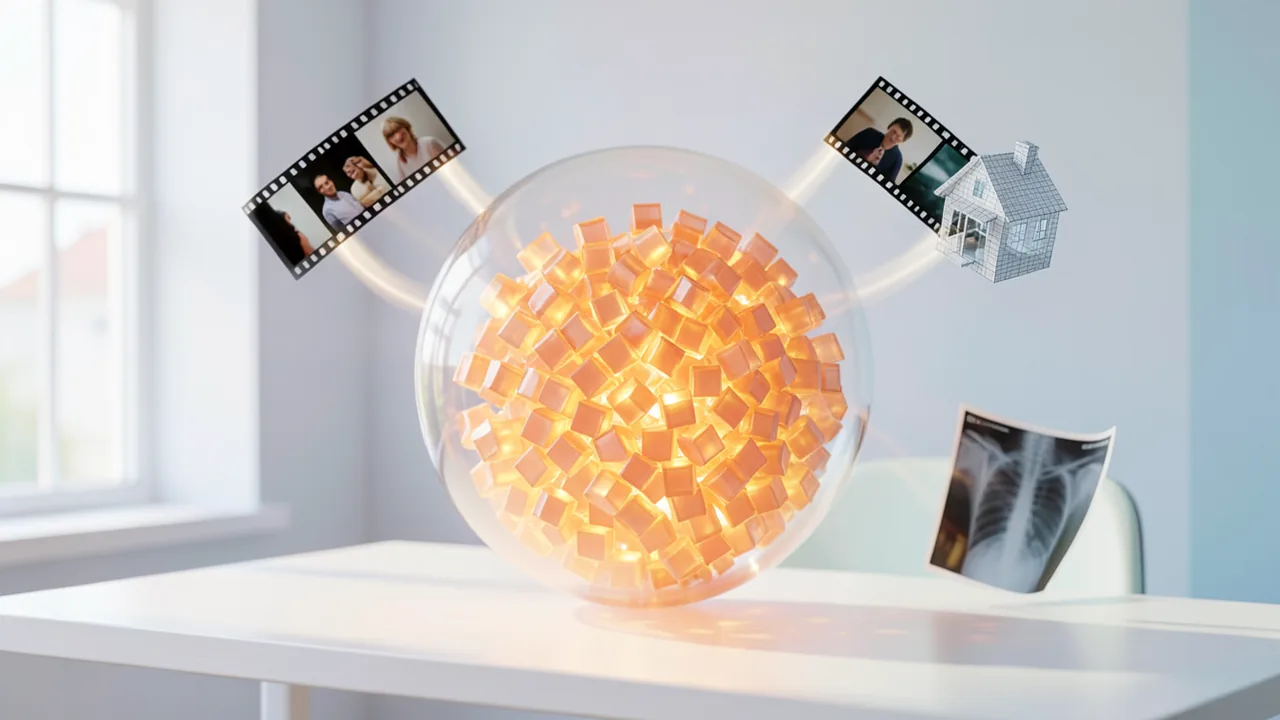
Ant Group, the Chinese finance and tech giant behind Alipay, unveiled a new model in its Ling series on November 6, 2026: Ling-3.2-flash. It was built by the "Bailing" team, known internationally as inclusionAI. According to IT之家 (ITHome), it's a natively multimodal model. That means it was designed from the ground up to understand images, video and text together, rather than having a vision module bolted on later.
The key specs: 560 billion parameters in total, about 25 billion of them active per token, and a context window of one million tokens. The context window is how much text the model can keep "in view" at once. One million tokens is roughly several thick books. You can try the model on Ant's Bailing platform, either in the browser chat or through the API. It's free for the first two weeks after launch.
The routing service OrcaRouter sums up the difference from its predecessor in one line: "Still 560B, new feel." The size hasn't changed, but the capabilities have shifted, mainly toward image and video understanding.
What the model is supposed to do
Ant highlights four areas that got a particular boost:
- Complex visual understanding: The model is meant to analyze images and video in depth and draw conclusions from them.
- Multimodal long-horizon agents: An agent is an AI that works through a task on its own over many steps, such as navigating websites or editing files. Ling-3.2-flash is supposed to keep the goal in sight across many steps and make decisions based on both visual and text information.
- 3D understanding and interaction: The model is meant to grasp three-dimensional scenes and spatial relationships.
- Medical multimodality: It's supposed to understand medical images and interpret clinical reports to help professionals with their analysis.
The benchmarks: three wins over Claude Opus 5
The headline-grabbing part is Ant's claim that the model beats Anthropic's flagship Claude Opus 5 at its strongest setting ("max") on three tests. All numbers come from Ant itself:
| Benchmark | What it measures | Ling-3.2-flash | Claude Opus 5 (max) |
|---|---|---|---|
| OmniDocBench1.5 | Understanding and extracting complex documents | 92.21 | 90.56 |
| ZEROBench (Sub) | Very hard visual reasoning tasks | 43.71 | 39.52 |
| Vision2Web | Building a web page from an image | 85.86 | 80.20 |
On DesignArena, a leaderboard where users rate how well models turn an image into a web interface (frontend), the model scores an Elo rating of 1238, according to ITHome. Elo is a rating system borrowed from chess that builds a ranking out of many head-to-head comparisons. That puts Ling-3.2-flash in the top 10, alongside models from Meta, DeepSeek and Anthropic.
One important caveat: these are three hand-picked benchmarks that Ant measured itself. The sources don't say how the model performs on other tests, such as coding or pure factual knowledge. There are no independent measurements yet.
How the tech works
The ratio of 560 to 25 billion parameters gives away the design: Ling-3.2-flash is a mixture-of-experts model (MoE). It's made up of many specialized subnetworks, the "experts." For each word, only a small selection of them gets consulted, much like a large hospital where not every patient sees every doctor. That way you keep the knowledge of a huge model, while the compute per word is closer to that of a mid-sized one.
Ant doesn't explicitly say whether Ling-3.2-flash uses the same architecture as its direct predecessor, but the identical size suggests it does. Ling-3.1-flash, unveiled in late September 2026, combines two kinds of "attention," according to a detailed analysis on note.com. Attention is the mechanism a model uses to decide which earlier words matter for the current one. Seven out of eight layers use the lean linear variant KDA (Kimi Delta Attention, originally from Chinese startup Moonshot AI). KDA stores the text so far in a fixed-size memory instead of having to keep every earlier word around individually. Every eighth layer is a more expensive Gated MLA layer that takes care of accuracy. On top of that come 512 experts, of which 8 plus one fixed "all-round expert" work on each token. That combination explains why a 560-billion-parameter model can output about 219 tokens per second, according to Artificial Analysis.
Pricing and availability
The API costs $0.30 per million input tokens and $0.90 per million output tokens. According to the DesignArena leaderboard, that's the lowest price among models in this performance class. For comparison, Anthropic's Opus models cost many times more. The API speaks both the OpenAI and the Anthropic format. If you've already written code for either provider, you'll usually only need to swap the endpoint and the model name.
The pricing is exactly the same as Ling-3.1-flash. But there's a catch, which the note.com analysis pointed out with the predecessor: the Ling-3.1-flash-1019 checkpoint got noticeably smarter (Artificial Analysis Index up from 41 to 44, plus 126 Elo on the knowledge-work benchmark AA-Briefcase). At the same time, though, it "thinks" much longer before answering. Output per task rose from 102,000 to 145,000 tokens, and the actual cost per task went from $1.00 to $1.49. So a low per-token price doesn't tell the whole story. Whether Ling-3.2-flash is similarly chatty hasn't been measured yet.
Background: the Ling family
Ant is expanding the Ling series at a rapid clip. In late July 2026, it released Ling-3.0-flash with 124 billion parameters (5.1 billion active), freely downloadable under the MIT license and designed specifically as a fast, cheap "execution model" for AI agents. According to Marktechpost, NVIDIA recently showed this model running on a single DGX Spark desktop machine. With three optimizations, output speed there rose by 42.5 percent to just under 54 tokens per second, with no measurable loss in accuracy. The 560-billion-parameter Ling-3.1-flash followed in late September, and its weights were also released under the MIT license in mid-October. According to note.com, the improved 1019 checkpoint was initially available only via the API.
For Ling-3.2-flash, the available sources mention only API access. Whether and when the weights will be available for download is still open.
The bottom line
Ling-3.2-flash shows how quickly Chinese providers are catching up with the leaders, at least on selected tasks. If you want to extract documents, turn screenshots into web pages or build visual agents, you get a model that, according to its maker, keeps pace with Claude Opus 5 at a fraction of the cost. The two free weeks are a cheap chance to run your own tests.
There are still reasons for skepticism. The comparisons with Opus 5 come from the vendor and are limited to three vision benchmarks where Ling is apparently especially strong. They say little about general reasoning, coding or hallucinations. The predecessor trailed the competition on factual reliability and command-line coding. The medical capabilities also deserve caution: "supports professionals" is not approval for diagnosis. And as long as the weights aren't available, Ling-3.2-flash, unlike its predecessors, isn't an open model but a low-cost cloud service from a Chinese conglomerate. For users in Europe, that matters for data protection.
Sources
- Google News (VN) orcarouter.ai
- ITHome (CN) ithome.com
- marktechpost.com marktechpost.com
- finance.yahoo.com finance.yahoo.com
- note.com note.com
Ask the AI assistant
Questions about this article, installation or background? Our assistant knows this page and runs on our own machine, not in someone else's cloud.
The Assistant is an AI (Gemma 4) and can make mistakes – please check important details against the source. Questions are used only to generate an answer and are deleted after one hour. Please don't enter any personal data.


Comments
What do you think? Already tried it? Write it here, no sign-up needed.
Comments are public. Links aren't allowed, and we delete abusive posts. You can delete your own comment at any time in this browser. Learn more in the Privacy Policy.