
Anthropic buys one-person biotech that ran 11 labs with Claude
Anthropic has acquired the biotech startup Mithril Medicine. Its only employee, Cody Tranbarger, used Claude to coordinate experiments at 11 labs. The goal: drugs for two rare muscular dystrophies. A 38-page report shows what Claude did, and where the evidence is thin.
What this is about
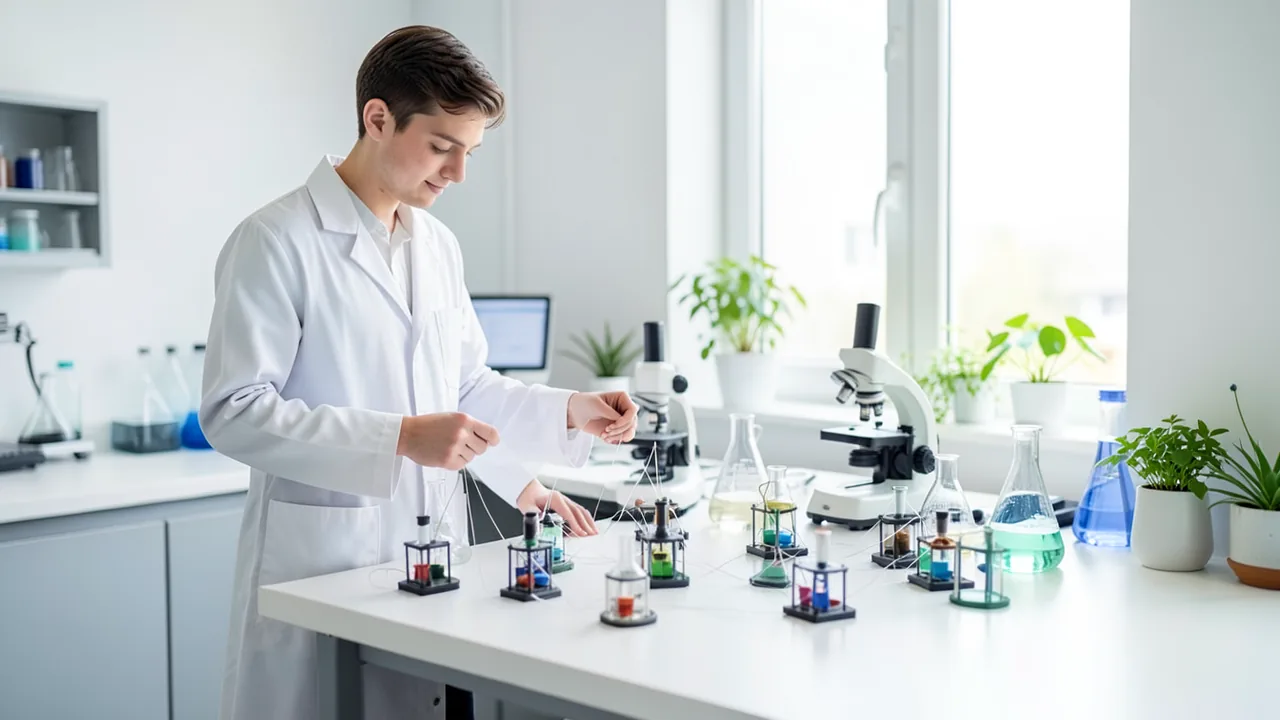
On October 27, 2026, it emerged who is behind the X account "Professor Oak," which had been publishing analyses of pharmaceutical research: Cody Tranbarger, founder and sole employee of the biotech company Mithril Medicine. The trigger was a publication by Anthropic, the maker of Claude, about its new work in medicine. According to Tranbarger, Anthropic bought Mithril earlier this year. His post: "Surprise #1: Anthropic bought a one-person biotech. Surprise #2: That person is me."
Anthropic and pharma research
Anthropic says its scientists have formed deep research partnerships with six organizations developing new drugs over the past few months, including Bristol Myers Squibb, Generate Biomedicines and Enveda. Mithril isn't one of them: it was bought to run its own research programs.
What Mithril is said to have achieved
According to Anthropic, the founder handed Claude contracts, logistics and the tracking of experiments at 11 external labs. The target was therapies for two rare forms of muscular dystrophy. The claimed result: in less than 18 months, a potential drug for one form of muscular dystrophy went from idea to promising results in mice. That's a step toward a therapy for a rare muscle disease in children. Anthropic writes that Tranbarger is continuing the work and plans several new programs. If results keep looking good, a drug could enter human clinical trials in late 2028.
The 38-page technical report tempers the lone-wolf picture: eight paid advisers supported the founder, and contract research organizations (CROs) carried out all the experiments.
What Claude actually does
The report describes a typical working week:
- In 7 minutes 53 seconds, Claude read a 341-page dossier from a lab and produced a visual summary with recommendations for each of the 113 candidate antibodies.
- It wrote 17 technical emails; 12 were sent after the team corrected them. Claude itself sent none.
- Claude proposed excluding 24 antibodies built from three identical building blocks from cell tests, for manufacturing reasons. It defended its position in 27 seconds against an objection, but the team decided to exclude them. In four minutes, Claude adjusted the plan, test list and three email drafts from 113 to 89 molecules.
- The first reply came after 96 seconds. One external lab took 8.5 hours (including nights, a weekend and a 12-hour time difference).
- For ten comparable emails, 4,938 words written by Claude became 3,409 words sent, about a third fewer. Some suggestions, such as experimental controls, stayed unchanged.
Claude reads, calculates and drafts, while the team keeps the decisions. It runs no physical tests, doesn't validate protocols on its own, and sends nothing without approval.
Weaknesses in the evidence
- The report hasn't been reviewed by independent experts.
- The mice were neither randomly assigned nor assessed in a blinded way.
- The main result rests on 7 treated animals versus 4 controls.
- The treated group was tested last, after the animal facility moved, and had longer paws, which can skew strength measurements.
- The report itself was written by Claude under the team's guidance, including literature research and diagrams. The company acknowledges a risk of bias in the section on the AI's work. The author is an Anthropic employee, and Anthropic now owns the antibody program.
Our take
Anthropic's team, led by Nathan C. Frey, head of drug discovery research, calls the model "pipeline-in-a-person." In the pharma industry, a pipeline is the portfolio of drug candidates. The idea is that one person with several Claude instances can run one. The time savings on logistics and documents are plausible, but the real bottleneck, effective and safe drugs, remains biological. With such thin data, the mouse result is more of a hint than proof. This is the manufacturer's own account.
Sources
- Numerama (FR) numerama.com
- AI Times (KR) aitimes.com
Ask the AI assistant
Questions about this article, installation or background? Our assistant knows this page and runs on our own machine, not in someone else's cloud.
The Assistant is an AI (Gemma 4) and can make mistakes – please check important details against the source. Questions are used only to generate an answer and are deleted after one hour. Please don't enter any personal data.

Comments
What do you think? Already tried it? Write it here, no sign-up needed.
Comments are public. Links aren't allowed, and we delete abusive posts. You can delete your own comment at any time in this browser. Learn more in the Privacy Policy.