
Gemini Omni 1.2 Flash: Google's video AI gets cheaper and now makes 15-second clips
Google has made its video model Gemini Omni 1.2 Flash generally available. It generates clips with sound up to 15 seconds long, lets you refine them step by step in a chat, and costs 30 percent less than its predecessor. It's built mainly for producing ads and product videos at scale.
What's going on
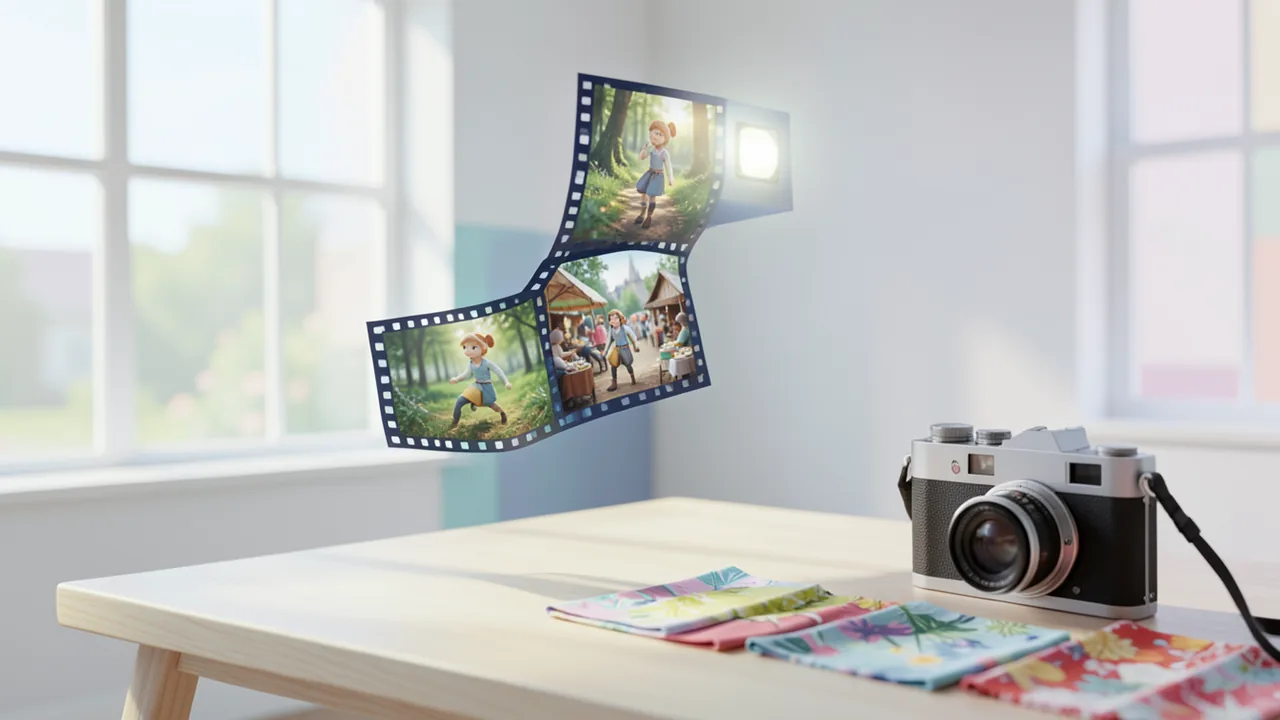
On November 5, 2026, Google released Gemini Omni 1.2 Flash, the new version of its model that creates and edits short clips with sound from text, images and video. It's generally available as of now. That means Google considers the model production-ready and offers businesses binding service commitments. You can access it through the Gemini API, Google AI Studio, the Google Cloud Console and Gemini for business. The highlights: clips up to 15 seconds, conversational editing, more faithful adherence to references and a 30 percent lower price.
According to Cryptobriefing, Google introduced the Omni series at Google I/O on May 19, 2026. Version 1.1 added scene extension and control via a clip's first and last frames.
Longer clips and conversational editing
Clips can now run up to 15 seconds in a single pass, up from 10. You can set the length to the second, anywhere from 3 to 15 seconds. According to the developer documentation cited by Unite.ai, the default is 10 seconds at 720p in 16:9 landscape. Vertical 9:16 is also supported. Google says that's long enough for a complete short story, a product explainer or a full social media ad.
The new feature is multi-turn editing: you change the same clip step by step in a chat instead of starting over each time. You can swap the product, change the background, adjust lighting or weather, or switch the aspect ratio. Anything you don't mention is supposed to stay the same. In Google's demo, a scene with two knights moves from a striped pavilion to an oak forest, a stable with a white horse, a market and finally a castle. According to Google, the characters' performances, the reflections on their armor and the framing stay intact throughout. Via the API, the model keeps track of the previous step using an ID, so you don't have to re-upload the video.
Video extension works separately: each step adds 3 to 10 seconds, using the last 10 seconds as context, for a total of up to 30 seconds. You can't prepend footage or insert it mid-clip. Interpolation between the first and last frames is still limited to 3 to 10 seconds.
References, consistency, audio and camera
You can steer the model with images of characters, products or styles, as well as with short motion clips of up to three seconds and audio references. According to Unite.ai, each request allows up to six reference images, with up to three per character and a maximum of two characters. Cryptobriefing, on the other hand, says 7 to 10 images. The figure from the documentation seems more reliable. Faces, clothing, packaging text and brand colors are supposed to stay consistent across camera angles and cuts. One example is a virtual try-on: a model photo plus front and back views of three outfits become a 15-second sequence with 360-degree turns.
Google backs this up with its own numbers. In side-by-side tests where raters compare two videos, 1.2 wins on visual consistency 62 percent of the time against 1.1 (38 percent). For character identity with multiple references, it's 63 to 37 percent. There are no independent tests yet. Superpowerdaily points out that even Google's own examples show small glitches: in one clip, a soup ladle turns into a pair of chopsticks.
Google also says dialogue sounds more natural, lip movements match the audio better (lip sync) and multiple speakers are correctly assigned to the right characters. Camera moves like FPV drone flights (from a drone's first-person view) or orbits should produce far fewer unwanted cuts. One demo flies in a single take across the piazza in front of the Pantheon, through the bronze doors and up to the opening in the dome.
Pricing and availability
| Item | Price |
|---|---|
| Video output (720p) | approx. $0.07 per second (−30% vs. 1.1) |
| Billing | $12 per 1M video tokens, 5,792 tokens per second at 720p |
| 10-second clip | approx. $0.70 |
| 15-second clip | approx. $1.04 |
| Input (text, image, video) | $1.50 per 1M tokens |
There's no free API tier. According to Google Cloud, the savings are similar at other resolutions. Cryptobriefing cites a range of $0.02 to $0.10 per second, but that isn't officially confirmed. Google recommends creating cheap drafts in 360p or 720p, refining them through editing, and only upscaling the best results to 1080p or 4K.
Consumers can use the model too: in Google Vids, you can create 15-second clips at no extra cost with a Google account or Workspace subscription. In the Gemini app, the feature is rolling out first to Google AI Ultra subscribers. In Flow, you can stage scenes and edit them step by step, and in Google Ads you can build campaigns. According to Cryptobriefing, third-party platforms like Runware and Segmind also offer the model. For enterprises there's Provisioned Throughput, meaning reserved compute capacity. All videos carry an invisible SynthID watermark that software can detect.
Important for developers: Omni 1.1 Flash remains available for four weeks. Starting December 3, 2026, API requests will be automatically redirected to 1.2 without any code changes and billed at the lower price.
Limitations and voices from the field
Google itself names open issues: fast-paced sports scenes, rapid script changes and complex physics. According to Unite.ai, only English is fully supported in the API; other languages haven't been tested. Voice editing, uploading your own audio files and audio references currently don't work in the API. According to Google Cloud, audio references are only available on an allowlist basis. Prompts and videos go through safety filters.
Partner companies praise the model, though their statements are part of Google's announcement. Shivam Rastogi of invideo says it sticks to the prompt and that physics and sound feel real. Photoroom CEO Matt Rouif calls 15 seconds one of users' most frequent requests and says the service commitments make production use possible. Picsart plans to offer the model to its more than 100 million users. Artlist, FLORA, Krea, Runway and QuickFrame AI are using it as well.
Our take
Omni 1.2 Flash isn't a big leap in quality. It's a step toward mass production. It's getting cheaper, clips are getting longer, and conversational editing means fewer regenerations. For agencies, online retailers and advertisers, that could noticeably lower the cost per video. How much it actually helps depends on whether characters and products really stay stable across multiple editing steps, and so far the evidence comes only from Google and its partners. Google deserves credit for openly naming the weaknesses in physics and fast action. For hobbyists, the most interesting part is that 15-second clips are available in Google Vids at no extra cost.
Related videos
Sources
- Google DeepMind deepmind.google
- Merkliste: superpowerdaily.com superpowerdaily.com
- Merkliste: panewslab.com panewslab.com
- cloud.google.com cloud.google.com
- unite.ai unite.ai
- cryptobriefing.com cryptobriefing.com
- Merkliste: hyper.ai hyper.ai
- The Decoder (DE) the-decoder.de
- Google News (DE) news.google.com
- Qiita LLM (JP) qiita.com
- Qiita LLM (JP) qiita.com
- Qiita LLM (JP) qiita.com
- Google News (US) news.google.com
Ask the AI assistant
Questions about this article, installation or background? Our assistant knows this page and runs on our own machine, not in someone else's cloud.
The Assistant is an AI (Gemma 4) and can make mistakes – please check important details against the source. Questions are used only to generate an answer and are deleted after one hour. Please don't enter any personal data.


Comments
What do you think? Already tried it? Write it here, no sign-up needed.
Comments are public. Links aren't allowed, and we delete abusive posts. You can delete your own comment at any time in this browser. Learn more in the Privacy Policy.