
Inception unveils Mercury 3, a diffusion language model topping 1,000 tokens/s
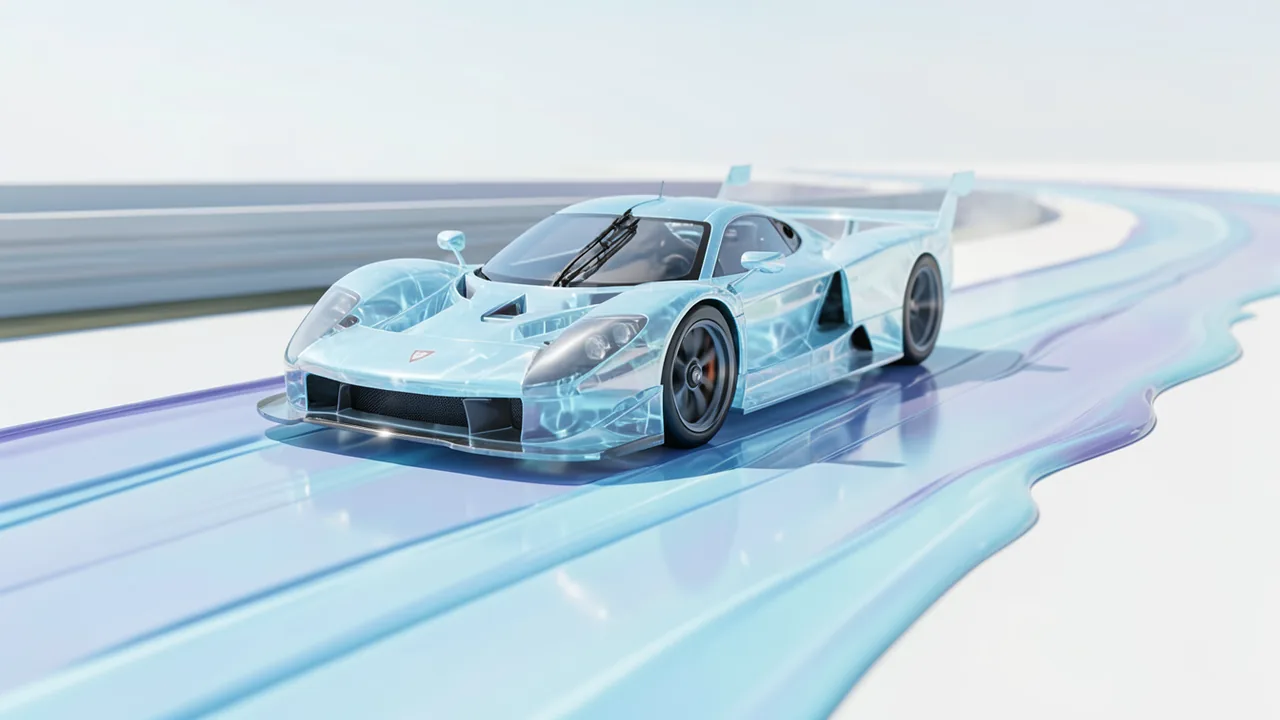
Startup Inception has released Mercury 3, a language model that generates text through diffusion, refining it over several passes instead of writing word by word. The company says it is 4–8 times faster than GPT-6 Luna and Claude Haiku 5.5 and wins eight of twelve benchmarks.
What this is about
AI startup Inception has unveiled Mercury 3, which it calls the most capable diffusion language model released so far. It is available through Inception's platform, as well as OpenRouter, Baseten and Vercel. No downloadable weights are mentioned, so this is an API model.
How diffusion works for text
Models like GPT or Claude write one word at a time (autoregressive): each new word has to wait for the previous one. Diffusion models are best known from image generation. They first sketch the whole answer roughly, then refine it over several passes, producing many words at once. That is where the speed advantage is supposed to come from. According to The Decoder, the basic principle is explained in the technical report for Google's DiffusionGemma.
Speed and benchmarks
On Nvidia GPUs, Mercury 3 generates 1,068 tokens per second, according to the company (a token is a chunk of text, roughly a word or part of a word).
| Model | Tokens/s (vendor figures) |
|---|---|
| Mercury 3 | 1,068 |
| Claude Haiku 5.5 | approx. 240 |
| GPT-6 Luna | approx. 130 |
In Inception's benchmark table, Mercury 3 wins eight of twelve tests. All three models ran at medium settings. The biggest gap is in instruction following: 76.84 points on IFBench, 15 more than GPT-6 Luna. On SWE-Bench Atlas (autonomous coding) it scores 51.08 points, versus 33.33 and 32.26 for the competitors. Claude Haiku 5.5, however, wins the longer coding test DeepSWE and is better at retrieving information from long texts. GPT-6 Luna is narrowly ahead in two Artificial Analysis tests. Inception therefore words its claim more cautiously: quality is "on par or better." There are no independent measurements yet.
Scaling
According to Inception, Mercury 3 has more than 40 times as many parameters (the settings a model learns during training) as Mercury 1, yet runs just as fast. Performance has tripled since the small Mercury 1 mini. Inception sees this as a sign that diffusion models also improve reliably with size. The company does not give the exact parameter count.
Use cases and partner experience
The target audience is AI agents, search services, customer support and tutoring, where many small delays add up. Partners with early access mainly stress speed:
- Octen AI (search for smart glasses): the search itself took about 80 milliseconds, and the language model was the bottleneck. With Mercury 3, the median time to answer was 0.9 seconds, and the whole pipeline took 2.2 seconds.
- General Learning: hints and corrections for students arrive in about a second, the company says.
- Lorikeet (customer support): shorter response times with better results.
- TinyFish AI: solved 25 of 50 navigation tasks on real websites, more than GPT-6.1-Sol, but no comparison figure was given.
Pricing and availability
Regular prices are $0.20 per million input tokens and $0.70 per million output tokens. Prices are halved at launch, and it is unclear when the discount ends. After that, Mercury 3 would cost more for output than GPT-6 Luna and Claude Haiku 5.5 (each $0.50) on shorter inputs, though the competitors charge considerably more for very long prompts. The OpenAI-compatible API is meant to make switching easier.
Background
In February, Inception introduced Mercury 2, which it says was the first diffusion model to reason through intermediate steps before answering. Before that, the startup raised $50 million, including from NVentures, M12 and Snowflake Ventures. Google is also pursuing the approach: the Gemini Diffusion demo was followed in June by the open DiffusionGemma, which Google says is up to four times faster than Gemma 4 but somewhat weaker.
Our take
For latency-critical applications, a model that exceeds 1,000 tokens/s is interesting, especially if quality really keeps up with smaller frontier models. But all figures come from Inception itself, the lead is less clear-cut than the announcement suggests according to the source, and the price advantage only holds in part. Independent tests will have to show whether the results hold up.
Sources
- Product Hunt – KI producthunt.com
- Bing News (de-DE) the-decoder.de
Ask the AI assistant
Questions about this article, installation or background? Our assistant knows this page and runs on our own machine, not in someone else's cloud.
The Assistant is an AI (Gemma 4) and can make mistakes – please check important details against the source. Questions are used only to generate an answer and are deleted after one hour. Please don't enter any personal data.


Comments
What do you think? Already tried it? Write it here, no sign-up needed.
Comments are public. Links aren't allowed, and we delete abusive posts. You can delete your own comment at any time in this browser. Learn more in the Privacy Policy.