
Microsoft unveils MAI model family: reasoning, voice, code and image
At Build 2026, Microsoft introduced a family of in-house AI models, including MAI-Thinking-1, its first reasoning model. Models for image, speech, transcription and code join it. There's also a new image editing model that comes close to OpenAI in head-to-head tests.
What it's about
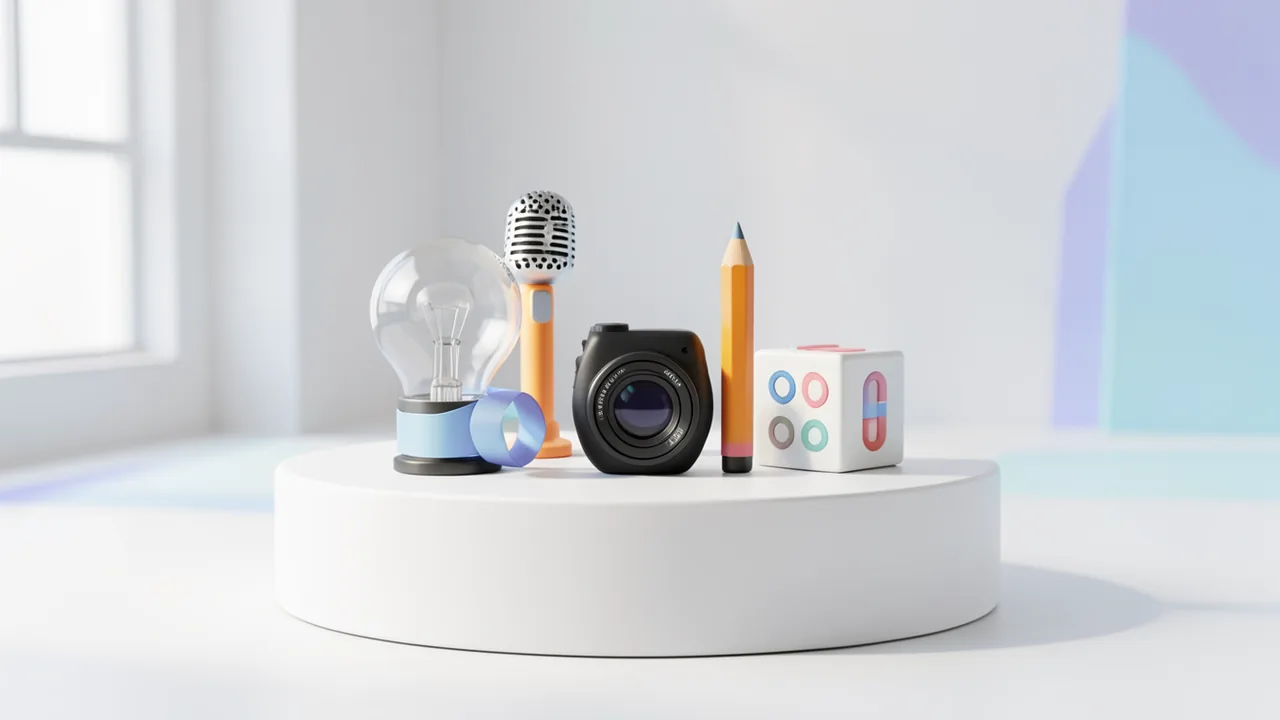
At its Build 2026 developer conference, Microsoft introduced a new family of in-house AI models called MAI. The announcement came in CEO Satya Nadella's keynote and is part of a larger package that spans everything from chips to the operating system to the cloud. At the center is MAI-Thinking-1, Microsoft's first reasoning model. Reasoning models are language models that work through intermediate steps before answering. Six more models for image, transcription, voice and code join it.
The models at a glance
According to Mashable, the new family includes:
- MAI-Thinking-1
- MAI-Image-2.5 and a Flash variant
- MAI-Transcribe-1.5
- MAI-Voice-2 and a Flash variant
- MAI-Code-1
MAI-Thinking-1 is a mid-sized model with 35 billion active parameters. Parameters are, roughly speaking, the dials a model tunes during training. "Active" suggests that only part of the model is used per token. That's typical of mixture-of-experts architectures, though the source doesn't say so explicitly. The context window, meaning the amount of text the model can process at once, is 128K tokens. Microsoft stresses high efficiency at low token costs.
Kyle Daigle, Microsoft Developer CMO and GitHub COO, said the model is built for complex multi-step instructions, reasoning over long contexts and code generation. He said it was trained from the ground up on commercially licensed data.
Performance claims and availability
According to Microsoft, independent reviewers preferred MAI-Thinking-1 over Anthropic's Claude Sonnet 4.6. On the SWE Bench Pro coding benchmark, it's said to match Claude Opus 4.6. These are vendor claims, and the source cites no independent confirmation.
| Model | Status |
|---|---|
| MAI-Thinking-1 | Private preview in Microsoft Foundry |
| MAI-Image-2.5 (+ Flash) | Live in PowerPoint and OneDrive, coming soon to Foundry |
| MAI-Code-1 | Available in Copilot and VS Code |
| MAI-Transcribe-1.5 | Coming soon in 43 languages |
| MAI-Voice-2 (+ Flash) | Already in 15 additional languages, multiple voices |
In the long run, all models are meant to be available in Foundry, Microsoft's service for building with AI models, and in the new "MAI Playground" environment.
MAI-Image-2.7: image editing close to OpenAI
The preview of MAI-Image-2.7, which modifies existing images, was announced in parallel. You provide an image and an instruction, such as changing the lighting or style, fixing text in the image, or upgrading and restoring material. The 2.5 models have supported editing since June, and the 2.6 series added support for multiple reference images.
The independent platform Artificial Analysis reports improvements over 2.6 in all seven edit types it measures. Elo scores, which show how often reviewers prefer a result, rose by 57 points for composition and framing, 49 for text and symbol editing, and 48 for scene and style. 2.7 leads in four categories.
| Model | Elo | 95% interval |
|---|---|---|
| GPT Image 2.5 Sunburst (max) | 1199 | 1188–1210 |
| MAI-Image-2.7 Preview | 1193 | 1178–1208 |
| GPT Image 2.5 Flare (max) | 1182 | 1171–1193 |
| MAI-Image-2.6 | 1151 | 1139–1163 |
The intervals for 2.7 and both OpenAI models overlap, so there's no clear winner. The improvement over 2.6, however, is clear-cut. In the Image Edit Arena, 2.7 ranks third with 1470 points, 45 more than 2.6.
You can use the model for image editing in the MAI Playground. Text-to-image will follow later, with no date given. According to Artificial Analysis, there's no API for developers, and Microsoft hasn't announced pricing or a Foundry date.
Other Build announcements
- Microsoft Scout: a proactive personal agent for scheduling, meeting prep and routine tasks across Teams and Outlook. Rollout to Frontier customers is starting.
- Surface RTX Spark Dev Box: built on NVIDIA's RTX Spark chip, with up to 1 petaflop of AI compute and 128 GB of unified memory. It's meant to run models of up to 120 billion parameters locally. Release later this year in the US.
- Microsoft Discovery: a research platform, now generally available.
- Microsoft Execution Containers: a new sandbox system meant to turn Windows into an "agent-native" runtime environment (preview).
Our take
Microsoft is building its own models alongside its existing reliance on partners, and it now covers all the common modalities. For developers, MAI-Code-1 is the one you can use right away. MAI-Thinking-1, by contrast, is only a private preview, and the comparisons with Claude come from Microsoft itself. In image editing, the measurements are independent but close. Pricing, weights (these are proprietary models) and real-world testing remain open questions.
Sources
- Google News (US) mashable.com
- Google News (US) winbuzzer.com
Ask the AI assistant
Questions about this article, installation or background? Our assistant knows this page and runs on our own machine, not in someone else's cloud.
The Assistant is an AI (Gemma 4) and can make mistakes – please check important details against the source. Questions are used only to generate an answer and are deleted after one hour. Please don't enter any personal data.


Comments
What do you think? Already tried it? Write it here, no sign-up needed.
Comments are public. Links aren't allowed, and we delete abusive posts. You can delete your own comment at any time in this browser. Learn more in the Privacy Policy.