
Nvidia halts AI server shipments to Singapore, Malaysia, Thailand and Indonesia
According to the Financial Times, Nvidia has told partners such as Dell and Supermicro to stop shipping servers with its AI chips to four Southeast Asian countries. The move follows new US export rules meant to close a loophole: Chinese companies reaching Nvidia hardware through data centers in the region. The fallout reaches Chinese AI labs, which now expect their next models to slip.
What's happening
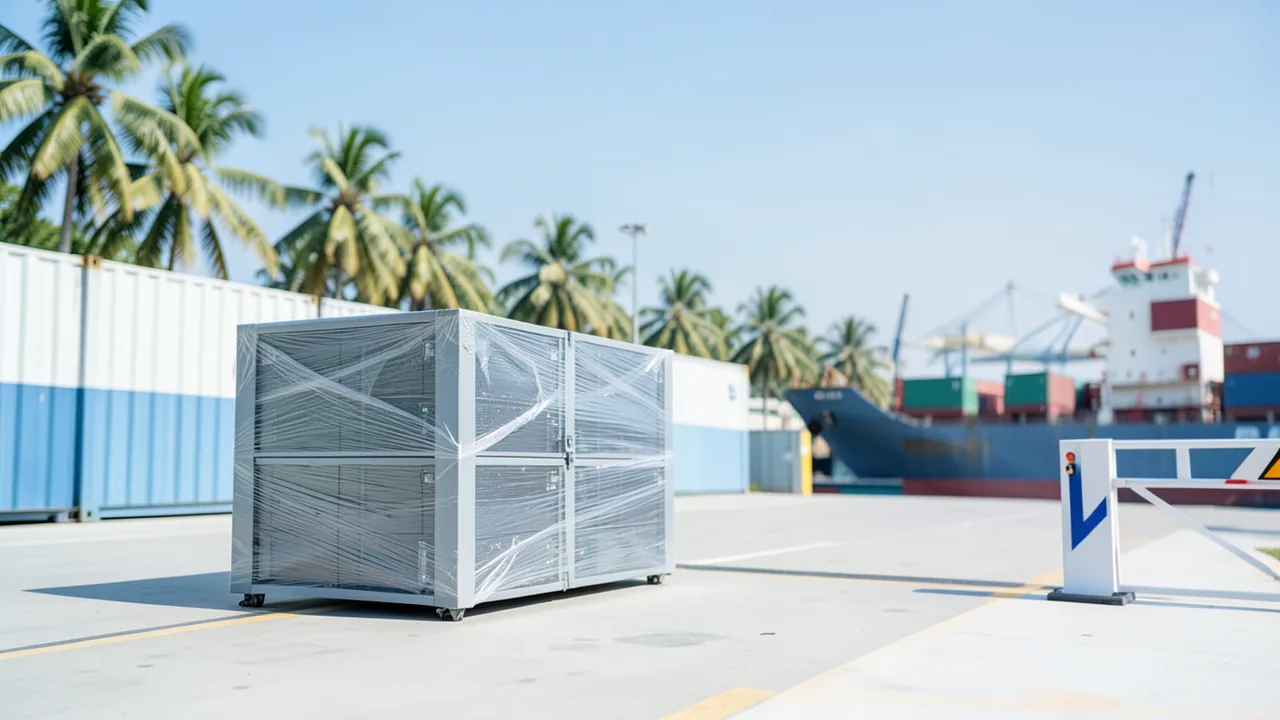
Nvidia has told its manufacturing partners to stop shipping servers with Nvidia AI chips to Malaysia, Singapore, Thailand and Indonesia. The Financial Times reported this on November 26, citing three people familiar with the matter. According to the report, manufacturers such as Dell and Supermicro, which build Nvidia's chips into finished servers, have told customers in these countries that Nvidia won't allow their orders to ship.
Nobody knows yet how long the halt will last. The FT says it could be temporary, giving Nvidia and its partners time to work out what the new US export rules require of them. Reuters couldn't immediately confirm the report. Nvidia, Dell and Supermicro didn't respond right away to requests for comment sent outside business hours.
The new US rule: a license requirement, not an import ban
The trigger is a rule from the Bureau of Industry and Security (BIS), the export control agency within the US Commerce Department. It was announced on November 16 and took effect on November 19. Since then, exports, re-exports and transfers of advanced computing hardware to or within Malaysia, Singapore, Thailand, Indonesia and Brazil have required a license. A re-export is when goods are resold onward from a third country. BIS considers these countries at particularly high risk of unauthorized diversion of chips, mainly to China. Brazil, however, doesn't appear in the reported shipping halt.
As TechRepublic points out, the rule is not a blanket import ban. Qualified end users headquartered in the US, and companies whose ultimate parent is based in the US, are exempt from the license requirement. They do have to meet reporting obligations, though. Other export controls may also apply.
The core problem: banning chip shipments to China isn't enough to keep the chips out of Chinese hands. Chinese developers can also rent compute in data centers abroad without ever owning the hardware. That's why the new rule also covers certain large-scale remote access to AI compute by companies headquartered in China, Macau or other named territories, as well as by companies whose parent is based there. According to TechRepublic, existing arrangements of this kind get a 90-day window to obtain a license. The report doesn't say whether servers already in operation will be shut down.
The espionage backdrop
The Straits Times provides context on the timing: the Commerce Department published the rule just days after Nvidia CEO Jensen Huang stepped down. His resignation followed reports of an affair with an alleged Chinese spy who had previously worked at Singapore-based cloud provider Megaspeed. Megaspeed is an Nvidia partner that rents out compute in its data centers, and it's suspected of illegally funneling advanced AI chips to China. On November 23, Nvidia's board reinstated Huang as CEO. According to Times Kuwait, Nvidia has also set up an independent committee on national security and export controls. Even before that, Nvidia had reportedly tightened GPU monitoring requirements for prospective cloud partners in Southeast Asia.
What it means for data centers and Chinese AI labs
The region is pouring money into data centers right now. According to the Malaysian Investment Development Authority (MIDA), Malaysia alone approved 123.5 billion ringgit of investment across 86 data center and cloud projects between January and September 2026. How many of them are affected by the halt is unknown. Singapore's government said on November 16 that it was in contact with companies and US authorities about the rules.
Financing is running into trouble too. Bloomberg reports that lenders have put billions of dollars in financing on hold for data center projects linked to Chinese tech giants such as ByteDance, Alibaba and Tencent. TechRepublic cites a concrete example: a planned $480 million loan to Singapore-based Aolani Cloud for GPU purchases at a Malaysian data center that serves ByteDance.
For Chinese AI companies, this could mean delays:
| Company | Affected model | Possible impact |
|---|---|---|
| Z.ai (Zhipu) | GLM-5.5 | Originally planned for November, then for year-end. According to Reuters, possibly not until Q1 2027 |
| Moonshot AI | Kimi K4 (successor to Kimi K3, released in July) | Could slip to mid-2027. The roughly six-month development cycle could stretch to a year or more |
Moonshot explicitly warns about losing access to Nvidia chips at foreign cloud providers. At the same time, according to Times Kuwait, OpenAI and Anthropic are cracking down harder on distillation. With this technique, you train your own model on the outputs of someone else's stronger model, which saves a lot of development effort.
TechRepublic advises IT teams with open orders to check several things. Get the order status confirmed in writing. Clarify who needs to apply for which licenses. Review contracts for cancellation rights and late-delivery penalties. Ask cloud providers whether reserved GPU capacity is already installed or still waiting on delivery itself. Sourcing new hardware is likely to be tough. Demand is high, and Dell reports a record backlog for AI servers.
Nvidia and the stock market
So far, the rule hasn't had any visible effect on Nvidia's forecasts. The company raised its revenue growth forecast for fiscal 2028 from 70 to around 75 percent and expects nearly $130 billion in revenue for the current quarter. Interim CFO Colette Kress told analysts that demand still far outstrips supply. She said the new controls are factored into the forecasts, but their impact is still being assessed. Whether the shipping halt will hit those numbers remains to be seen.
The stock jumped more than 31 percent to $165.05 on Monday after the board's decision on Huang. On Wednesday it fell 3.91 percent to $149.30, then recovered to $151.23 in after-hours trading. For Dell, Yahoo Finance says it's unclear how much demand will shift to exempt operators or to other regions, where HPE and Lenovo are also competing for AI customers.
The big picture
The halt shows that Washington is now going after the workarounds Chinese companies use to reach Nvidia compute: data centers in third countries and rented cloud capacity. For Southeast Asia, which is trying to establish itself as a data center hub, it's a serious setback. It also hits projects with no ties to China for as long as the licensing questions stay open. For the AI industry, this is about more than logistics. If labs like Z.ai and Moonshot get compute more slowly, their often openly available models will ship later, and the gap to US labs could widen. Plenty is still unclear. The report relies on anonymous sources, nobody knows how long the halt will last, and there are no official statements yet.
Related videos
Sources
- NewsData (kuwait) timeskuwait.com
- techrepublic.com techrepublic.com
- finance.yahoo.com finance.yahoo.com
- straitstimes.com straitstimes.com
Ask the AI assistant
Questions about this article, installation or background? Our assistant knows this page and runs on our own machine, not in someone else's cloud.
The Assistant is an AI (Gemma 4) and can make mistakes – please check important details against the source. Questions are used only to generate an answer and are deleted after one hour. Please don't enter any personal data.


Comments
What do you think? Already tried it? Write it here, no sign-up needed.
Comments are public. Links aren't allowed, and we delete abusive posts. You can delete your own comment at any time in this browser. Learn more in the Privacy Policy.