
OpenMausBot: Open-source Grok Bot rival runs on your Claude and Codex subscriptions
OpenMausBot is a free desktop app that turns one chat window into a whole team of AI bots. Instead of locking you into a single model the way xAI's Grok Bot does, it runs on the Claude and Codex subscriptions you already pay for. According to INSIDE, the project has already passed 20,000 stars on GitHub.
What's going on
OpenMausBot is a free desktop app that developers are talking about a lot right now. Its GitHub page calls it an open-source alternative to Grok Bot, the AI agent service Elon Musk's company xAI launched in August. Taiwanese tech magazine INSIDE sums up the difference quickly: Grok Bot ties you to xAI's Grok models. OpenMausBot instead runs several independent AI bots on the Claude or Codex subscriptions you already have.
The project comes from GitHub user milind-soni. The project page says it has no connection to xAI, Meta, OpenAI or Manus. It also states plainly that there is no crypto token tied to the project. Sadly, that kind of disclaimer has become necessary for open-source projects that suddenly go viral, because scammers like to borrow their names for fake coins. When INSIDE went to press, the repository had more than 20,000 stars.
A chat app where every chat is a bot
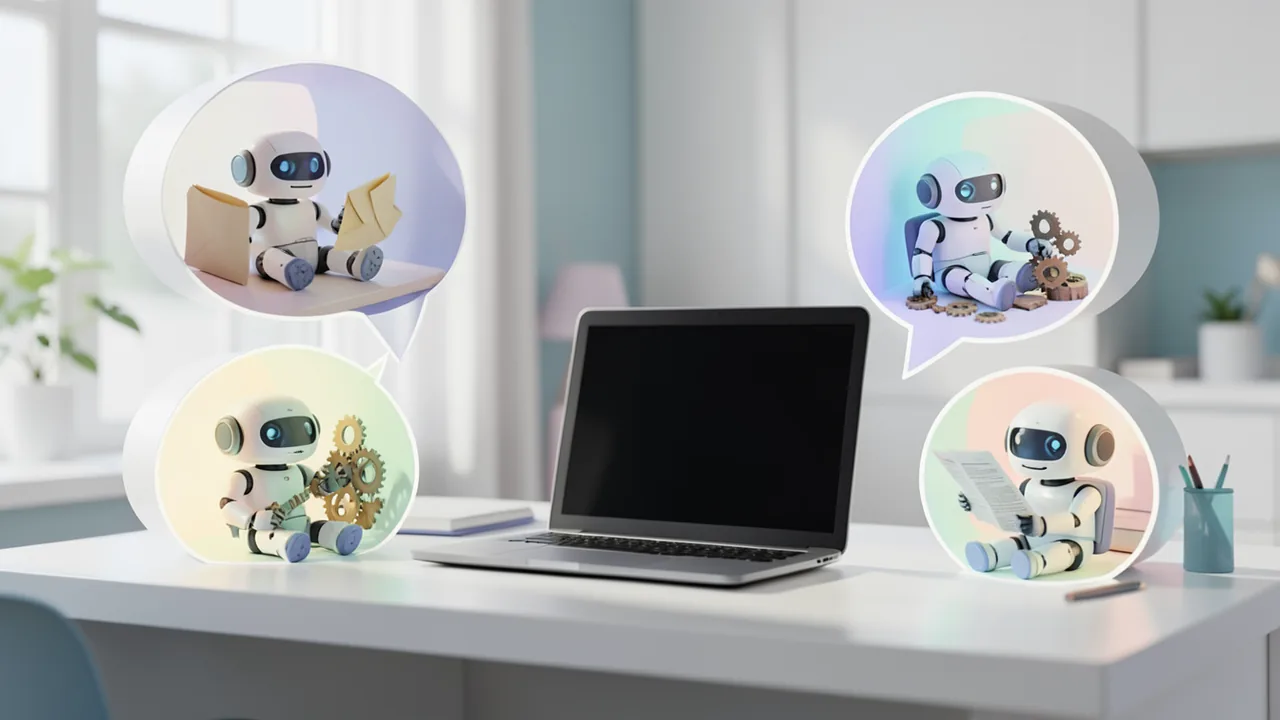
OpenMausBot is an Electron app, meaning a desktop application built on web technology under the hood, like Slack or Discord. The interface looks like a messenger, and every chat room is its own bot. According to blockchain.news, each bot can have its own personality, memory, model and connected apps. You could set up one bot for email, one for coding and one for research.
The interesting technical part is where the AI comes from. According to ScriptByAI's overview, the bots run on the command-line tools (CLIs, programs you control by typing text commands in a terminal) claude, codex and grok installed on your machine. OpenMausBot simply reuses those tools' logins and subscriptions. That means you don't need your own API key and you don't pay per request. You can use your existing Claude Code subscription, for example. You can pick the model for each bot separately and even switch it mid-conversation.
Other features, according to the project page and INSIDE:
- A workspace per bot: Each bot can use a Linux desktop in the cloud, a sandboxed virtual machine on your own computer (a simulated computer inside your computer that keeps your real system safe) or your computer directly.
- App integrations via Composio: Composio is a service that gives AI agents access to other software. The list includes Gmail, GitHub, Slack and Notion, and blockchain.news puts the total at more than 500 apps.
- Automation: Bots can be triggered on a schedule, by a webhook (a notification another service sends automatically when something happens) or by events in connected apps.
- Approval cards: Before a bot runs shell commands, edits files or starts other risky actions, a card pops up and you have to approve it.
According to blockchain.news, the project is local-first. Data like chat histories and keys stays on your device, and the bots are meant to work without external proxies or cloud services unless you deliberately choose the cloud option.
Platforms, installation and numbers
OpenMausBot runs on macOS (Apple Silicon and Intel), Windows (x64) and Ubuntu 24.04, where it ships as a .deb package or AppImage. There are also companion apps for Android and iOS. You can also launch it with npx openmausbot. According to INSIDE, the Windows version doesn't have code signing yet, meaning no digital certificate of authenticity, so Windows will probably show a warning when you start it. The Ubuntu version is still considered beta.
blockchain.news gives concrete growth figures from November 7, 2026:
| Metric | Value |
|---|---|
| New stars in 24 hours | 1,986 |
| Total stars (Nov 7) | 16,689 |
| Forks | 2,364 |
| Open issues | 851 |
| Repository created | August 11, 2026 |
| Main language | TypeScript |
| License | Apache 2.0 |
Four days later, INSIDE reports more than 20,000 stars. The 851 open issues, meaning reported bugs and feature requests, show how busy things are, but also how much work is still left.
How it stacks up against Grok Bot, Muse and dots
On its GitHub page, OpenMausBot compares itself with several commercial products:
| Product | Vendor | Key trait according to the project page |
|---|---|---|
| Grok Bot | xAI | Bot team, all bots share one cloud computer, Grok only |
| Muse | Meta | Single personal agent on a VM in Meta's cloud, US and Canada only |
| dots | OpenAI | Always-on agent in ChatGPT, GPT only, requires a Pro or Business Premium subscription |
| Cue | Manus | According to blockchain.news, also a proprietary bot platform |
| OpenMausBot | Open source | Your own subscriptions (Claude, Codex, Grok), separate environments per bot, local |
INSIDE reported earlier that Grok Bot reportedly uses Claude Opus 5.5 for some tasks. So the service may not be as strictly limited to Grok as the table suggests. The comparison comes from the project itself, so read it as self-promotion.
Costs and risks
The desktop app is free. There is also a paid MausBot Cloud, which according to ScriptByAI starts at $15 a month and is tiered by cloud computer usage hours. The most expensive enterprise plan costs $599 a month.
The real barrier is the subscription: without paid access to Claude Code or Codex, OpenMausBot won't do much for you. You also carry the risk yourself. A bot that runs commands and has access to Gmail or GitHub can do a lot of damage, whether through its own mistakes or through manipulated content in emails and web pages. The project page describes its own status as "early, but usable". INSIDE recommends keeping the approval cards switched on if you give bots broad permissions.
The bigger picture
OpenMausBot taps into a clear trend. The big vendors are building always-on AI agents that handle tasks in the cloud, and they tie you to their own models and servers along the way. This open-source project flips that around. You bring the models you already pay for, and your data stays with you. If you already use Claude Code or Codex, it's an obvious way to run several specialized agents side by side without signing up for another subscription.
Plenty of questions remain. The project is only three months old, is largely carried by a single developer and has hundreds of open bug reports. It's also unclear whether the vendors will put up with their CLI subscriptions powering third-party bot platforms in the long run. GitHub stars show interest, not necessarily quality. If you give your bots real access to accounts and files, be careful, and ideally start in the isolated VM.
Related videos
Sources
- Google News (TW) inside.com.tw
- techtarget.com techtarget.com
- heise.de heise.de
- coinkurier.de coinkurier.de
Ask the AI assistant
Questions about this article, installation or background? Our assistant knows this page and runs on our own machine, not in someone else's cloud.
The Assistant is an AI (Gemma 4) and can make mistakes – please check important details against the source. Questions are used only to generate an answer and are deleted after one hour. Please don't enter any personal data.



Comments
What do you think? Already tried it? Write it here, no sign-up needed.
Comments are public. Links aren't allowed, and we delete abusive posts. You can delete your own comment at any time in this browser. Learn more in the Privacy Policy.