
Tesla's wheel-less Cybercab costs $29,990 – but won't drive without a $299 subscription
Tesla is inviting its first private buyers in the US to purchase the two-seat Cybercab, a car with no steering wheel or pedals that can only drive itself. It comes with a mandatory $299-a-month subscription, and the contract terms give Tesla sweeping control over the vehicle.
What's going on
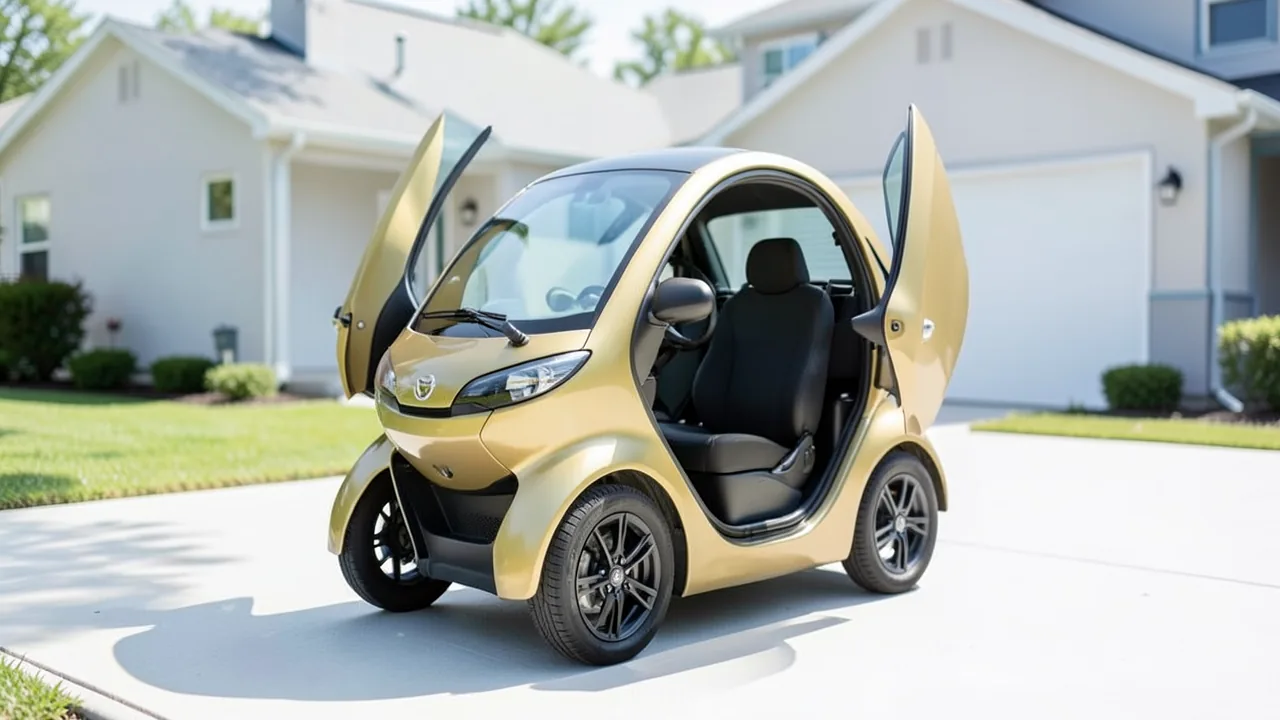
On November 13, 2026, Tesla announced on its Robotaxi account on X that "select customers" are now being invited to buy the Cybercab for private use. The Cybercab is a two-seat electric car with no steering wheel, no pedals and no side mirrors. It can only drive itself. Tesla unveiled it in October 2024 and has been building it at Gigafactory Texas since April 2026. Until now, every unit produced has gone into Tesla's own Robotaxi fleet.
The price on the order page: $29,990 before taxes. According to the Malaysian car magazine Paultan.org, no Tesla has ever been this cheap. On top of that, you pay a non-refundable $1,000 deposit and a mandatory $299 monthly subscription. The expected delivery date is December 2026 in Austin, Texas. It's unclear how many people are on the invitation list.
The subscription: no monthly fee, no driving
The key point is the so-called "Autonomy Subscription." According to Paultan.org, the accompanying contract states:
"Your Cybercab will not operate without an active Autonomy subscription."
The first month is included in the purchase price. After that, you pay $299 a month, or $3,588 a year. The subscription covers autonomous driving, cellular connectivity, remote assistance and roadside assistance, including towing for about 80 kilometers. Tires, windshield, wipers, cabin filters and camera cleaning are covered too. For servicing, the car drives itself to the shop and back, empty.
Owners pay for registration, insurance, parking, charging and regular cleaning themselves. Unscheduled repairs aren't included but may be covered by the warranty. You can cancel the subscription monthly, but partial months aren't refunded. Tesla says it will announce price changes one month in advance.
Notably, Elon Musk himself wrote on X that the monthly fee is "too high." He said it should be closer to the roughly $115 Tesla charges on other models for "Full Self-Driving" (FSD, Tesla's driver-assistance and self-driving software) plus connectivity. That would come to about $1,380 a year. Tesla hasn't announced a final price, though.
What owners can and can't do
The contract terms, which an X user made public and Paultan.org reported on in detail, show how much control Tesla keeps:
- Approved areas only: The car only drives where Tesla allows it. These zones may differ from the Robotaxi areas and can be expanded or shrunk. Tesla can also restrict operation by road type or weather.
- Remote access: Tesla can locate the car, restrict it, take it over remotely or put it into a safe state.
- Penalty system: Three or more "strikeouts" for improper or unsafe use trigger a one-week suspension, and you don't get a prorated refund of the monthly fee.
- No commercial use: Ride-hailing, deliveries or rentals through third parties are banned without Tesla's consent. Owners can only add their car to Tesla's own Robotaxi network if Tesla allows it in writing or enables the feature.
- No resale: Without written approval, you can't sell or transfer the car. Violations carry damages of at least $50,000 or the full business value, whichever is higher, and Tesla can disable the car. Tesla also reserves the right to buy back the vehicle at any time at a market value it determines itself.
- Looks: Wraps, window tinting or wheel swaps only through Tesla or authorized partners.
For emergencies, there are manual controls that let you move the car at up to 3 km/h. They're not meant for public roads and require a valid US driver's license.
The author of the Yahoo Finance piece also points out that insurance costs are unclear. Since the car has no controls, liability in a crash would almost always fall on Tesla's driving system. Until safety data is published, Tesla's own insurance may be the only option. Tesla's Robotaxis were involved in several mostly minor crashes during the pilot phase, and in about half of them the vehicle appeared to be at fault. Lending the car to friends is risky too: if they do something wrong, the car could get suspended.
Specs
| Feature | Value |
|---|---|
| Seats | 2, fully adjustable |
| Screen | 21 inches, center-mounted |
| Cargo space | 569 liters |
| Battery | approx. 47.6 kWh |
| Motor | 1 motor, 163 kW (222 PS), front-wheel drive |
| Weight | 1,412 kg |
| Range | 673 km unadjusted in EPA testing, official figure expected around 470 km |
| Charging | NACS fast chargers only, e.g. Tesla Superchargers |
The gold color of the body panels comes from a special injection-molding process rather than paint. The gullwing doors open and close automatically, and there's no rear window. Every car gets a test drive before delivery and arrives with about 400 kilometers on the odometer, which already count toward the warranty.
Where Tesla's Robotaxis already operate
Tesla launched its driverless Robotaxi service in Austin in June 2025 using Model Y vehicles, later adding Dallas and Houston (April 2026) and Miami (July 2026). According to Paultan.org, the Model Y now runs without safety monitors in eight US cities: Austin, San Antonio, Houston, Dallas, Fort Worth, Miami, Orlando and Tampa. In the San Francisco Bay Area, a Tesla employee still rides along. Cybercab rides are so far only available in Austin, where more than 300 units are on the road. Dallas is set to follow in November. For comparison: rival Waymo, an Alphabet subsidiary, operates in eleven US cities, according to AFP.
Tesla's AI chief Ashok Elluswamy wrote that private Cybercabs would drive unsupervised in all Robotaxi areas, "just for the owners' needs." Musk said the offer will eventually be available nationwide, pending regulatory approval. On the October earnings call, however, Musk also stressed that the vast majority of Cybercabs will be owned by Tesla itself. To make room for more Cybercabs, Cybertruck production in Texas is set to wind down in mid-2027.
According to Yahoo Finance, the move comes sooner than expected. On that same earnings call, Elluswamy had said of regular customer Teslas that the first privately owned cars could join the Robotaxi fleet around Q2 2027. He said the software for the Cybercab and Model Y is the same and will ship to customers with version 15.
Regulators are watching closely
In the US, manufacturers self-certify that their vehicles meet federal safety standards (FMVSS). That's different from many other countries, where new models need approval upfront. Tesla self-certified the Cybercab this way, even though it has no steering wheel, pedals or mirrors, and it holds no exemption.
The traffic safety regulator NHTSA opened an inquiry in early September, shortly after paid Cybercab rides began. A week later, it issued a special order demanding sworn answers to 21 questions. Tesla responded on October 30 and asked for the entire file to be treated as confidential. There are no findings yet. In June, NHTSA had proposed dropping the brake pedal requirement for fully autonomous vehicles. And according to AFP, many states still require a human safety monitor.
Our take
The Cybercab is the first attempt by a major automaker to sell a car with no controls to private buyers. That's a real turning point: if you buy one, you own a vehicle that won't drive without Tesla's ongoing software, approval and payment. Legally, the model looks more like a perpetual license than traditional car ownership, complete with a resale ban, remote shutdown and buyback rights.
In practice, the benefits are narrow for now. If you don't live in one of the Robotaxi areas, you can barely use the car, and earning money with it as a robotaxi is explicitly ruled out. Open questions remain: insurance costs, the final subscription price (which even Musk thinks is too high), how many people are invited and, above all, the outcome of the NHTSA review. For Europe, the offer is irrelevant for now. In Malaysia, for example, the Cybercab is only on display because there are no rules for autonomous vehicles there yet.
Sources
- NewsData (nigeria) tekedia.com
- finance.yahoo.com finance.yahoo.com
- techxplore.com techxplore.com
- paultan.org paultan.org
Ask the AI assistant
Questions about this article, installation or background? Our assistant knows this page and runs on our own machine, not in someone else's cloud.
The Assistant is an AI (Gemma 4) and can make mistakes – please check important details against the source. Questions are used only to generate an answer and are deleted after one hour. Please don't enter any personal data.
Comments
What do you think? Already tried it? Write it here, no sign-up needed.
Comments are public. Links aren't allowed, and we delete abusive posts. You can delete your own comment at any time in this browser. Learn more in the Privacy Policy.