
AI replaces the photo studio: Zalando shuts its Berlin studios, cutting 340 jobs
Zalando, Europe's biggest online fashion retailer, has closed both of its Berlin photo studios and switched to AI-generated images, Reuters reports. 340 jobs are gone. Confidential contracts also show how major fashion brands are trying to secure sweeping rights to their models' faces and bodies.
What's going on
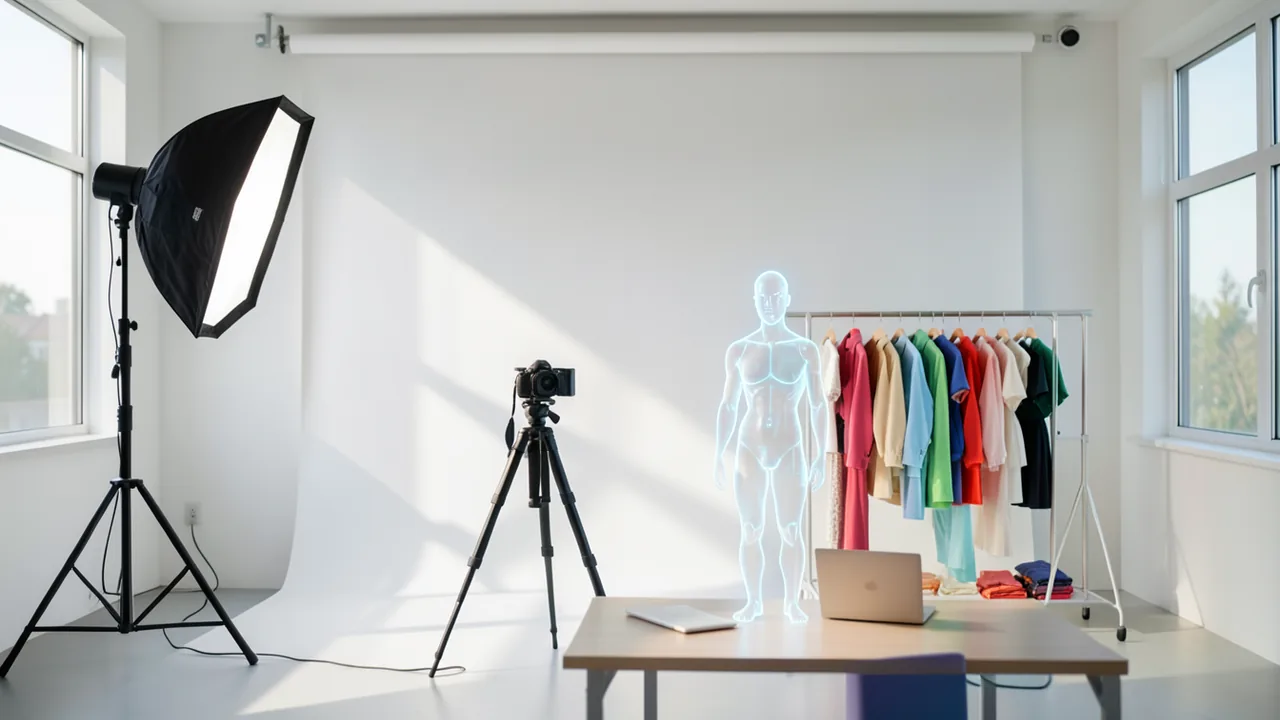
The fashion industry is moving its product photography to artificial intelligence at breakneck speed, and it's already costing jobs. That's the finding of an investigation by Reuters, picked up by the photography site PetaPixel and the Spanish outlet Photolari, among others. The most striking case is Zalando. Europe's largest online fashion retailer has closed both of its Berlin photo studios and now relies on AI-generated images instead. In total, 340 jobs have gone. The company says some of those employees were moved to other parts of the business. The reports don't say how many.
Photographers and studio staff aren't the only ones affected. Models are under pressure too. Some are being replaced by entirely artificial figures. Others are being asked to sign away sweeping rights to their own appearance.
Why retailers are turning to AI images
For online retailers, product photography is a huge expense. Every garment needs several images, often on a model, in different poses and colorways. That means studio rental, photographers, models, stylists, makeup, retouching and, above all, time. Generative AI, meaning software that creates new images from reference material or text descriptions, can replace or shortcut many of these steps.
A second German example is About You. The fashion retailer has built a digital image studio called Scayle Studios that works with AI-generated models. The company says this cuts production costs by 90 percent. Julian Jansen, About You's vice president of marketing, told Reuters:
"We save so much money. You always had this super-fast world of e-commerce and this super-slow traditional world of photo shoots, and they just didn't fit together. With AI, it's now on a completely different scale."
The 90 percent figure comes from the company itself. It's unclear how it was calculated, or whether costs for software, compute or post-production are included.
Contracts: faces and bodies as raw material
The more explosive part of the Reuters investigation concerns the models who still get booked. Reuters says it reviewed dozens of confidential shoot contracts from major brands, including Calvin Klein, Diesel and L'Oréal. According to PetaPixel, these contracts effectively let brands reuse a model's likeness again and again for any purpose. They can also use just the body and swap in a different head with AI image editing.
Some concrete examples from the report:
- Calvin Klein: A draft contract would allow the fashion house to use "sufficiently unidentifiable images of the model (without identifying features such as face, scars, tattoos or similar)" to train and fine-tune AI tools. In other words, the images would improve the software so it learns "general model characteristics." No extra pay was planned for this.
- Diesel: On a casting form for one shoot, models agreed to the "alteration or reconstruction of facial features and body proportions," to the "swapping of faces between participating models," and to the "superimposition of the participant's face onto the body of another person." Diesel told Reuters this release applied only to one specific campaign and isn't a typical contract.
- Reale Actives: Reuters says this brand also wanted the right to create digital clones of models. The company denies ever having used AI to replicate a model.
Patrick Staal, owner of the Barcelona model agency Uniko Models, told Reuters what agencies now see on a regular basis:
"Some brands ask to alter faces, bodies, skin, age or facial expressions with AI after the shoots. Others ask for 'digital twins' of the models to be created, which they can then reuse without a new production."
A digital twin is a virtual copy of a real person. It can be re-dressed, posed and staged at will, without the person ever having to step in front of a camera again. For the model, that can mean a single paid shoot but unlimited use.
Fully synthetic models
Beyond editing real photos, some companies now skip humans as source material altogether. According to PetaPixel, they use fully synthetic models: figures who never existed. That eliminates not only fees but also questions about the image rights of real people. But it still leaves open the question of which images the underlying AI systems were trained on. That's exactly what clauses like the one in the Calvin Klein draft are about.
What it means for the industry
Photolari sums up the trend this way: fewer traditional shoots, lower costs and more and more AI-generated images. Many image professionals are being left behind and will have to reinvent themselves. A whole chain of jobs is affected: photographers, assistants, stylists, makeup artists, retouchers, studio technicians and models.
It's no coincidence that the two most prominent examples are German companies. Zalando and About You are among Europe's largest fashion platforms and produce huge volumes of product images every day. AI pays off fastest where images are mostly standardized and needed in bulk: items on a neutral background, the same poses every time.
Our take
The closure of Zalando's studios is one of the clearest signs yet that generative image AI doesn't just make individual tasks easier. It makes entire departments redundant. 340 jobs at a single company is a scale that goes well beyond isolated cases. For shoppers, it also means the model wearing that jacket in the online store may not exist at all. How well AI images show fit and fabric realistically is an open question the reports don't answer.
The legal side matters at least as much. The contracts Reuters reviewed show brands trying to lock in models' faces and bodies as reusable raw material, sometimes including AI training without extra pay. Hollywood has already seen similar fights, with actors battling over rules for digital doubles. The fashion industry still largely lacks such collective agreements, and models are often on their own when they sign.
Some caveats: the 90 percent cost saving is About You's own figure, and Diesel and Reale Actives dispute parts of the reporting. It's also unclear how many of the 340 Zalando employees actually kept jobs inside the company. Still, the direction is clear. Product photography in fashion retail is one of the first fields where AI is replacing human work on a large scale.
Sources
- Bing News (es-MX) photolari.com
- petapixel.com petapixel.com
- NewsData (colombia) infobae.com
Ask the AI assistant
Questions about this article, installation or background? Our assistant knows this page and runs on our own machine, not in someone else's cloud.
The Assistant is an AI (Gemma 4) and can make mistakes – please check important details against the source. Questions are used only to generate an answer and are deleted after one hour. Please don't enter any personal data.


Comments
What do you think? Already tried it? Write it here, no sign-up needed.
Comments are public. Links aren't allowed, and we delete abusive posts. You can delete your own comment at any time in this browser. Learn more in the Privacy Policy.