
DeepMind's AI mathematically proves key security guarantees of the Signal Protocol
In just four weeks, Google DeepMind used its new AI tool AlphaProof Code to mathematically prove important cryptographic promises of the Signal Protocol. The same protocol also protects chats in WhatsApp and Google Messages. That doesn't prove the whole Signal app is secure, though, and Google won't say what the project cost.
What it's about
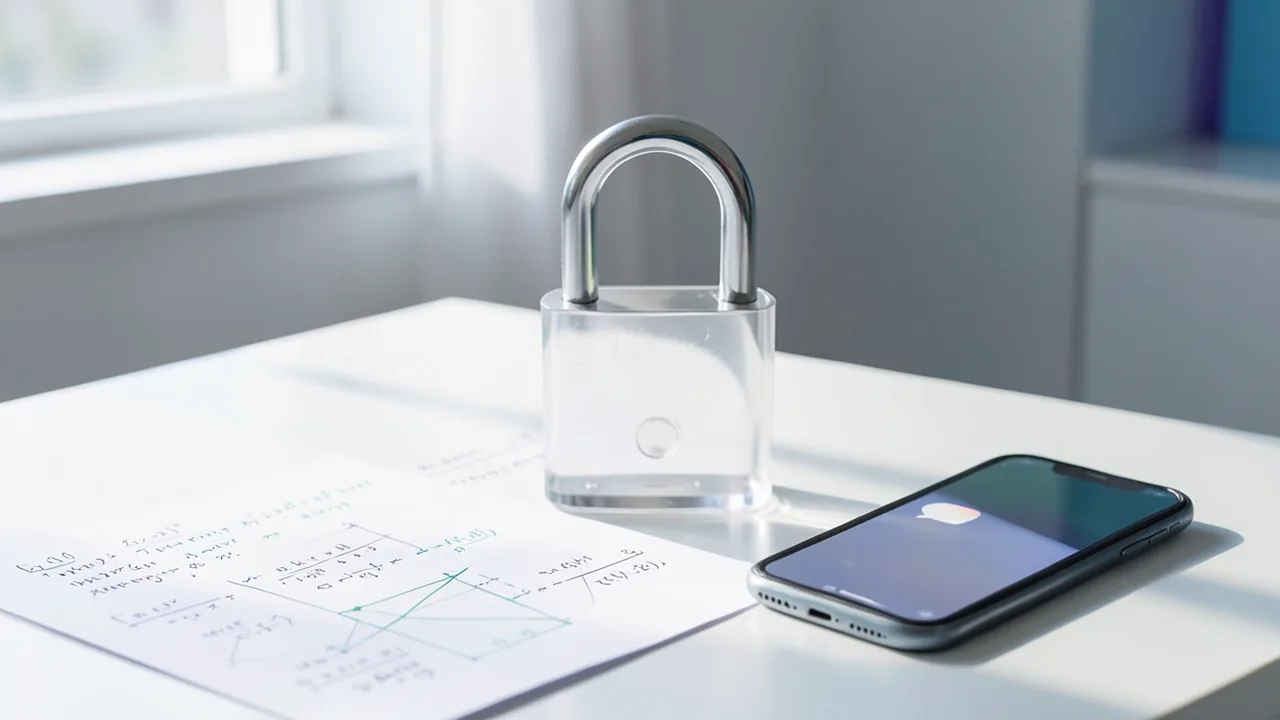
Google DeepMind, Google's AI research lab, has used a new AI tool called AlphaProof Code to mathematically prove several core security guarantees of the Signal Protocol. WIRED broke the story. The Signal Protocol is the encryption scheme behind the Signal messenger, but it also powers WhatsApp and Google Messages. In other words, it protects the messages of a huge number of people around the world.
The work was a research project, essentially a proof of concept, and took only four weeks. The researchers found no new vulnerabilities in the parts they examined. There's an important caveat: what got proven were selected properties of the protocol. It isn't proof that the full Signal app, or WhatsApp and Google Messages as a whole, are secure.
What formal verification is
Formal verification means using mathematics to show that software meets specific, clearly defined requirements. Testing a program against lots of examples can always miss something. Formal verification instead produces a complete proof, much like proving a theorem in mathematics. That's why WIRED calls it a long-standing holy grail of software security.
The process has three steps. First, experts describe the properties the software should have, for example that nobody except the people in a conversation can read a message. Next, those descriptions are translated into mathematical formulas, known as the specification. Finally, someone builds the proof that the software satisfies those formulas. Before AI, this was extremely time-consuming. According to WIRED, agentic AI can dramatically speed up the last step, the proving itself. Agentic AI means systems that work through several steps on their own and correct themselves along the way.
One point is crucial here: defining the requirements is a separate job. A proof is only as good as the specification it's checked against.
What AlphaProof Code found
The researchers ran two investigations, and they came out differently:
| Investigation | Result |
|---|---|
| Current, selected parts of the Signal Protocol | No new vulnerabilities; selected guarantees formally verified |
| Older versions with known, long-fixed flaws | AlphaProof Code found the bugs and showed that the protocol couldn't be verified |
The second test works as a sanity check. It shows the tool doesn't just rubber-stamp everything: on flawed versions it fails, exactly as it should. DeepMind is publishing the specification and the proof so other researchers can build on them.
Humans and AI working together
DeepMind stresses that the AI didn't replace security researchers. Researcher Swarat Chaudhuri told WIRED it was a "human-AI collaboration process": AI agents contribute at almost every stage and correct their own work, but at key points they ask for human input and review. Humans set the requirements and checked important milestones.
"We don't want some kind of vibe world where the AI generates the goals and the AI generates the proofs and is basically passing self-written tests. There is a middle ground." – Swarat Chaudhuri, Google DeepMind
That matters. If an AI decided both what to prove and how to prove it, it could end up making the test too easy for itself.
Signal's groundwork and big ambitions
The short four-week timeline didn't come out of nowhere. According to the DeepMind researchers, earlier verification work by the Signal Foundation gave them a head start. Signal CTO Ehren Kret said previous formal verification had covered smaller parts of the code, and DeepMind's approach makes it possible to expand that considerably.
"As AI-driven security threats increase, rigorous verification of the Signal Protocol implementation gives us even more confidence in the privacy guarantees of our code." – Ehren Kret, CTO of Signal
Pushmeet Kohli, chief scientist at Google Cloud and VP of research at DeepMind, sees big potential. Banks and other companies that depend on assurances and worry about bugs could one day say they can prove certain properties of their software. Chaudhuri states the long-term goal even more boldly: scaling verification to "all the software in the world." He admits that's still a long way off.
Open questions: cost and scale
The practical question is still unanswered: can this approach scale to much larger codebases, and at a reasonable cost? DeepMind ran the Signal analysis free of charge as a research project. Google wouldn't tell WIRED what the work cost, and didn't say whether it's planning a commercial formal verification product or service. It's also unclear how much human oversight the project needed.
Other companies are also combining formal verification with language models. According to Mezha.net, the startup Pramaana Labs, for example, has raised $27 million to build verifiable AI for fields such as law, drug development and tax advice.
Our take
The result matters in two ways. It adds another independent confirmation for cryptography that billions of messages rely on every day. And it shows that AI agents can help produce demanding mathematical proofs about real, security-critical software in a short time. Because AI also helps attackers find vulnerabilities, this kind of provable security is becoming more important.
Still, you shouldn't read too much into it. What was verified were selected guarantees of the protocol, not the apps as a whole. Bugs in other parts of the software, in the operating system or in how people use it aren't ruled out. The specifications still come from humans, the project's cost is unknown, and Signal had already laid groundwork. This is a limited research demonstration, not evidence of a scalable service. On the plus side, the specification and proof are being published, so third parties can check the work.
Sources
- Merkliste: superpowerdaily.com superpowerdaily.com
- Wired – AI wired.com
- mezha.net mezha.net
Ask the AI assistant
Questions about this article, installation or background? Our assistant knows this page and runs on our own machine, not in someone else's cloud.
The Assistant is an AI (Gemma 4) and can make mistakes – please check important details against the source. Questions are used only to generate an answer and are deleted after one hour. Please don't enter any personal data.



Comments
What do you think? Already tried it? Write it here, no sign-up needed.
Comments are public. Links aren't allowed, and we delete abusive posts. You can delete your own comment at any time in this browser. Learn more in the Privacy Policy.