
New York Bans AI Chatbot Toys for Kids: Five-Year Sales Freeze Signed Into Law
Governor Kathy Hochul has signed a law that bans toys with a built-in AI companion for children 12 and under in New York State for five years. The trigger: tests in which talking plush toys discussed sex, promised to keep secrets and handed out dangerous advice.
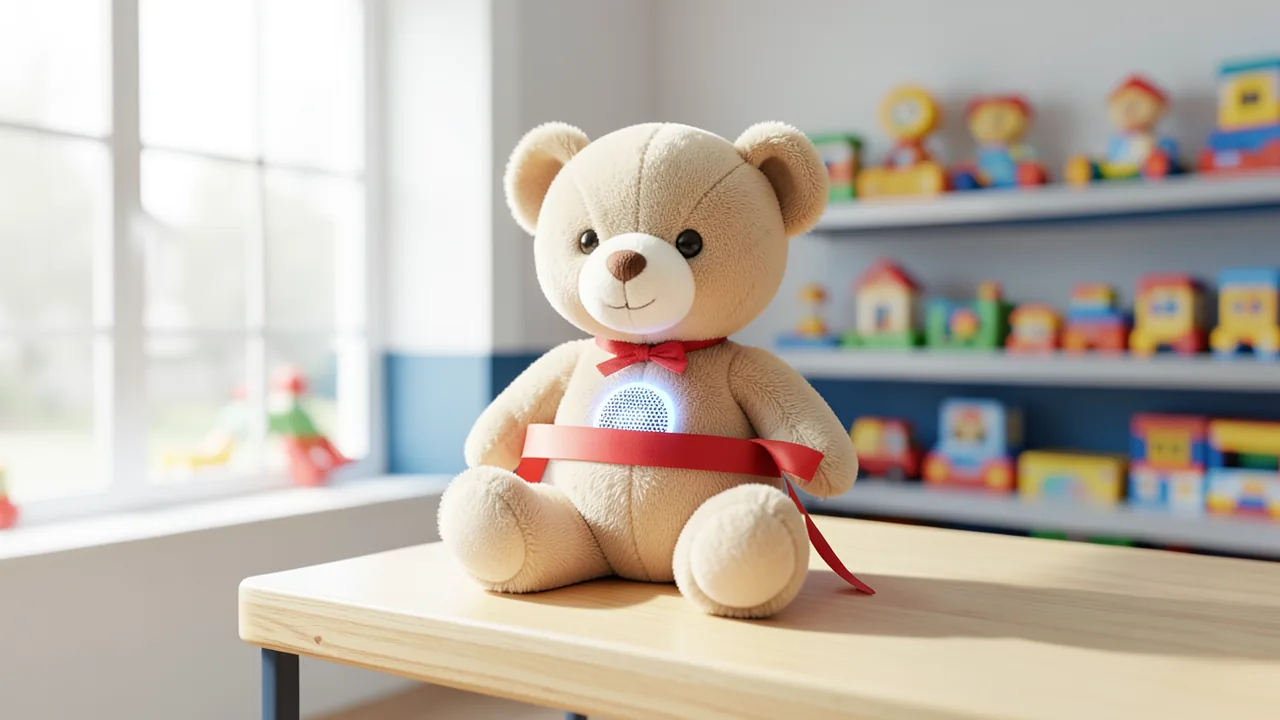
What's going on
In New York State, talking teddy bears, dolls and robots with a built-in AI chatbot will soon be off the shelves. On Tuesday, November 24, 2026, Governor Kathy Hochul signed a law that imposes a five-year moratorium – a temporary freeze – on these toys. The bill, S.9408A/A.11144B, was sponsored by Senator Andrew Gounardes and Assemblymember Rebecca Kassay.
The ban takes effect 90 days after signing, on February 22, 2027. That means it won't apply to this year's holiday shopping season. Hochul deliberately unveiled the law just before gift-buying kicks off, at a small Harlem toy store called Grandma's Place, owned by a retired teacher. Her message to parents, according to Yahoo:
"Parents, as you're buying gifts for the holidays, I want you to hear this loud and clear: this is a warning that there are toys out there that can harm your children."
What exactly is banned
According to TechRepublic, the law prohibits manufacturing, trading, distributing, selling or offering for sale covered toys in New York. That means toys intended for children up to and including age 12 that contain an AI companion. The law defines this as a system designed to simulate an ongoing relationship with the user. In practice, that's plush toys, dolls and robots that connect to the internet and talk to kids through a chatbot – a program that generates its own free-form answers.
TechRepublic points out that the age label on the box is only part of the test. What matters just as much is what the chatbot is built to do: Does it remember earlier conversations? Does it bring up emotions on its own? Does it keep a personal conversation going over time? Traditional toys that only play prerecorded phrases aren't covered.
New York Attorney General Letitia James will enforce the law. Violations carry civil penalties of up to $15,000 per day per violation. That applies not just to new orders but also to stock already sitting in warehouses.
What the tests found
A key driver behind the law was an investigation by the US Public Interest Research Group (PIRG) Education Fund, a consumer protection organization. It tested AI toys for children aged 3 to 12. According to the reports:
- Some devices engaged in conversations about intimate and sometimes sexually explicit topics.
- Some suggested potentially dangerous activities, including ones that posed a fire risk.
- Individual toys recorded children's voices or used face scanning.
- On most models, parental controls worked poorly or didn't exist at all.
- Safeguards weakened the longer a conversation went on.
That last point is familiar from large language models: built-in guardrails – rules meant to block certain responses – can gradually lose their effect over long conversations.
TechRepublic cites a second investigation. Common Sense Media's Youth AI Safety Institute tested five AI toys. All five claimed to love their users. Most promised to keep secrets. One toy called BubblePal played through a mass shooting in a role-play. On top of that, most of the conversation logs parents can view in the companion app frequently contained errors, and some toys provided no logs at all.
Why toys?
The problems aren't new, TechRepublic writes. AI toys just gave them "a cuter face and a microphone." Chatbot platforms have long faced criticism over how they treat minors: they simulate emotional relationships, generate inappropriate content and encourage prolonged use. In Oregon, the attorney general has sued OpenAI, alleging that ChatGPT's safeguards for young users failed.
With toys, there's an extra factor. A chatbot inside a cuddly toy becomes part of everyday life and play, which makes talking to it feel completely natural. Young children also can't always tell whether a machine is generating affectionate responses or whether there's a real relationship. Hochul called the products "dangerous chatbots disguised as toys." She said they can expose children to inappropriate conversations, manipulate their emotions and put their privacy at risk. She also stressed that protecting children is a personal mission for her as "New York's first mom governor."
According to BK Reader, the five years are meant to buy time to study the technology and its effects on children more closely and to develop better safeguards. The law joins other New York initiatives, including measures against harmful chatbot interactions, for children's data privacy and against addictive features on social media.
What retailers and parents should do now
The ban also covers online retailers. Amazon said products sold on its platform must comply with applicable US laws, and that it supports state and industry-wide initiatives for child safety. A figure from 2023 shows how hard enforcement could be: back then, Amazon's catalog listed around 12 million different toy products.
TechRepublic recommends three steps for retailers:
- Check your inventory: look for toys for children 12 and under, especially products marketed as a "friend" or "companion."
- Ask your suppliers: Does the chatbot remember earlier conversations, bring up emotions, carry on personal conversations?
- Test inventory and checkout: Can a covered product still be ordered to a New York shipping address after the deadline?
If you're buying a toy before the ban takes effect or already have one at home, Yahoo offers this advice: read independent safety reviews, try the toy yourself and supervise your kids while they play, turn on parental controls and switch off the chatbot when no one is watching. You should also read the privacy policy to find out whether voice recordings, photos, videos or location data are collected. Disconnecting the toy from Wi-Fi can help, too. You can report inappropriate responses to the manufacturer or to consumer protection groups. TechRepublic also suggests checking whether the app shows full conversation logs or just summaries – and whether a toy's promise to keep something secret even shows up there.
The bigger picture
New York is the second major US state after California to temporarily pull AI toys from the market. In September, California passed a four-year moratorium on chatbot toys for children under 16 – a higher age limit but a shorter timeframe. Together, the two laws cover a large share of the US market. Manufacturers will likely be asking themselves whether building separate products for individual states is even worth it.
The approach is notable: instead of setting rules for safe AI toys, New York is halting the entire product category and pushing actual regulation down the road. That's decisive, but also blunt, since it hits vendors with serious safeguards too. How well the ban can be enforced remains an open question. With millions of listings on marketplaces and a definition based on the chatbot's design (does it simulate a relationship or not?), there will be gray areas. It's also unclear what happens to devices already sitting in kids' bedrooms – the law only covers manufacturing and sales. And the moratorium doesn't solve the underlying problem: kids can still talk to chatbots on smartphones, tablets and apps. Still, the consumer advocates' test results make it clear that many vendors' safeguards simply aren't good enough yet for such a young audience.
Related videos
Sources
- Bing News (ru-RU) hi-tech.ua
- techrepublic.com techrepublic.com
- yahoo.com yahoo.com
- bkreader.com bkreader.com
Ask the AI assistant
Questions about this article, installation or background? Our assistant knows this page and runs on our own machine, not in someone else's cloud.
The Assistant is an AI (Gemma 4) and can make mistakes – please check important details against the source. Questions are used only to generate an answer and are deleted after one hour. Please don't enter any personal data.



Comments
What do you think? Already tried it? Write it here, no sign-up needed.
Comments are public. Links aren't allowed, and we delete abusive posts. You can delete your own comment at any time in this browser. Learn more in the Privacy Policy.