
Developer uses Claude Code to put Battlefield 1942, multiplayer and all, in the browser
Indie developer Pieter Levels says he used Anthropic's AI coding agent Claude Code to decompile the engine from the Battlefield 1942 demo and rebuild it as a browser game. It runs with no install and supports online co-op. He says it took about 1 million output tokens.
What happened
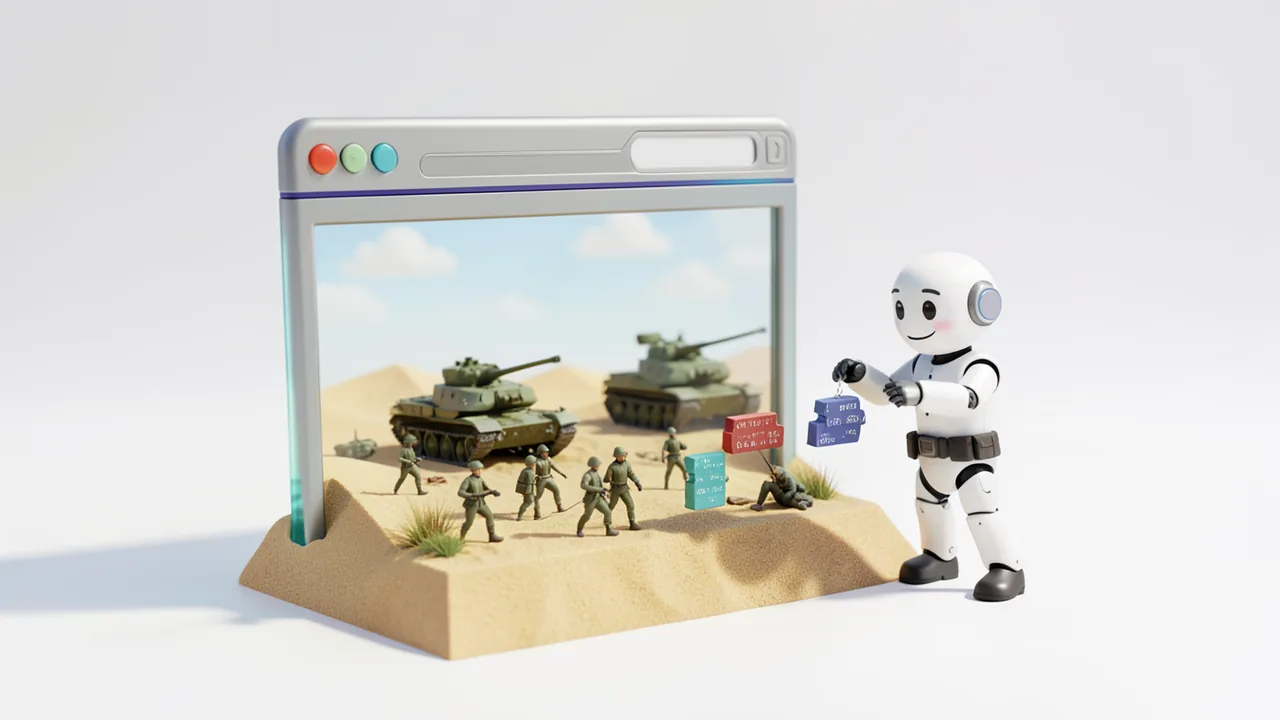
Pieter Levels, who goes by @levelsio and is one of the best-known indie developers on X, showed off an unusual project on November 2, 2026. He took the free demo of the 2002 shooter Battlefield 1942 and got it running in a web browser, with no install and with online multiplayer. He says most of the work was done by Claude Code, Anthropic's coding agent. Instead of just suggesting code, it reads, writes and runs code on its own.
You can try it yourself at bf1942.pieter.com. The site describes itself as a non-commercial, unofficial game preservation project. Right now you can play online co-op on the Tobruk map. Levels stresses that he only used the freely available demo.
According to aicoder.com, his two main posts racked up around 2,200 likes and 340,000 views and hit X's trending list. All of the technical details come from the developer himself and haven't been independently verified.
How the port reportedly works
Levels describes a three-step process:
- Decompiling: Claude Code turned the demo engine's compiled executable back into readable code. A game engine is the technical foundation of a game, handling graphics, physics and controls. Decompiling is like trying to work out the recipe from a finished cake. The compiled program is nothing but machine instructions. The names, comments and structure of the original source code are gone.
- Porting to C: The recovered code was turned into a version written in the C programming language.
- Compiling to WebAssembly: The C code was compiled to WebAssembly, a format modern browsers can run at close to the speed of regular desktop programs. On top of that came a multiplayer mode so several people can play together online.
According to aicoder.com, Levels hasn't fully disclosed how much code was produced or how long the whole thing took.
Why this is harder than DOOM and Quake
Levels has brought classics like Quake and DOOM to the browser before. He says this one was much harder. The reason: id Software, the studio behind DOOM and Quake, released the source code for its engines years ago. If you want to port those games, you start with the original code.
There's nothing like that for Battlefield 1942. To move it to another platform, you first have to do reverse engineering, meaning you work out from the compiled program how it works internally. aicoder.com notes that this kind of work normally takes experienced developers a lot of time. That's what makes the project interesting: the claim that an AI agent handled most of this tedious part.
What it cost
Levels gives only one number: about 1 million output tokens. Tokens are the small chunks of text, like word fragments or character sequences, that language models work with and bill by. Output tokens are the ones the model generates itself, which here means mostly code and explanations. At standard pay-as-you-go API prices, Levels says that would come to around $100. In practice, he pays for a $100-a-month Claude subscription.
| Metric | Figure (according to Levels) |
|---|---|
| Output tokens | approx. 1 million |
| Equivalent at API prices | approx. $100 |
| Actual cost | Claude subscription at $100/month |
| Playable content | Online co-op, Tobruk map |
There's no benchmark (a standardized performance comparison). aicoder.com explicitly points out that other numbers are circulating in the community but aren't backed up.
Current state and limits
The project is brand new and clearly unfinished. Early testers have already reported bugs. Only one map is playable, in co-op mode, so you don't get the full original game. And since it's built on the demo, the full version's content isn't there anyway.
The legal side is also unresolved. Levels labels the project as non-commercial and unofficial and points to the freely available demo. aicoder.com still urges caution: only reverse engineer software you have the rights to, and check the licensing for commercial projects. It isn't known whether the rights holders will tolerate a project like this.
The bigger picture
More than anything, the story shows how much people now trust coding agents to do. Until now they've mostly been praised for manageable tasks like websites, small apps or debugging. Decompiling old binaries, moving them to a new platform and adding networking code on top is on a different scale. If Levels' account holds up, it suggests that classic specialist work like reverse engineering is becoming doable for individual developers on a modest budget. That could matter for preserving old games and software whose source code has been lost or was never made public.
There are several caveats. Everything rests on claims from a single developer with a huge following and a reputation for flashy demos. How much he did by hand, how often the AI got things wrong and how complete the port really is all remain unclear. So far the only thing you can check is the result in the browser, and testers say it still has bugs. Then there's the legal gray area: the easier AI makes it to reverse engineer software, the more pressing the question of what's actually allowed.
Sources
- Merkliste: aicoder.com aicoder.com
Ask the AI assistant
Questions about this article, installation or background? Our assistant knows this page and runs on our own machine, not in someone else's cloud.
The Assistant is an AI (Gemma 4) and can make mistakes – please check important details against the source. Questions are used only to generate an answer and are deleted after one hour. Please don't enter any personal data.



Comments
What do you think? Already tried it? Write it here, no sign-up needed.
Comments are public. Links aren't allowed, and we delete abusive posts. You can delete your own comment at any time in this browser. Learn more in the Privacy Policy.